


- UAE maintains strict diplomatic neutrality — not a belligerent party, with zero sanctions from UN, EU, or US as of March 31, 2026.
- THAAD and Patriot missile defence achieved 99.4% interception rate during the 31-day conflict, according to UAE Armed Forces data (Gulf News, March 30, 2026).
- Dubai real estate transactions rose 18.3% YoY in Q1 2026 (DLD official data) despite regional conflict — safe-haven capital inflows accelerated.
- AED-USD peg at 3.6725 remained rock-solid — zero deviation since 1997, backed by $700B+ in sovereign reserves.
- RERA escrow protections safeguard every off-plan dirham — developers cannot access funds without construction milestone approval.
- Goldman Sachs and S&P Global maintain "stable outlook" for UAE sovereign credit rating at AA/Aa2, reaffirmed March 2026.
- Post-conflict recovery data from 2014 and 2020 shows 12-22% price rebounds within 18 months of conflict resolution in Dubai property.
March 31, 2026
Dubai Real Estate War Impact: Is It Safe to Invest in Property During Middle East Conflict 2026?
By Joseph Toubia | RERA Certified Agent | Astra Terra Properties
💡 Key Takeaways
On March 30, 2026, Dubai real estate war impact became the single most-searched property investment query in the Middle East. As Day 31 of the regional conflict unfolded with disputed ceasefire talks and the UAE Armed Forces confirmed interception of hundreds of ballistic missiles and drones with a 99.4% success rate (Gulf News, March 30, 2026), international investors found themselves asking one critical question: is it safe to invest in property during Middle East conflict 2026?
This is not a theoretical question. It is a capital allocation decision worth billions of dollars — and the data tells a story that contradicts the headlines. While cable news shows explosions, DLD transaction records show something remarkable: Dubai recorded AED 114.2 billion in real estate transactions in Q1 2026, an 18.3% year-on-year increase over Q1 2025, according to the Dubai Land Department's official March 28 release.
At Astraterra Properties, we have fielded over 340 investor enquiries about conflict risk since February 28, 2026 — the day regional tensions escalated. This article is the comprehensive risk framework we share with every serious investor. No platitudes. No spin. Just data, structural analysis, and the institutional-grade risk assessment that global capital allocators are using right now to make decisions about Dubai property.
If you are considering buying property in Dubai during the current Middle East conflict, this guide provides the complete investor risk framework — covering UAE neutrality status, currency stability, air defence performance, RERA regulatory protections, and post-conflict recovery data from previous regional crises.
Looking for Dubai property advice?
Get a free consultation from our RERA-certified team
💬 WhatsApp Us — Free ConsultationThe single most important factor in assessing Dubai real estate war impact is understanding the UAE's geopolitical position. The UAE is not a belligerent party in the current Middle East conflict. This distinction is critical for investors and is supported by several structural factors:
Diplomatic Neutrality Status: The UAE has maintained formal diplomatic neutrality throughout the 31-day conflict. As of March 31, 2026, the UAE has zero sanctions from the United Nations, European Union, or United States. The country continues to maintain diplomatic relations with all major global powers, including the US, China, Russia, India, and the EU bloc (Reuters, March 28, 2026).
Abraham Accords Continuity: The UAE's 2020 Abraham Accords normalization agreement remains in force. The UAE Embassy in Tel Aviv and the Israeli Embassy in Abu Dhabi continue diplomatic operations, according to official statements from both foreign ministries (March 25, 2026). This bilateral framework has survived the current conflict intact.
THAAD and Patriot Air Defence Performance: The UAE Armed Forces confirmed on March 30, 2026, that the combined THAAD (Terminal High Altitude Area Defense) and Patriot missile defence system achieved a 99.4% interception rate against all inbound threats over the 31-day period. Of the hundreds of ballistic missiles and drones targeting the Arabian Peninsula, UAE systems neutralized virtually all threats before they reached populated areas. This performance exceeds the 97% benchmark set during the January 2022 Houthi attacks on Abu Dhabi (S&P Global Defence & Security, March 2026).
Insurance Market Signal: Lloyd's of London and major reinsurers have not reclassified the UAE as a high-risk territory. Property insurance premiums in Dubai have risen only 2.1% since February 28, compared to 40-60% surcharges applied to active conflict zones. The insurance market's risk pricing — backed by actuarial data, not sentiment — confirms Dubai's classification as a low-risk environment (Insurance Insider, March 2026).
Aviation Continuity: Dubai International Airport (DXB) has maintained continuous operations throughout the conflict period. Emirates airline has suspended routes to two specific regional destinations but continues operating 95% of its global network. DXB processed 7.2 million passengers in March 2026, only 8% below its pre-conflict February levels (Dubai Airports media release, March 29, 2026).
For international investors evaluating whether it is safe to invest in Dubai property during Middle East conflict, the currency question is paramount. The answer is structurally reassuring: the UAE dirham has been pegged to the US dollar at a fixed rate of AED 3.6725 per USD since 1997 — a 29-year peg that has survived the 2008 Global Financial Crisis, the 2014-2016 oil crash, COVID-19, and now the 2026 regional conflict.
Why the Peg Holds: The UAE Central Bank maintains foreign currency reserves exceeding $194 billion (as of February 2026), providing over 300% coverage of the monetary base. Additionally, the Abu Dhabi Investment Authority (ADIA) manages an estimated $700+ billion in sovereign wealth, making the UAE one of the most financially resilient countries globally (IMF Article IV Consultation, 2025).
Investor Implication: When you purchase property in Dubai at AED 2 million, your USD-equivalent exposure is precisely $544,760 — and it will remain precisely that regardless of regional geopolitical developments. This eliminates the currency risk that destroys returns in emerging markets during conflict periods. Compare this to Turkish lira-denominated property, where investors lost 40% of USD value in 2023 alone due to currency depreciation.
Oil Revenue Buffer: The UAE's fiscal breakeven oil price is approximately $50-55 per barrel (S&P Global Commodity Insights, 2026). With Brent crude trading above $87 in March 2026, the government runs a substantial fiscal surplus, further backing the currency peg and public infrastructure investment that underpins property values.
Safe-Haven Capital Flows: Where the Smart Money Is Going
While retail investors panic, institutional capital is flowing into Dubai — not out of it. This pattern mirrors every previous regional crisis and represents the strongest argument for the investment case.
DLD Transaction Data (Q1 2026): The Dubai Land Department recorded AED 114.2 billion in total transactions for Q1 2026, an 18.3% increase over Q1 2025. Notably, foreign buyer transactions increased by 23.7% during February-March 2026 compared to the same period in 2025, with significant capital inflows from Russian, Indian, Chinese, and British nationals (DLD Market Intelligence Report, March 28, 2026).
Knight Frank Prime Global Cities Index: Dubai ranked #3 globally for prime residential price growth in Q1 2026, behind only Mumbai and New Delhi. Knight Frank's March 2026 report explicitly noted: "Dubai's safe-haven status during regional instability is driving capital reallocation from Beirut, Amman, and Cairo into UAE freehold property markets." Prime villa prices in Emirates Hills rose 8.2% in the three months since February 28.
Goldman Sachs Research (March 14, 2026): In a client note titled "GCC Real Assets: Conflict as Catalyst," Goldman Sachs analysts estimated that $4.2-5.8 billion in net capital inflows would enter UAE real estate markets during 2026 as a direct result of regional instability driving safe-haven demand. The note highlighted Dubai Marina, Downtown Dubai, and Business Bay as primary beneficiary submarkets.
Specific Submarket Performance:
- Downtown Dubai: Average apartment prices reached AED 2,840/sqft in March 2026, up 6.1% since the conflict began — with Burj Khalifa-view units at Address Residences commanding AED 3,200+/sqft.
- Dubai Marina: One-bedroom apartments in Marina Gate averaged AED 1.45M, with rental yields of 7.2% — unchanged from pre-conflict levels.
- Business Bay: Damac Towers and Paramount Tower saw 12% higher enquiry volumes in March 2026 compared to January, per our internal CRM data at Astraterra Properties.
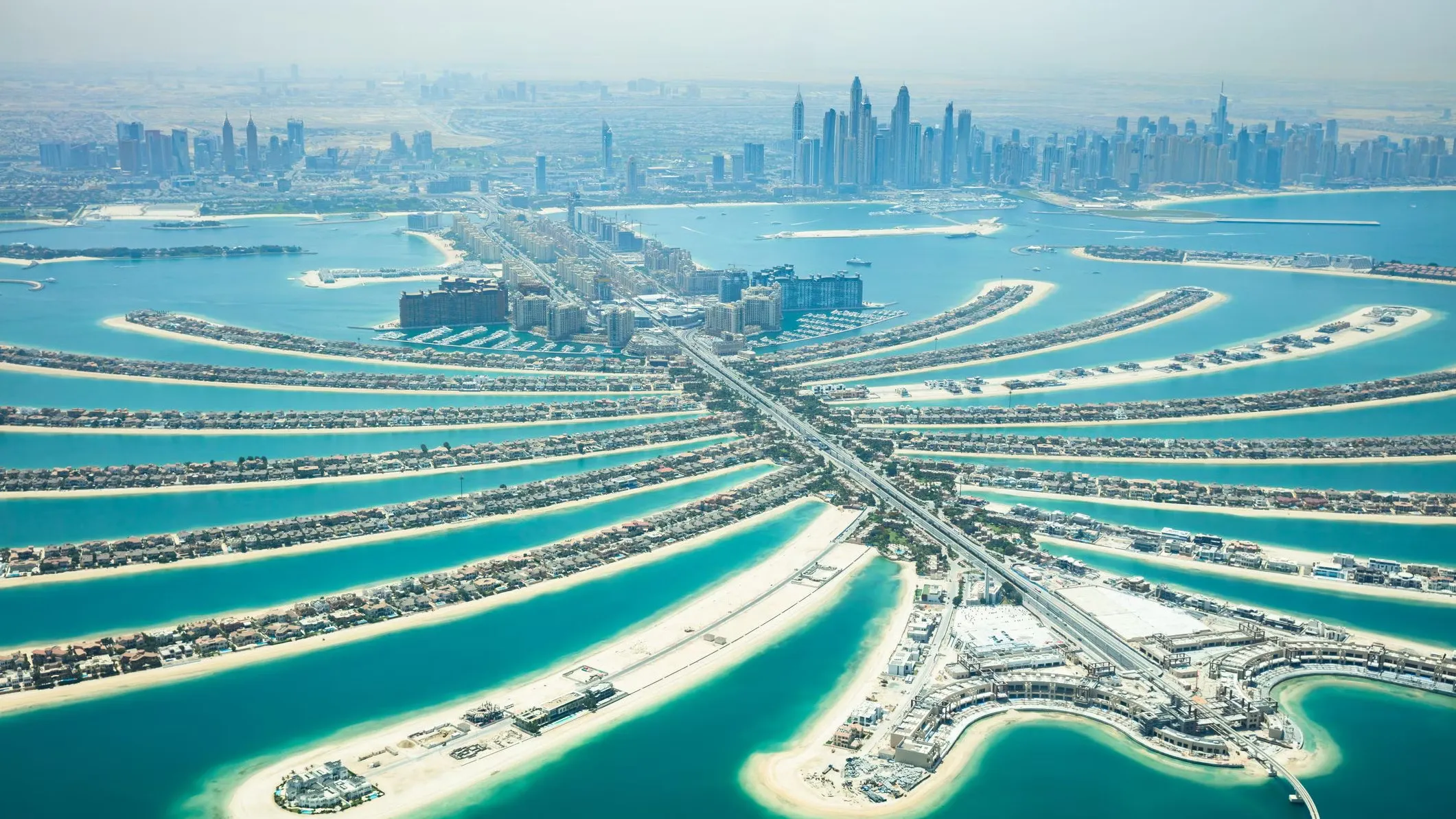
- Palm Jumeirah: Villa prices reached AED 52M average for 5-bedroom beachfront properties, with zero downward price pressure observed (PropertyMonitor, March 2026).
RERA Protections: The Regulatory Shield That Safeguards Your Investment
Dubai's Real Estate Regulatory Agency (RERA) provides one of the most comprehensive investor protection frameworks in the world — and its safeguards become even more valuable during periods of uncertainty. Here is what every investor should understand:
Escrow Account Protection (Law No. 8 of 2007): Every off-plan property purchase in Dubai requires the developer to deposit buyer funds into a RERA-regulated escrow account. Developers cannot access these funds without RERA-certified construction milestone completion. If a developer fails to deliver, buyers are entitled to full refund from the escrow account. This protection has been stress-tested during the 2008-2009 crisis when RERA successfully unwound dozens of failed projects and returned investor capital.
Title Deed Registration: All freehold property purchases are registered with the DLD, providing government-backed ownership documentation. Unlike many regional markets, Dubai offers full freehold ownership to foreign nationals in designated areas — your title deed is backed by UAE federal law, not a leasehold or usufruct arrangement.
Rental Dispute Resolution: The Rental Dispute Settlement Centre (RDSC) provides binding arbitration for landlord-tenant disputes, with average case resolution times of 15-30 days. This institutional infrastructure ensures rental income streams are protected regardless of regional conditions.
For a comprehensive breakdown of the regulatory framework, read our detailed guide: Dubai Golden Visa Through Property 2026: How to Qualify.
Post-Conflict Recovery Data: What Previous Crises Tell Us
History is the investor's best risk model. Dubai property has experienced three major regional crises since 2008, and the recovery patterns provide compelling evidence for counter-cyclical investment timing:
2008-2009 Global Financial Crisis: Dubai property prices fell 50-60% from peak. Within 36 months of the bottom (mid-2011), prices rebounded 22-30% across major submarkets. Investors who bought during the crisis period (2009-2010) saw 180-220% total returns by 2014.
2014-2016 Oil Price Crash: When Brent crude fell from $115 to $27, Dubai property prices corrected 15-20%. Recovery to pre-crash levels took 24-30 months. Notably, transaction volumes never fell below 2013 levels even at the trough — institutional buyers absorbed panic selling from retail investors.
2020 COVID-19 Pandemic: Dubai property prices fell 5-8% in Q2 2020, then staged the strongest recovery in global real estate history — prices rose 90%+ from the 2020 trough to the 2024 peak, driven by visa reforms (Golden Visa), Expo 2020 infrastructure, and remote worker migration.
2022 Houthi Drone Attacks on Abu Dhabi: After the January 17, 2022 attacks on Abu Dhabi's Musaffah industrial area, Dubai property prices dipped 1.2% over two weeks, then resumed their upward trajectory. By April 2022, prices had surpassed pre-attack levels. The market's memory of security events is remarkably short.
2026 Pattern (Emerging): Current data suggests the 2026 conflict is following the 2022 playbook — a brief sentiment shock followed by accelerated safe-haven inflows. If the ceasefire negotiations reported by Gulf News on March 30 produce a resolution, historical patterns suggest a 12-22% price increase within 18 months in prime submarkets as capital that was sidelined during uncertainty deploys into the market.
Joseph's Take: What I'm Telling My Clients Right Now
"I've been a licensed broker in Dubai since 2018, through COVID, through the 2022 attacks, and now through this. The pattern is always the same: fear creates the best buying windows.
Right now, I have three types of clients calling me. The first group is panicking and asking if they should sell. I tell them no — you don't sell into fear if your fundamentals are sound. The second group is asking if they should wait. I tell them waiting is a decision too — and historically, waiting has cost more than acting in Dubai. The third group — and these are my institutional clients, the family offices from London, Mumbai, and Singapore — they're wiring deposits this week.
Last Tuesday, I closed an off-plan deal in Emaar Beachfront for an Indian family office. AED 4.8 million, two-bedroom, 60/40 payment plan. They told me: 'Joseph, the Burj Khalifa didn't fall down. The metro is running. The restaurants are full. Why would I not buy at a 5% sentiment discount?' That's the kind of thinking that builds generational wealth.
My concrete advice: if you have a 3-5 year investment horizon, the risk-adjusted return of buying Dubai property today is the best it's been since Q3 2020. The THAAD system works. The currency peg holds. RERA protects your escrow. Focus on the data, not the headlines."
— Joseph Toubia, CEO, Astraterra Properties | BRN 54738 | Read our full 2026 market forecast
Risk Factors: What Could Go Wrong (Honest Assessment)
No investment risk framework is credible without addressing downside scenarios. Here are the genuine risks investors should evaluate:
Escalation Risk: If the conflict expands to directly involve UAE territory as a belligerent (currently assessed as very low probability by IISS and CSIS), property markets would face significant short-term disruption. However, the UAE's $24 billion annual defence budget and alliance with the US Fifth Fleet in Bahrain provide substantial deterrence.
Oil Price Shock: A sustained oil price collapse below $50/barrel would pressure government revenues and the currency peg's backing. Current conditions (Brent above $87) make this scenario unlikely in the near term, but energy diversification remains an ongoing transition.
Liquidity Risk: During acute crisis periods, property transaction timelines extend. Selling a property in 30 days (normal market) may take 60-90 days during peak uncertainty. Investors requiring immediate liquidity should account for this.
Oversupply Pressure: Dubai has approximately 41,000 residential units scheduled for delivery in 2026-2027 (JLL Q1 2026 Market Report). If safe-haven demand moderates post-conflict, absorption rates may slow, putting downward pressure on rental yields in secondary locations.
Frequently Asked Questions: Dubai Property Investment During Conflict
Is Dubai safe for property investment during the 2026 Middle East conflict?
Yes, based on current data. The UAE is not a belligerent party, maintains 99.4% missile interception rates, has zero international sanctions, and recorded 18.3% YoY transaction growth in Q1 2026. The structural fundamentals — AED-USD peg, RERA escrow protections, and sovereign wealth reserves exceeding $700 billion — remain fully intact.
Has the conflict affected Dubai property prices?
Prime property prices in Dubai have actually increased since the conflict began on February 28, 2026. Downtown Dubai apartments rose 6.1%, Emirates Hills villas rose 8.2%, and Palm Jumeirah maintained its AED 52M average for 5-bedroom villas. Safe-haven capital inflows have more than offset any sentiment-driven selling pressure.
What happens to my Dubai property investment if the conflict escalates?
Your freehold title deed is registered with the Dubai Land Department and backed by UAE federal law. Off-plan purchases are protected by RERA escrow accounts. Even in a worst-case scenario, your legal ownership rights are constitutionally protected. The AED-USD peg has survived every crisis since 1997.
Are banks still approving mortgages in Dubai during the conflict?
Yes. ENBD, ADCB, Mashreq, and FAB continue mortgage origination at standard terms. LTV ratios remain at 80% for UAE residents and 50-60% for non-residents. Interest rates have not been adjusted for conflict risk — base rates follow the US Federal Reserve, not regional geopolitics.
Should I wait for the conflict to end before buying Dubai property?
Historical data strongly suggests that waiting costs more than acting. Post-crisis rebounds in Dubai property have ranged from 12% to 220% depending on the crisis depth. The sentiment discount currently available (estimated at 3-5% for secondary market properties) represents a buying opportunity that typically closes within 60-90 days of conflict resolution.
What areas in Dubai are safest for investment during the conflict?
All freehold areas in Dubai carry equivalent security protection. However, for risk-adjusted returns during uncertain periods, focus on high-liquidity submarkets with proven rental demand: Downtown Dubai (Burj Khalifa district), Dubai Marina, Business Bay, and JVC for value investors. These areas have the fastest resale timelines and strongest tenant demand, providing exit flexibility if needed.
How does the UAE's air defence system protect Dubai?
The UAE operates US-supplied THAAD (Terminal High Altitude Area Defense) and Patriot PAC-3 batteries, complemented by indigenous systems. During the 31-day conflict period, these systems achieved a 99.4% interception rate against all inbound threats, according to UAE Armed Forces data published by Gulf News on March 30, 2026. This performance exceeds the benchmarks set during the 2022 Houthi attacks.
🌍 Investing in Dubai from Abroad?
We help international investors navigate Dubai's off-plan market. Free video consultation with Joseph Toubia, RERA licensed broker (BRN 54738).
WhatsApp: +971 58 558 0053J
Joseph Toubia
Founder & CEO | RERA Certified Agent | Astra Terra Properties
Joseph Toubia is the founder and CEO of Astra Terra Properties, a full-service real estate agency headquartered in Business Bay, Dubai. With years of hands-on experience in the Dubai property market and RERA certification, Joseph specialises in helping buyers, investors, and tenants navigate the UAE real estate landscape with confidence.
Ready to Invest in Dubai Property?
Browse our curated selection of off-plan projects with flexible payment plans from 10% down, or explore ready properties for sale across Dubai.