Moving to Dubai 2026 — The Complete Expat Guide

Dubai attracts more than 200,000 new residents every year — drawn by zero income tax, world-class infrastructure, year-round sunshine, and a genuinely cosmopolitan lifestyle. Whether you are relocating for work, investing in property, or seeking a better quality of life for your family, this guide covers every practical step: visas, the best areas for expats, renting and buying property, cost of living, schools, banking, and healthcare — everything you need to move to Dubai confidently in 2026.

Why Expats Choose Dubai

Dubai is home to approximately 3.7 million people, of whom over 90% are expatriates. It has become one of the world's foremost destinations for skilled professionals, entrepreneurs, and families seeking a different quality of life. The reasons are well-established — and compelling.

Zero Personal Income Tax

Your entire salary, bonus, and investment returns are tax-free. For expats from high-tax countries, this is often the single most transformative financial benefit of living in Dubai.

World-Class Infrastructure

Dubai International Airport is one of the busiest in the world. The RTA metro, tram, and bus network is modern and expanding. Roads are excellent. Broadband speeds rank among the fastest globally.

Safety

Consistently ranked in the top ten safest cities globally. Low crime rates, strong rule of law, and a visible police presence mean families feel secure. Dubai's safety extends to women travelling and living alone.

Year-Round Sun

Dubai averages 342 sunny days per year. Winters (November–March) are genuinely perfect — warm days, cool evenings, and minimal rain. Summers are hot (40°C+) but the city is fully air-conditioned and outdoor life simply moves to beaches and pools.

Lifestyle & Leisure

World-class restaurants, beach clubs, desert experiences, skiing at Ski Dubai, Michelin-starred dining, and some of the best brunches on the planet. Dubai punches well above its weight in leisure and hospitality.

Global Connectivity

Emirates flies to over 150 destinations. Dubai is roughly equidistant from Europe, Asia, and Africa — making it an ideal base for globally mobile professionals and business owners.

No Property Tax or Capital Gains Tax

There is no annual property tax, no capital gains tax on property sales, and no inheritance tax in the UAE. Property ownership costs are predictable and comparatively low.

Healthcare

Dubai has invested heavily in private healthcare. International hospitals such as Mediclinic, Cleveland Clinic, and King's College Hospital London operate world-class facilities. Most employers provide comprehensive health insurance.

UAE Visa Options for Expats Moving to Dubai

You need a UAE residency visa to live and work legally in Dubai. There are several routes available — the right one depends on your employment status, investment plans, and long-term intentions. For property investors, the UAE now offers investor and Golden Visas that are directly tied to property purchase value.

Employment Visa

Most common

Sponsored by a UAE-registered employer. The company handles the entire process — medical examination, Emirates ID registration, and residency stamp. Valid for 2–3 years and renewable. Family members (spouse and children) can be sponsored as dependents once the primary holder's monthly salary meets the minimum threshold (typically AED 4,000–10,000 depending on accommodation arrangements).

Investor Visa

From AED 750k property

Purchasing property in Dubai at AED 750,000 or above qualifies you for a 2-year renewable investor visa. The property must be completed (not off-plan) and mortgage-free, or the equity portion must meet the minimum. This route is popular with buyers who want to live in Dubai independently of employer sponsorship or who are semi-retired.

Golden Visa

AED 2M+ property

A 10-year renewable UAE residency visa available to property investors (AED 2 million or above, fully paid), entrepreneurs, outstanding talents, scientists, athletes, and select professionals. The Golden Visa removes the need for employer sponsorship entirely and allows holders to stay outside the UAE for extended periods without the visa lapsing — a major advantage over standard residency visas.

Freelancer Visa

For self-employed

UAE free zones including Dubai Media City, DMCC, and Dubai Internet City issue freelancer licences and associated residency visas. Costs vary by free zone but typically range from AED 7,500–20,000 per year including the visa. This route suits remote workers, consultants, content creators, and digital professionals who work for international clients and want legitimate UAE residency without setting up a full LLC.

Full UAE Golden Visa Guide →

Best Areas in Dubai for Expats

Dubai is a large and diverse city — choosing the right area is one of the most important decisions you will make when relocating. Each community has a distinct character, price point, and commute profile. Below are the five areas most consistently chosen by expats, with honest assessments of rent, lifestyle, and suitability.

Jumeirah Village Circle (JVC)

AED 55k–100k/yr (1–2 bed)

Best value-for-money in Dubai. Predominantly apartment buildings with some townhouses, good community feel, parks, and a growing selection of restaurants and gyms. Popular with young professionals and families priced out of marina-facing areas. Major drawback is limited public transport — a car is almost essential.

Business Bay

AED 85k–160k/yr (1–2 bed)

Central location between Downtown and Dubai Marina, on the Dubai Canal. Mix of residential towers and serviced apartment buildings. Ideal for professionals working in DIFC, Downtown, or Sheikh Zayed Road. The canal promenade is a genuine lifestyle asset. Property values have appreciated significantly since 2021.

Dubai Marina

AED 90k–175k/yr (1–2 bed)

Dubai's most established waterfront community. The marina walk, proximity to JBR beach, and dense F&B offering make it one of the most walkable and sociable places to live in the city. Excellent metro access (two stations). Popular with young professionals and couples. Families with children often move to quieter areas once school-age decisions take over.

Downtown Dubai

AED 110k–220k/yr (1–2 bed)

Premium central living in the shadow of the Burj Khalifa. The Dubai Mall, Dubai Fountain, and Souk Al Bahar on the doorstep. Strong long-term capital appreciation. Attracts high-earning professionals and executives. Slightly less community-feel than Marina but unmatched for prestige and connectivity.

Palm Jumeirah

AED 160k–400k/yr (2–3 bed)

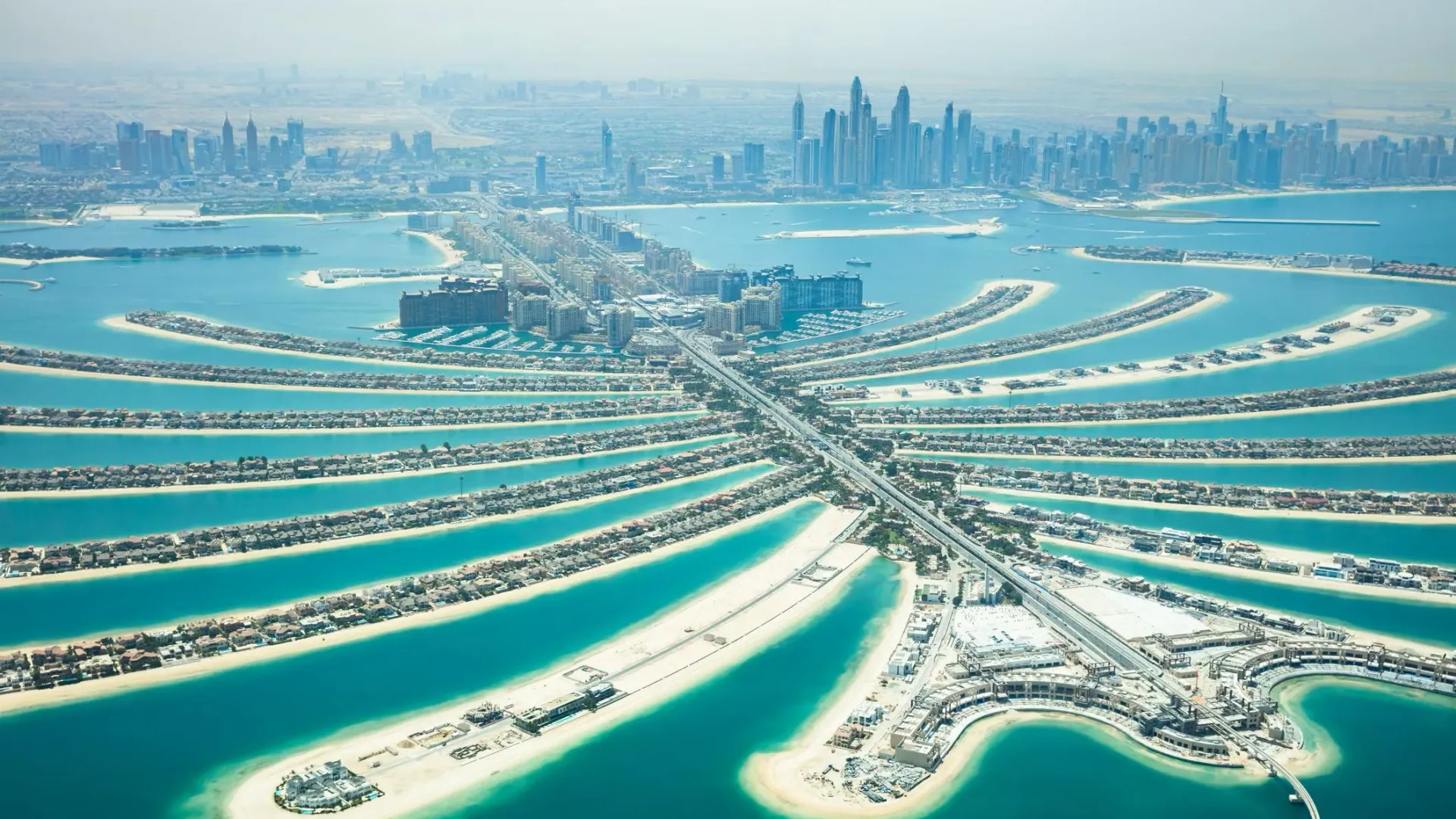
Dubai's iconic artificial island — beach access, private pools, and panoramic sea views as standard. Home to Atlantis, Nakheel Mall, and dozens of beach clubs and Michelin-starred restaurants. The premium choice for families and those seeking a resort-style lifestyle year-round. The Palm Monorail connects to the mainland though most residents drive.

Explore All Dubai Area Guides →

Cost of Living in Dubai — 2026 Overview

Dubai is not a cheap city, but the zero income tax means most expats find their disposable income is significantly higher than in their home country despite the cost of living. The biggest variable is rent — which depends heavily on your chosen area and apartment size. Below are representative costs across the key spending categories for 2026.

Studio / 1-bed apartment (JVC, Al Furjan)AED 55,000–90,000 / year
1–2 bed apartment (Dubai Marina, Business Bay)AED 90,000–175,000 / year
2–3 bed apartment (Downtown, Palm Jumeirah)AED 150,000–400,000 / year
Private school fees (per child)AED 25,000–80,000 / year
Groceries (mid-range, couple)AED 1,500–2,500 / month
Dining out (per meal, mid-range restaurant)AED 50–150 / person
Monthly RTA metro/bus passAED 350 / month
Petrol (per litre, 95 octane)AED 3.0–3.5 / litre
Health insurance (employer-sponsored top-up)AED 3,000–15,000 / year
Gym membership (mid-range)AED 250–500 / month
DEWA (electricity + water, 1-bed)AED 400–900 / month (summer higher)
Car insurance (standard sedan)AED 3,000–6,000 / year

Schools: The Biggest Variable for Families

Private school fees in Dubai range from AED 25,000 per year (budget-tier schools in areas like Al Quoz or Deira) to AED 80,000+ per year (premium British or international schools in Jumeirah and Nad Al Sheba). Most families moving to Dubai for the first time underestimate school fees as a line item. If you have two school-age children in mid-range schools, budget AED 80,000–120,000 per year in school fees alone — before rent, transport, or food.

Finding Accommodation in Dubai

Unless your employer provides accommodation or a housing allowance that covers a specific unit, most expats need to find their own home in Dubai. The approach that works best is a two-stage process: arrive on a short-term basis first, then sign a long-term tenancy once you know the city.

Stage 1: Serviced Apartments (First 1–3 Months)

Book a serviced apartment or furnished short-stay rental through Airbnb, Sonder, or operators like Nuspace or StayBridge Suites. This gives you time to explore different areas, understand commute times, and discover which community feels like home — before committing to a 12-month tenancy. Monthly rates for serviced studios range from AED 5,000–9,000 per month.

Stage 2: Long-Term Tenancy or Purchase

Once you know your preferred area, engage a RERA-licensed agent to find long-term rentals or browse listings on Property Finder and Bayut. Dubai's rental market moves quickly — good apartments at fair prices rent within days. Having your documents ready (passport, UAE visa, Emirates ID) and being prepared to issue cheques quickly is a genuine competitive advantage.

Browse Apartments to RentBrowse Properties for Sale

The Dubai Renting Process — Step by Step

Renting in Dubai differs from most Western markets in several important ways — the cheque system, Ejari registration, and DEWA connection process are unique to the UAE. Here is exactly what to expect from search to move-in.

01

Search and Viewings

Use Property Finder, Bayut, or work with a RERA-licensed agent. Verify listings are live and units available before viewing — phantom listings are a known issue on portals. Your agent will arrange viewings and negotiate on your behalf. Budget for a brokerage fee of 5% of the annual rent, paid once upon signing.

02

Tenancy Contract

Once you agree on rent and terms, the landlord or agent prepares a tenancy contract (often on RERA's standard template). Read it carefully — pay attention to renewal notice periods (usually 90 days), maintenance responsibilities, and permitted use clauses. Both parties sign before any cheques change hands.

03

Cheque Payments

Dubai's rental market still runs primarily on post-dated cheques. Landlords typically request 1–4 cheques per year — fewer cheques (paying 1 cheque = full year upfront) is a bargaining chip to negotiate a lower rent. Security deposit is 5% of annual rent (unfurnished) or 10% (furnished), returned at end of tenancy subject to property condition.

04

Ejari Registration

All tenancy contracts in Dubai must be registered with Ejari (the DLD tenancy registration system) within 30 days of signing. Ejari registration costs approximately AED 220 and is usually handled by the landlord or agent. You need your Ejari certificate to apply for a residency visa, open bank accounts, and connect DEWA utilities.

05

DEWA Connection

Connect Dubai Electricity and Water Authority (DEWA) in your name before moving in. You'll need your Ejari certificate, passport, Emirates ID (or UAE visa page), and a refundable security deposit of AED 2,010 (apartment) or AED 4,020 (villa). Apply via the DEWA app or website — connection is typically completed within 24 hours of payment.

Buying Property in Dubai as an Expat

Foreign nationals can buy property in Dubai's designated freehold zones with complete ownership rights — no UAE national partner, no local sponsor, and no restrictions on repatriating sale proceeds. Freehold zones cover the majority of Dubai's developed residential areas including Dubai Marina, Downtown, Palm Jumeirah, Business Bay, JVC, Arabian Ranches, and many more.

Minimum Purchase for Investor Visa

AED 750,000

Minimum Purchase for Golden Visa

AED 2,000,000

DLD Transfer Fee (buyer)

4% of purchase price

Agent Commission (resale)

2% of purchase price

Mortgage Available to Expats?

Yes — up to 75% LTV

Minimum Mortgage Down Payment (expat)

25% (first property)

No Capital Gains Tax?

Correct — zero CGT in UAE

No Annual Property Tax?

Correct — zero property tax

Expats can obtain UAE mortgages from local and international banks at competitive rates. As a first-time buyer in the UAE, the maximum loan-to-value (LTV) is 75% for properties under AED 5 million, meaning you need a minimum 25% deposit plus buying costs (DLD fee, trustee office, agent commission) which typically add a further 6–7% on top of the purchase price.

Full Guide: Buying Property in Dubai as an Expat →

Banking, Driving Licence & Healthcare

Opening a UAE Bank Account

Most major UAE banks — Emirates NBD, ADCB, Mashreq, FAB, and HSBC UAE — offer current accounts for expatriates. You will need your UAE residency visa, Emirates ID, salary certificate or employment letter, and three months of bank statements. Many banks now offer digital onboarding. Some banks require a minimum monthly salary credit (typically AED 5,000–10,000) to waive monthly fees. Once your Ejari is registered and your Emirates ID is active, the process is usually straightforward and completed within 1–5 business days.

Converting Your Driving Licence

Nationals of many countries — including the UK, USA, Canada, Australia, Germany, and most EU member states — can convert their home driving licence to a UAE licence without sitting a theory or practical test. You will need your home country licence, passport, UAE visa, Emirates ID, and an eye test at an approved RTA optician (cost approximately AED 50–100). The conversion is processed at an RTA licensing centre and takes 1–2 hours. Nationals of countries not on the exempt list must complete the full UAE driving test programme.

Healthcare Registration

Dubai has mandatory health insurance for all residents. Most employers provide health insurance as part of the employment contract — check the coverage level carefully (network hospitals, outpatient limits, dental). If your employer does not provide insurance or you are self-sponsored (investor visa, Golden Visa), you must purchase your own policy. Dubai Health Authority (DHA) requires proof of health insurance to renew residency visas. International private medical insurance (IPMI) policies from providers such as Bupa International, Cigna, or Allianz Care are widely accepted at Dubai's private hospitals.

Schools in Dubai — Curriculum Options for Expat Families

Dubai has over 200 private schools serving its expatriate population, and school choice is one of the most important — and highest-cost — decisions for relocating families. All private schools in Dubai are regulated by the Knowledge and Human Development Authority (KHDA), which publishes annual inspection ratings that are a reliable guide to school quality.

British Curriculum (GCSE / A-Level)

AED 35,000–80,000/yr

The most popular curriculum among expats. Schools include Gems Wellington, Kings School Dubai, Repton Dubai, and Dubai College. Widely recognised globally and a natural fit for families from the UK, Australia, India, and much of Africa. Dubai College is a selective state-funded grammar school with no fees — extremely competitive entry.

IB (International Baccalaureate)

AED 50,000–80,000/yr

Taught at schools including Dubai International Academy, Jumeirah English Speaking School (JESS), and Swiss International Scientific School. The IB diploma is globally portable and valued by top universities worldwide. Popular with internationally mobile families who may move countries again.

American Curriculum (AP / SAT)

AED 30,000–70,000/yr

American-curriculum schools such as American School of Dubai (ASD) and Fairgreen International offer the American high school programme with Advanced Placement courses. The right choice for families intending to return to the USA for university, or those coming from the American education system.

Indian / CBSE Curriculum

AED 15,000–40,000/yr

CBSE (Indian curriculum) schools are numerous in Dubai and tend to be more affordable than British or IB schools. Popular with the large Indian expatriate community. Schools in areas like Deira, Al Quoz, and Al Qusais offer strong academic programmes at a more accessible price point.

Public Schools in Dubai

Government (public) schools in Dubai teach in Arabic and follow the UAE national curriculum. They are free for UAE nationals and GCC citizens but are generally not accessible to expat children. In practice, essentially all expatriate families use private schools. Budget for private school fees from the day you arrive — waiting lists at popular schools can be 1–2 years, so register as early as possible after deciding on your area.

Related guides and tools:

UAE Golden Visa GuideBuying Property in Dubai as an ExpatBrowse Apartments to RentBrowse Properties for SaleDubai Area GuidesContact Our Advisors

Frequently Asked Questions — Moving to Dubai

Can I buy property in Dubai as an expat?

Yes. Foreign nationals can purchase property in Dubai's designated freehold zones with full ownership rights — no local sponsor or partner required. Freehold areas cover the vast majority of new development in Dubai including Dubai Marina, Downtown, Palm Jumeirah, Business Bay, JVC, and many more. Buying property worth AED 750,000 or more also makes you eligible for a UAE investor visa, and AED 2 million or above qualifies you for the 10-year Golden Visa.

What visa do I need to move to Dubai?

Most expats arrive on an employment visa sponsored by their UAE employer. Other routes include the investor visa (AED 750k+ property), the Golden Visa (AED 2M+ property or qualifying profession), and free zone freelancer visas. The right visa depends on your employment situation, investment plans, and long-term intentions in the UAE.

Is Dubai safe for expats and families?

Dubai is consistently ranked among the safest cities in the world. Crime rates are extremely low, law enforcement is highly visible, and the city infrastructure is designed with safety in mind. Expat families regularly cite safety as the primary factor in their decision to relocate to Dubai — children can socialise independently in residential communities, and violent crime is exceptionally rare.

How much money do I need to move to Dubai?

A single professional can live comfortably on AED 10,000–15,000 per month in areas like JVC or Business Bay. A family of four with school-age children needs AED 25,000–45,000 per month to cover rent, school fees, groceries, transport, and lifestyle costs. Initial relocation costs (visa, deposit, agency fee, DEWA, furniture) typically add AED 30,000–60,000 to your upfront requirements.

What are the best areas to live in Dubai as an expat?

The most popular expat areas are Dubai Marina (walkable, vibrant, waterfront), Business Bay (central, professional), Downtown Dubai (premium, iconic), JVC (affordable, family-friendly), and Palm Jumeirah (ultra-premium, beach lifestyle). The best fit depends on your budget, commute, and lifestyle preferences — our area guide covers each community in full detail.

Do I pay income tax in Dubai?

No. The UAE has zero personal income tax. Your full salary, bonuses, and investment returns are tax-free. VAT at 5% applies to goods and services. For expats from the UK, Europe, Australia, or Canada, the tax-free income typically represents a 20–45% effective increase in take-home pay compared to equivalent roles in their home country.

Planning Your Move to Dubai? Talk to Our Team.

Our RERA-certified advisors have helped hundreds of expats find, rent, and buy property in Dubai. Whether you are weeks away from relocating or still planning your move, we can help you shortlist the right areas, understand the visa options tied to property purchase, and navigate the Dubai rental and buying process from abroad.

Speak to an AdvisorBrowse Properties for Sale