How to underwrite Business Bay, Majan, DIFC and JLT
Business Bay remained the centre of 2026 office investment, recording about 1,100 deals worth more than AED 9.9 billion in the first nine months. That is close to half of Dubai's total office sales value. The district has genuine advantages: a recognised address, mixed residential and hotel demand, the canal corridor, access to Downtown and a broad occupier base. Yet Marasi Drive, Bay Square, Executive Towers and the Sheikh Zayed Road edge offer very different access, parking and building quality.
September added momentum with 419 office transactions worth AED 1.85 billion. Reported sales value rose around 62% from August and 54% compared with September 2025. Those are five distinct 2026 statistics when combined with the nine-month totals, but none replaces a building-level rent schedule or a current comparable sale. They tell a buyer where capital is active, not what an individual office will earn.
DIFC competes for regulated firms, wealth managers and premium professional services, with a high specification and prestige threshold. Jumeirah Lake Towers offers a wider range of strata offices, Metro-linked access and the Uptown Dubai growth story. Majan sits in a different price and occupier context, linked to Dubailand, Sheikh Mohammed Bin Zayed Road, schools, attractions and growing residential catchments. Each district needs its own tenant hypothesis rather than a citywide rent assumption.
A 2026 project test: Samana Business Park in Majan
GenieMap's project record for Samana Business Park describes a commercial development in Majan combining offices, showrooms, restaurants and retail. The record reviewed for this article showed unit prices from approximately AED 4.028 million to AED 11.081 million, areas from about 1,343 to 3,562 sq ft, and a target handover of 30 September 2028. These are project-record and marketing inputs to refresh, not a valuation or availability promise.
The project is a useful counterpoint to Business Bay concentration. A Majan office or showroom may offer a larger floorplate or different customer catchment for the same capital, but the tenant pool is not interchangeable with DIFC or JLT. An owner-occupier serving Dubailand, education, leisure or surrounding residential communities may value road access and space. A financial-services tenant seeking client prestige and Metro proximity may not.
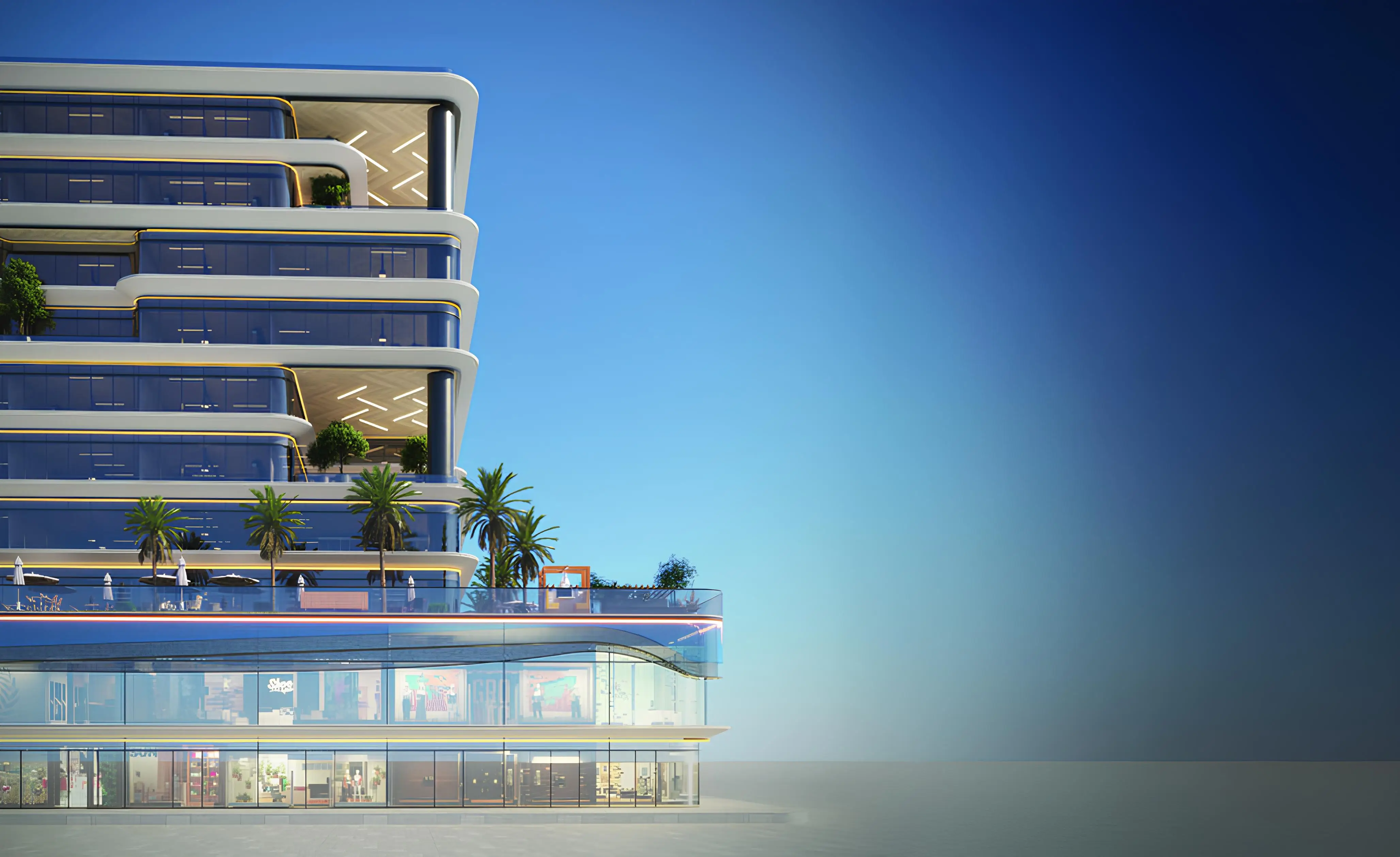
The image used for this article is a unique GenieMap project visual from Samana Business Park. It was checked before publication for relevance and for the absence of generated Astra Terra branding. Visual appeal is helpful for understanding the product, but the investment decision must be grounded in current project documents, DLD registration, escrow, construction status and the exact unit schedule.
Convert the purchase price into total income-producing cost
Begin with purchase price, DLD and trustee costs, any agency or administration charges, finance costs and payment timing. Add the complete fit-out budget, design, authority approvals, fire and life-safety work, utilities, telecoms, furniture, contingency, service charges and the cash carried while the office is vacant. A shell-and-core office is not economically comparable with a fitted ready unit until both are put on the same opening-date basis.
For example, an AED 4.5 million office requiring AED 900,000 of fit-out and nine months before rent starts has a very different effective basis from an AED 5.1 million fitted office producing income within two months. The cheaper headline price can become the more expensive investment. Model rent only after checking net usable area, not merely the saleable area in a marketing schedule.
Next, stress-test three cases. In the base case, use achieved rent evidence and a realistic lease-up period. In the downside case, reduce rent, extend vacancy, add incentives and increase fit-out costs. In the exit case, estimate how many future buyers could finance and use the office at the projected resale price. If the return relies on one optimistic rent or rapid assignment before handover, the margin of safety is thin.
Parking, lifts and floorplate decide occupier usefulness
Commercial buyers regularly underestimate operational friction. Confirm allocated parking, visitor parking, loading, lift count and waiting time, reception control, cooling hours, backup power, telecom choice and after-hours access. A beautiful floorplate with insufficient parking can exclude sales-led or client-facing companies. A high floor with slow lifts can affect staff and visitor experience every day.
Measure columns, core placement, window line, ceiling height and the ratio of net usable to purchased area. Place actual desks, meeting rooms, reception, pantry, storage and circulation on the plan. Then divide the total cost by usable area and realistic headcount. This exposes apparent bargains that sacrifice too much efficiency.
Separate a payment plan from investment performance
A 40/60 or 50/50 schedule can reduce capital deployed during construction, but leverage works in both directions. The buyer still needs a credible plan for the handover balance, fit-out and vacancy period. If bank valuation at completion is below the contract price, the equity requirement can be larger than expected. International buyers should also model currency conversion and transfer timing rather than assuming the remaining funds will be available on demand.
Ask for each instalment date in calendar form, then overlay expected construction milestones, personal liquidity and the intended exit window. Review what the contract permits before assignment and which fees or developer approvals apply. A unit that appears easy to trade may have restrictions, a high minimum paid percentage or a resale market crowded by identical layouts. Payment flexibility is valuable, but only when it supports a durable acquisition thesis.