
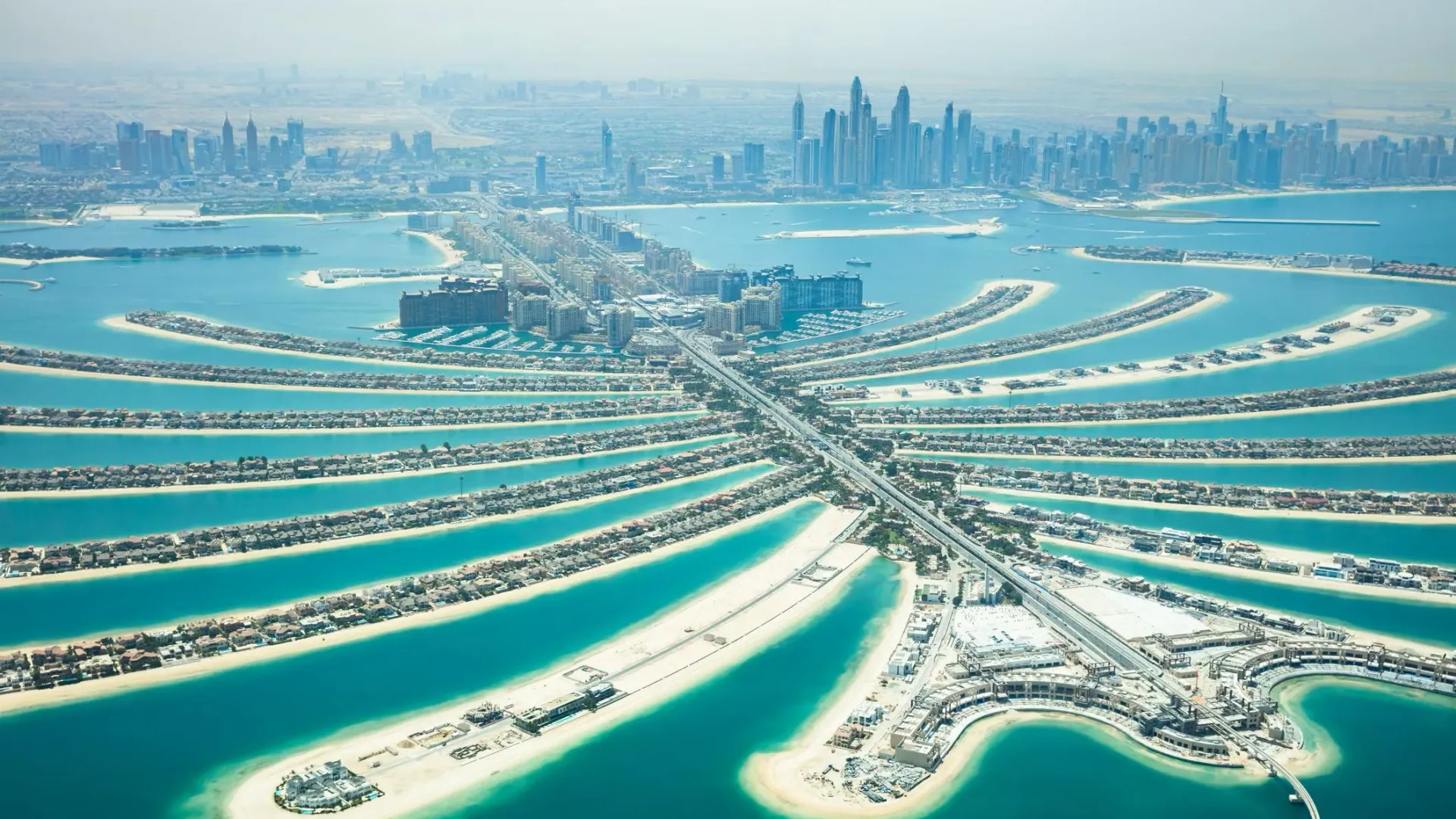
Dubai Property Market Softens in 2026: Why Buyers Gain Leverage While Off-Plan Demand Stays Strong

Quick answer
💡 Key Takeaways
Dubai Property Market Softens in 2026: Why Buyers Gain Leverage While Off-Plan Demand Stays Strong
Dubai property market softens 2026 is the right headline, but only if we explain it properly. The newest market reporting from Khaleej Times, Gulf News, Arabian Business, and Dubai Land Department all points to the same conclusion: Dubai has entered a more stable phase after an extraordinary run, yet the market is still supported by deep transaction volume, strong investor inflows, and resilient off-plan demand. This is not a crash story. It is a leverage story.
Khaleej Times framed the shift as the first quarterly dip since the pandemic era, while still noting that values remain up year on year. Gulf News reported AED139.1 billion in Q1 2026 residential sales across 44,200 home transactions, with off-plan making up 73% of sales even as price growth and rental growth started cooling. Dubai Land Department then reinforced the bigger picture: AED252 billion in Q1 2026 transactions, 60,303 total deals, 29,312 new investors, and AED148.35 billion in foreign investment. That is not what a broken market looks like.
What happened
The most important change is tone. Dubai’s market is no longer being described as a one-direction boom where everything rises at once. Instead, the live coverage suggests a market moving into a more mature and disciplined phase. Khaleej Times highlighted the first quarterly softening since the post-pandemic upcycle began, but also emphasized that the market’s underlying fundamentals remain intact.
Gulf News added the operating detail buyers actually need. Q1 2026 residential sales hit AED139.1 billion across 44,200 home deals, and off-plan still accounted for roughly 73% of the total. That means demand has not disappeared. It has simply become more selective. Arabian Business captured the same mood by describing the shift as a move from boom conditions toward long-term growth.
Why it matters for Dubai real estate right now
When a fast market softens without losing liquidity, serious buyers gain one thing they usually do not get in a hype cycle: leverage. Sellers become more open to negotiation. Developers may become more flexible on payment structures. Buyers have more time to compare quality, location, and exit logic instead of chasing listings emotionally.
The reason this matters in Dubai specifically is that the transaction base is still very strong. DLD’s Q1 figures — AED252 billion in transactions, 60,303 deals, 29,312 new investors, and AED148.35 billion in foreign investment — tell us capital is still moving into the city. So the market is not distressed across the board. It is simply less forgiving of weak assets, overpriced units, and generic supply.
That is a healthier environment for real investors. In overheated phases, mediocre stock can look brilliant because momentum hides its flaws. In a calmer phase, quality differences become obvious. That helps buyers avoid mistakes and forces better discipline on the sell side.
Why off-plan demand is still strong
One of the easiest mistakes right now is assuming that softer headline sentiment means off-plan demand must be weakening sharply. Gulf News’ Q1 2026 number says otherwise: about 73% of residential sales were off-plan. That is a huge share, and it shows buyers still believe in Dubai’s future supply story when the developer, location, and payment structure make sense.
Off-plan remains attractive because it offers staged payment terms, newer product, and a way to access growth corridors before full maturity. In areas like Dubai South, Dubai Creek Harbour, Meydan, and selected master-planned communities, buyers still see the value of entering early if the asset has strong delivery logic and the developer has execution credibility.
What has changed is not demand itself, but tolerance for weak off-plan propositions. Buyers are asking harder questions about completion certainty, quality, resale depth, and whether the handover timing aligns with supply coming into the market. That is the right kind of caution.
Who should pay attention
End-users who felt priced out in the hottest phase
If you are buying a home to live in, a softer market can be good news. You may now have a little more room to negotiate on ready stock in places like Business Bay, Jumeirah Village Circle, Arjan, or secondary inventory in Dubai Marina. You are also less likely to be pushed into rushed decisions by extreme bidding pressure.
Investors looking for cleaner entries
Investors should pay attention because this kind of market often creates the best risk-adjusted entries. You can still buy into a city with strong capital inflows, but with more selective pricing. That is a better setup than buying at the peak of emotional momentum.
Landlords and sellers
Landlords need to grade their own assets honestly. If the unit is prime, well-located, and scarce, demand may still be very strong. If it is average and surrounded by competitive supply, expecting yesterday’s pricing power is risky. In this phase, presentation, pricing discipline, and realistic expectations matter a lot more.
Where buyers gain the most leverage
Leverage is not uniform across Dubai. The strongest advantage usually appears in stock that is plentiful, less differentiated, or slightly overpriced relative to competing inventory. Parts of Business Bay, JVC, Arjan, and supply-heavy apartment corridors can offer meaningful negotiating room when sellers want to keep momentum.
The opposite is also true. Best-in-class stock in Palm Jumeirah, Downtown Dubai, Emirates Hills, Dubai Hills Estate, and the strongest branded or waterfront product can still behave defensively because the buyer pool stays deeper. That is why buyers should not confuse broad market softening with automatic bargains in every prime building.
If you want context on how this selective trend has been playing out, our recent coverage on Dubai property transactions in 2026 and Dubai prime property prices shows the same split: liquidity remains strong, but quality matters more than ever.
Joseph’s take from the agent’s desk
From the agent side, this is the kind of market I actually prefer for clients because it rewards discipline. When everything is surging, buyers often mistake speed for strategy. Right now, we can be more precise. We can compare real deal quality, push harder on price or terms where the stock is average, and still move fast when a genuinely strong unit appears.
The biggest mistake I would avoid is reading a softer headline and assuming broad distress is around the corner. That mindset makes buyers wait for discounts that often never show up in the strongest buildings. The better approach is to identify where softness is real, where demand is still sticky, and then act with a clear objective.
The contrarian angle: softer can be safer
A lot of buyers think a hotter market is safer because prices are rising fast. In reality, that can be the more dangerous moment because poor underwriting gets hidden by momentum. A softer but liquid market is often safer for long-term investors because the spread between a smart buy and a weak buy becomes visible again.
That is exactly what we are seeing now. If the wider market is stabilizing while DLD still reports huge transaction volume and investor inflow, buyers can make better decisions without losing the benefit of a fundamentally active city. That is a much better environment for serious capital than a frenzy built on fear of missing out.
Best response and strategy now
1. Use softness to negotiate, not to freeze
If you find the right asset, use the current mood to negotiate better price, payment terms, or closing conditions. Do not assume that waiting endlessly is a strategy in itself.
2. Separate ready leverage from off-plan leverage
Ready properties may offer more direct price negotiation. Off-plan deals may offer more flexibility through payment plans, fee waivers, or developer incentives. They are not the same kind of leverage.
3. Focus on areas with both demand and exit logic
Dubai Hills Estate, selective Downtown Dubai stock, Dubai Marina, Palm Jumeirah, and growth corridors with real infrastructure support remain stronger than purely speculative choices. For off-plan, execution quality matters more than brochure appeal.
4. Stress-test resale depth
Ask who will realistically buy or rent this asset from you in two to five years. If the answer is vague, the property may be weaker than it looks.
5. Stay selective, not cynical
The right lesson from a softer market is to become more selective, not permanently bearish. Dubai still has demand, capital inflow, and development momentum. The market is simply asking better questions now.
What buyers and investors should do this week
If you are actively searching, build a shortlist that includes both one high-conviction ready property and one high-conviction off-plan option, then compare them on cash flow, payment exposure, and resale depth. In many cases, the right move is not choosing a market narrative. It is choosing the better asset within that narrative.
If you want a grounded view of where the leverage really is, start with our buyer advisory page or message us through Astraterra’s contact page. We can help you compare live opportunities, benchmark asking prices, and decide whether your leverage is strongest in ready stock or in a carefully chosen off-plan deal.
FAQs about the softer Dubai property market in 2026
Is Dubai’s property market crashing in 2026?
No. The latest reporting points to softening and stabilization, not collapse. Transaction volumes, investor inflows, and off-plan demand remain strong by most global standards.
Why are buyers gaining leverage now?
Buyers gain leverage when price growth cools, supply competition becomes more visible, and sellers or developers need to work harder to secure decisions. That creates more room for negotiation and comparison.
Is off-plan still worth buying in a softer market?
Yes, if the project has strong developer credibility, location logic, and payment structure. Gulf News reported off-plan still represented roughly 73% of Q1 2026 residential sales, which is a strong demand signal.
Which areas are most resilient right now?
Prime and best-in-class stock in Palm Jumeirah, Downtown Dubai, Emirates Hills, Dubai Hills Estate, and leading waterfront assets tend to stay more defensive than generic inventory in supply-heavy zones.
Should investors wait for bigger discounts?
Some investors should wait, but many should not. The better question is whether the specific asset is overpriced today. In the strongest buildings, the dramatic discounts many buyers imagine often never appear.
How can Astraterra help in this market?
We help buyers and investors identify where negotiating leverage is real, compare ready versus off-plan opportunities, and avoid weak assets hiding behind optimistic listing prices. If you want a live shortlist and pricing benchmark, we can build one around your exact budget and timeline.
Frequently Asked Questions
Joseph Toubia
CEO & Founder, Astra Terra Properties
RERA-certified real estate professional (BRN 54738) specialising in Dubai off-plan properties, investment advisory, and Golden Visa guidance. Based in Dubai.
Related Tools & Resources
Free calculators and guides to help you make smarter property decisions in Dubai.
Ready to Invest in Dubai Property?
Compare off-plan project details, payment schedules and handover terms, or explore ready properties for sale across Dubai.