
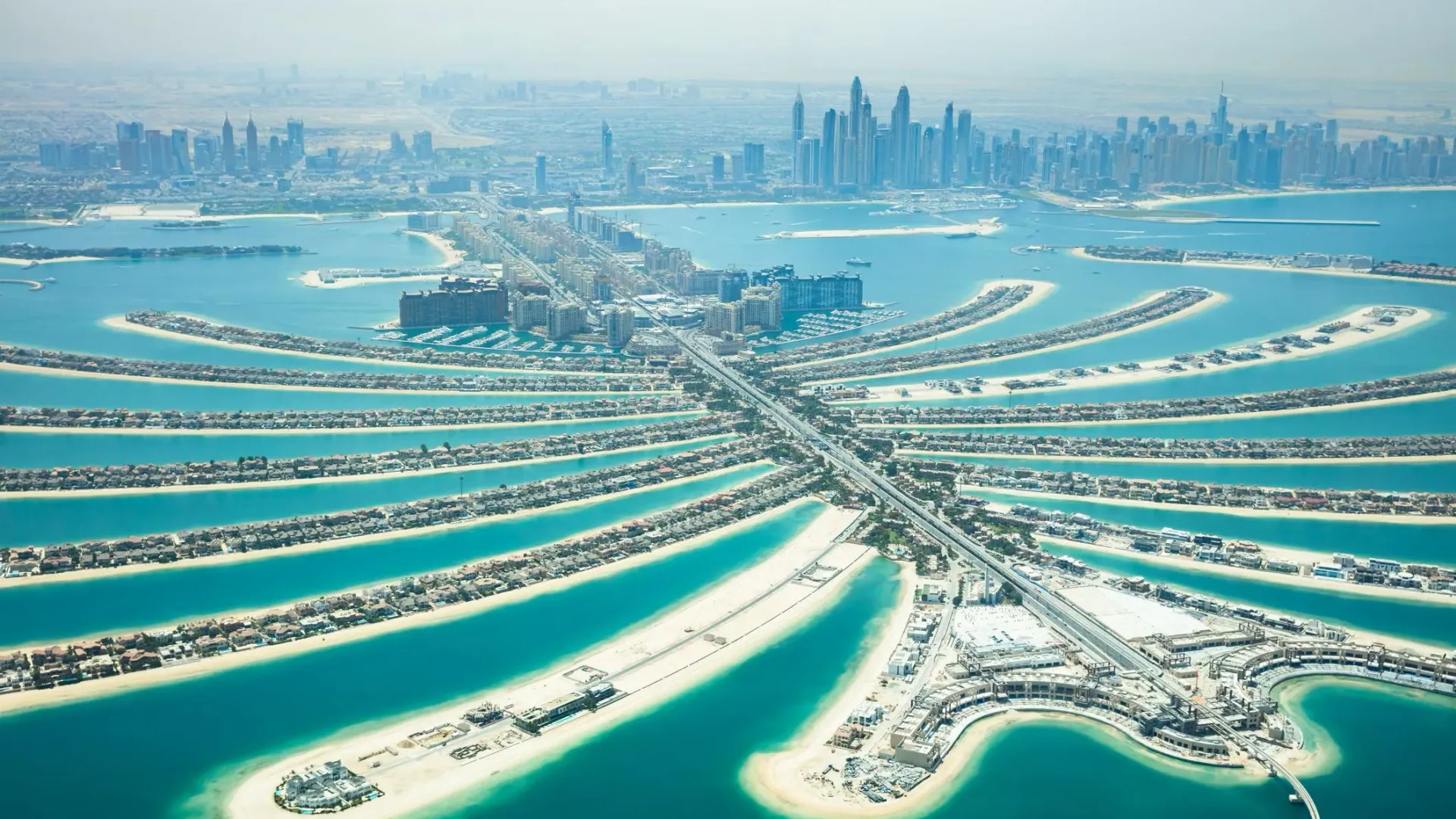

Dubai Property Transactions 2026: Why Fast Sales Volume Still Favors Selective Buyers
Quick answer
💡 Key Takeaways
Dubai Property Transactions 2026: Why Fast Sales Volume Still Favors Selective Buyers
Dubai property transactions 2026 still look fast on paper, but the buyers winning this market are not the ones chasing every launch. They are the ones getting more selective as supply broadens, handovers accelerate, and the market shifts from easy momentum to disciplined execution. That is the real read from this week’s data stack: Dubai Land Department’s Q1 release, Gulf News reporting on Colliers, Khaleej Times coverage of a softer but intact market, Arabian Business transaction reporting, Reuters context on regional tension, and The National’s fresh rental-screening coverage all point in the same direction. Dubai is still liquid. It is just becoming less forgiving.
That distinction matters. DLD said Q1 2026 transactions reached AED252 billion across 60,303 transactions, with 29,312 new investors entering the market and AED148.35 billion in foreign investment. Gulf News, citing Colliers, said the UAE has moved into a more balanced and sustainable growth phase while Dubai stayed resilient. Khaleej Times reported that the first quarterly dip since the pandemic should be read as moderation rather than collapse. Arabian Business coverage showed residential sales were still running hard in early 2026, with off-plan remaining dominant. In plain English: the market is still moving, but it is rewarding sharper judgment.
That is why I think buyers need to stop asking whether Dubai is “hot or cold” and start asking where liquidity stays strongest if the market keeps normalising. In 2026, the edge is not owning any Dubai asset. The edge is owning the right asset in the right district, at the right entry price, with a clear resale and rental story.
What happened this week
The strongest live angle is not a single flashy launch. It is the combination of fresh transaction strength and a clearer message that the market is becoming more segmented.
Dubai Land Department’s Q1 2026 release gave the cleanest top-line signal: AED252 billion in transactions, 60,303 deals, 29,312 new investors, and AED148.35 billion in foreign investment. Those are not weak-market numbers. They show Dubai still has deep capital inflows and real buyer participation.
Gulf News then added the Colliers layer on May 20, saying the UAE had entered a more balanced and sustainable growth phase, not a panic phase. The same report highlighted that Dubai recorded more than 10,000 apartment handovers for a second straight month, with around 65,000 apartments and 12,500 villas expected by year-end. That matters because fast transactions in a rising-supply environment tell you demand is still real, but future buying decisions will face more comparison and less blind urgency.
Khaleej Times sharpened the message: early-2026 softening should be treated as moderation, not collapse. ValuStrat’s Q1 review showed the first quarterly decline since 2020, yet residential values were still up year on year. Arabian Business coverage kept the momentum side visible too, with fresh reporting that Dubai logged roughly 57,300 residential sales in the first four months of 2026, and that off-plan was still dominating the flow of deals.
Reuters adds an important macro layer. Its May coverage on Dubai’s safe-haven status being put to the test during regional tension matters because it reminds buyers that resilience today is happening in a tougher geopolitical backdrop, not in a frictionless boom. The National’s May tenant-screening coverage matters for a different reason: it shows the market is maturing operationally too, especially on the rental side, where better screening supports better landlord underwriting and cleaner asset selection.
Why fast volume still favors selective buyers
When transaction volume stays high while the market gets more balanced, selectivity becomes more valuable, not less. In overheated markets, buyers can get lazy because broad price expansion hides mediocre decisions. In a more normal 2026 market, mediocre assets are more exposed.
That is the contrarian point I care about most. Strong volume is not a reason to buy faster. It is a reason to compare harder. If there are more handovers, more launches, and more investor choice, buyers should demand better layouts, cleaner payment structures, stronger developers, and more credible exit depth.
In practice, that means a completed apartment in Business Bay near Sheikh Zayed Road, a well-positioned unit in Dubai Hills Estate with real family demand, or a sensibly priced apartment in Jumeirah Village Circle can outperform a more glamorous brochure-led project simply because the exit and rental pool is wider. Fast market activity helps quality assets more than weak ones because liquidity clusters around what buyers can still trust.
I also think the supply story is being misunderstood. Extra handovers are not automatically bearish. They are only bearish for stock that relied on scarcity marketing rather than practical demand. If a property sits in a district with real tenant depth, usable access, and everyday livability, more market balance can actually help serious buyers enter better.
Where liquidity still looks strongest in 2026
If I had to prioritise where selective buyers should still focus, I would divide the city into three groups.
First: core mixed-use districts with proven resale depth, such as Downtown Dubai, Business Bay, and Dubai Marina. These are not always the cheapest buys, but they remain easier to understand. Buildings near Burj Khalifa Boulevard, the Business Bay canal edge, or established Marina towers still benefit from recognisable location value and broader end-user awareness.
Second: high-quality family and end-user districts such as Dubai Hills Estate, Arabian Ranches, and stronger pockets of Al Furjan. These areas matter because selective markets tend to reward livability. Buyers who can choose more carefully often lean toward communities with schools access, cleaner roads, parks, and practical daily use instead of pure hype.
Third: infrastructure-backed value corridors, including Dubai South, Dubai Creek Harbour, and selected outer growth districts. These are not all equal. But in the right projects, they can still work because the next wave of demand is tied to infrastructure and relative affordability, not just speculative excitement.
The mistake is treating all three groups with the same strategy. Downtown Dubai and Business Bay are usually about liquidity and recognition. Dubai Hills Estate is often about end-user resilience. Dubai South and Creek Harbour are more about timing, delivery, and how much future demand is already priced in. Smart buyers should underwrite each category differently.
Who should pay attention right now
Investors chasing rental durability should pay attention because selectivity in the sales market often improves relative pricing for assets that still lease well. The National’s tenant-screening coverage also hints at a more professional rental environment, which matters if you are underwriting renewal quality and tenant stability.
End users upgrading in 2026 should pay attention because this is a better comparison market than a year ago. More handovers and broader choice mean stronger buyers can negotiate without assuming sellers are desperate.
Overseas investors should pay attention because DLD’s AED148.35 billion in foreign investment shows international demand is still present. But overseas capital should not mistake foreign inflow for universal safety. Some micro-markets will stay liquid. Others will feel the weight of extra supply much faster.
Owners thinking about an exit should pay attention too. High citywide transactions do not guarantee the same resale speed for every product. If your asset sits in a supply-heavy cluster with little differentiation, 2026 may be the year to price realistically rather than anchor to last-cycle optimism.
Joseph’s Take: this market rewards filters, not excitement
From my desk, the biggest opportunity in this market is not spotting that Dubai is still active. Everyone can see that from the top-line numbers. The real opportunity is recognising that active and easy are no longer the same thing.
If I were advising a buyer today, my filter would be simple. First, does the district still attract real end-user or tenant demand beyond investor storytelling? Second, is the developer or building credible enough to hold value if more stock competes nearby? Third, would I still like this asset if appreciation slows and I need to rely on rent or a patient exit? Fourth, am I paying a price that leaves room for a normal market rather than a euphoric one?
I would rather buy a strong apartment in a proven Business Bay or Dubai Hills cluster than a weaker “future hotspot” unit that needs perfect sentiment to work. I would rather buy the right townhouse in a usable family community than a generic villa product with no clean comparative edge. And I would definitely rather miss a marketing-driven headline than own a property I cannot defend six months later.
My view is that 2026 still offers opportunity, but the opportunity is narrower and smarter. That is good news for disciplined buyers.
Best response for serious buyers now
Start with citywide context, then drop quickly to micro-market reality. DLD’s Q1 strength tells you there is still plenty of demand in Dubai. It does not tell you which tower, which block, or which layout deserves your money.
Next, pressure-test every deal with conservative assumptions. If you are buying for income, haircut the expected rent. If you are buying off-plan, assume delivery competition will be heavier by handover. If you are buying for resale, compare against the fresh pipeline in the same district rather than old comps from a tighter market.
Third, use the market’s improving balance. Khaleej Times and Gulf News are both telling the same broader story: Dubai is not falling apart, but the market is getting less one-directional. That is exactly when better buyers create edge.
Fourth, keep your shortlist focused. Compare a handful of serious assets in places like Business Bay, Dubai Hills Estate, Al Furjan, JVC, or Dubai South instead of getting distracted by ten different launches. Breadth feels productive; disciplined narrowing is usually where the value appears.
- Key takeaway 1: 2026 transaction strength proves Dubai is still liquid.
- Key takeaway 2: Rising handovers and broader supply mean asset selection matters more than last year.
- Key takeaway 3: Selective buyers should prioritize proven demand, delivery quality, and realistic exit logic.
If you want help comparing live opportunities instead of market headlines, review our Dubai property listings, explore our off-plan opportunities, or read our recent guides on Dubai’s apartment market in 2026 and why quality villa communities are outperforming.
FAQs
Are Dubai property transactions still strong in 2026?
Yes. Dubai Land Department said Q1 2026 reached AED252 billion in transactions across 60,303 deals, which confirms that citywide liquidity is still strong.
Does a more selective market mean prices are crashing?
No. The fresh Khaleej Times and Colliers-linked reporting points more toward moderation and segmentation than collapse. Some segments are cooling, but citywide activity remains substantial.
Why do selective buyers have an advantage now?
Because broader supply and more handovers create more comparison opportunities. Buyers who underwrite carefully can avoid weaker stock and negotiate harder on stronger stock.
Which areas look safer for liquidity?
Core mixed-use districts such as Downtown Dubai, Business Bay, and Dubai Marina usually remain easier to understand, while Dubai Hills Estate and stronger family communities offer end-user resilience.
Is off-plan still working in 2026?
Yes, but it should be treated more carefully. Arabian Business reporting suggests off-plan still dominates many transactions, yet buyers should be stricter about developer quality, delivery timing, and competing future supply.
Why does tenant screening matter for buyers?
Because a more professional rental ecosystem can support better landlord underwriting, cleaner tenancy outcomes, and more confidence in income-focused assets.
What should investors do before committing?
Compare live comps, estimate conservative rent, factor service charges honestly, and test whether the asset still works if price growth slows.
Sources
This analysis is grounded in fresh May 2026 reporting and official market releases, including Dubai Land Department’s Q1 2026 transaction announcement; Gulf News coverage of the Colliers report on a more balanced growth phase; Khaleej Times reporting on early-2026 moderation and April sales; Arabian Business reporting on Q1 and first-four-month residential sales with off-plan dominance; Reuters reporting on Dubai’s safe-haven status under regional tension; and The National’s coverage of the UAE tenant credit-check system.
Astra Terra Properties
Oxford Tower, Business Bay, Dubai
+971 58 558 0053
www.astraterra.ae
Joseph Toubia
CEO & Founder, Astra Terra Properties
RERA-certified real estate professional (BRN 54738) specialising in Dubai off-plan properties, investment advisory, and Golden Visa guidance. Based in Dubai.
Related Tools & Resources
Free calculators and guides to help you make smarter property decisions in Dubai.
Ready to Invest in Dubai Property?
Browse our curated selection of off-plan projects with flexible payment plans from 10% down, or explore ready properties for sale across Dubai.