

← Back to Blogs
All ArticlesContact Astraterra
May 5, 2026

Dubai Property Market’s First Quarterly Decline in 2026: What Buyers and Investors Should Do Now

By Joseph Toubia | RERA Certified Agent | Astra Terra Properties
Dubai Property Market’s First Quarterly Decline in 2026: What Buyers and Investors Should Do Now

💡 Key Takeaways

Dubai property market first quarterly decline 2026 is a reset signal, not a collapse signal. Valuations cooled, but annual growth and transaction volumes still show strong underlying demand.

The strongest proof of resilience is in the capital flow. Q1 2026 transactions hit AED252 billion, investments reached AED173 billion, and foreign investment rose to AED148.35 billion according to Dubai Land Department.

April confirms the market is still moving. Khaleej Times reported AED68.56 billion in April transactions and AED19.7 billion in off-plan apartment deals, the strongest monthly off-plan apartment value of the year.

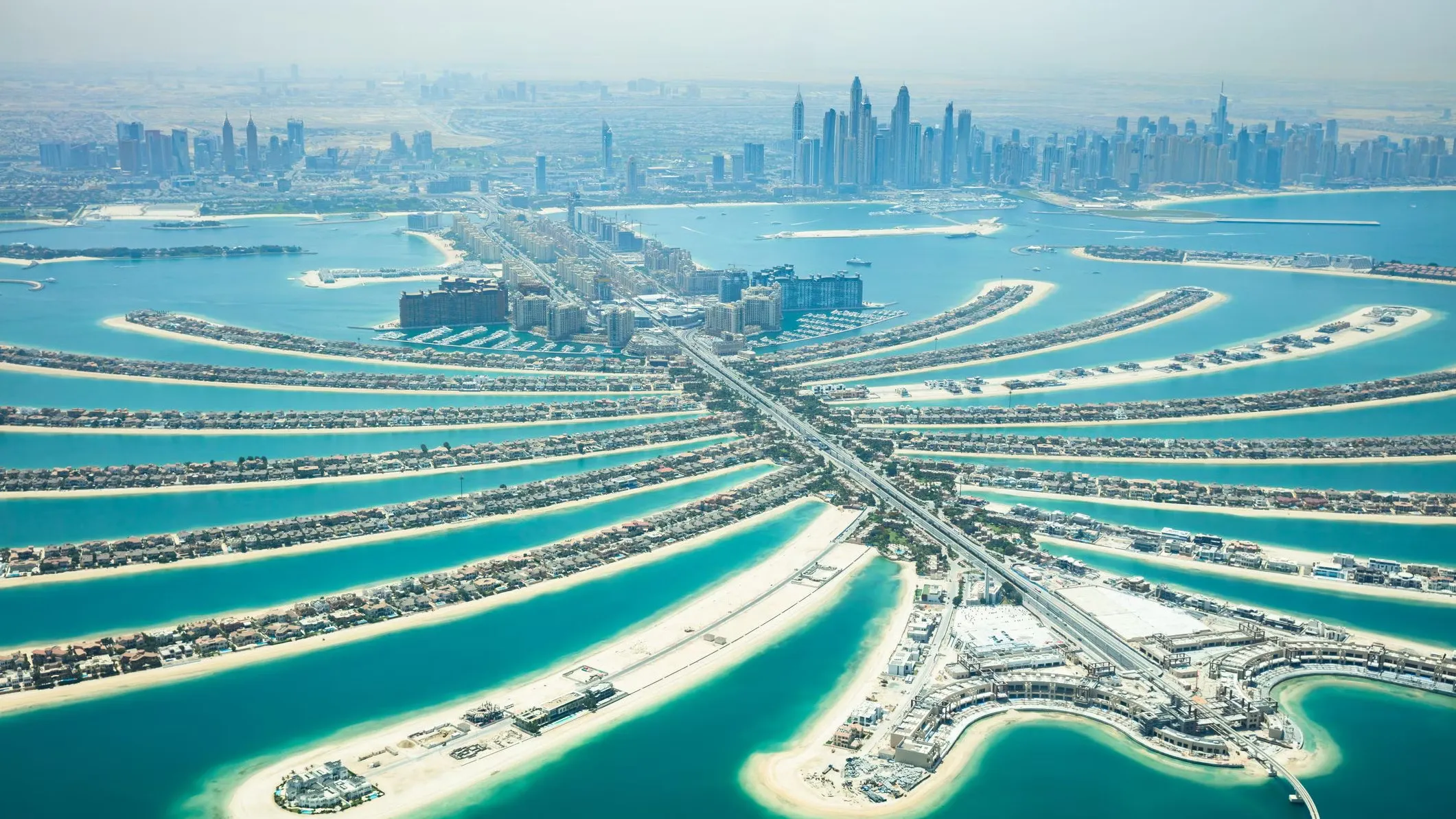
Prime areas are holding better than speculative stock. Gulf News highlighted continued firmness in Dubai Hills Estate, Palm Jumeirah, Arabian Ranches, Dubai Marina, Downtown Dubai, and Business Bay.

The best strategy now is selective aggression. Stay active, negotiate hard, and buy quality instead of waiting passively for a crash that may never hit prime stock.

What happened in Dubai property market first quarterly decline 2026?

The fresh trigger for this blog is Arabian Business coverage on May 4, 2026, citing ValuStrat data that residential capital values fell 3.8% in Q1 2026 to 229.2 points. That matters because it is the first quarterly contraction since 2020, which immediately changes the tone of the Dubai market conversation. After years of relentless price appreciation and repeated “record high” narratives, even a modest reset gets attention.

But the headline needs context. The same reports noted annual growth was still intact. So while quarter-on-quarter momentum cooled, the market has not erased the gains accumulated over the broader cycle. In plain language: prices are no longer sprinting in every direction, but the market is still standing on a much higher base than it was a year or two ago.

Then you have the official transaction data. Dubai Land Department said Q1 2026 real estate transactions reached AED252 billion, up 31% year on year, across 60,303 transactions, with 718,160 total real estate procedures recorded in the quarter. Real estate investments reached AED173 billion across 57,744 transactions, while the investor base grew to 48,448, including 29,312 new investors, up 14%. Foreign investment value also rose to AED148.35 billion. Those are not distress-market numbers.

The April follow-through also matters. Khaleej Times reported April 2026 transactions of AED68.56 billion, up more than 20%, while off-plan apartment sales hit AED19.7 billion across 8,812 transactions, the strongest monthly off-plan apartment value this year. Dubai Islands led with AED2.6 billion in off-plan apartment sales, followed by First Area of Al Khairan at AED1.5 billion and Airport City at AED1.4 billion. When a market is supposedly weakening but off-plan absorption remains that strong, buyers need a more nuanced interpretation.

Why this matters for Dubai real estate right now

The most important takeaway is that Dubai is splitting into micro-markets. During the strongest part of a bull cycle, almost everything rises together. During a normalization phase, quality starts separating from hype. That is healthy. It means location, developer credibility, payment structure, handover visibility, and true end-user demand begin to matter more again.

Gulf News captured this clearly in its fresh reporting: there is no visible wave of distress sales, villa demand remains firm in Dubai Hills Estate, Palm Jumeirah, and Arabian Ranches, and apartments in Dubai Marina, Downtown Dubai, and Business Bay are still holding steady. Negotiation has returned, but that is not the same as panic. In fact, a functioning market usually includes negotiation. The absence of widespread distressed inventory is a major reason I do not see this as the start of a broad crash.

This also matters for search intent and buyer psychology. There is already strong demand around “Dubai property prices 2026” and “market outlook” style queries, and many buyers are asking the same question in different forms: if prices have paused, should I buy now, wait, or shift strategy? The answer depends less on the macro headline and more on what exactly you want to own.

For the broader Dubai real estate story, the contradiction is actually bullish in one sense. A market that can absorb geopolitical nerves, valuation moderation, and tougher buyer scrutiny while still attracting foreign capital and new investors is showing resilience. That does not mean all segments are equally attractive. It means the city’s investment case is strong enough that the market can cool without immediately breaking.

Who should pay attention to this shift?

First, end-users who were priced out during the last run-up should pay attention. If you have been waiting for every seller to become desperate, you will probably keep waiting. But if your goal is to buy a home in a strong community such as Dubai Hills Estate, Arabian Ranches, or selected parts of Business Bay, a calmer market can give you better negotiation room on price, post-handover payment terms, or seller flexibility on transfer timing and inclusions.

Second, yield-focused investors should pay attention because a flatter price environment changes the return equation. When capital appreciation is no longer doing all the heavy lifting, rental durability becomes more important. That pushes attention toward proven rental districts like Dubai Marina, Jumeirah Village Circle, Business Bay, and selected Downtown Dubai assets where tenant depth is easier to underwrite. If you want a broader strategic primer, our guides on stable rental demand in Dubai and ready vs off-plan in Dubai are useful companion reads.

Third, off-plan buyers need to pay attention because this is where discipline really matters. April’s AED19.7 billion off-plan apartment volume proves demand is still there, but not every launch deserves the same confidence. In a cooling phase, I would rather buy from a credible developer in a location with real absorption than chase a glossy launch in a weak submarket just because the payment plan looks easy.

Fourth, luxury buyers should watch this carefully. DLD said luxury real estate investment reached AED87.71 billion in Q1 2026, up 26%, and Khaleej Times highlighted individual April deals above AED100 million at Aman Residences and Baccarat Dubai Hotel & Residences. Ultra-prime demand clearly remains alive. But even in luxury, the smart money is becoming more selective about brand, privacy, layout quality, and long-term scarcity.

Joseph’s Take: cooling is where professionals earn their edge

From the agent’s desk, I actually prefer this kind of market to the frenzy phase. When everything is running, it becomes harder to protect buyers from overpaying because speed overtakes judgment. In a cooling but still active market, we can negotiate more intelligently, compare developer quality more honestly, and structure deals around downside protection instead of pure FOMO.

I have seen this pattern before in Dubai: headlines suggest momentum is fading, but on the ground the best stock still moves when it is priced correctly. What changes is that weak stock no longer hides behind market excitement. Units with compromised layouts, inflated launch pricing, or secondary locations start getting exposed. That is good for serious buyers because it rewards preparation.

The contrarian point is this: the first quarterly decline is not automatically a reason to wait. For many buyers, it is the first sign that price discovery is returning. If you are targeting prime or defensible communities, waiting for a dramatic crash may cost you more than negotiating a better entry now. The buyers who usually win are the ones who stay active while others are frozen by headlines.

Looking for Dubai property advice?

Get a free consultation from our RERA-certified team

💬 WhatsApp Us — Free Consultation

Practical strategy now: what buyers and investors should do

1. Separate prime resilience from broad-market noise. Do not assume all areas are moving the same way. Dubai Hills Estate, Palm Jumeirah, Downtown Dubai, Dubai Marina, and established parts of Business Bay behave differently from oversupplied or overly speculative pockets. If your priority is wealth preservation, focus on communities with proven resale depth, strong tenant demand, and limited truly comparable stock.

2. Use negotiation, but do not confuse negotiation with distress. Gulf News noted transactions are still closing within roughly 5% to 15% of peak values in many cases. That means buyers can push for fairer pricing, but they should not expect blanket fire-sale discounts on quality assets. The practical move is to negotiate on total deal value: price, payment schedule, service charge exposure, handover risk, snagging allowances, and seller flexibility.

3. Be stricter on off-plan underwriting. With April off-plan apartment sales at AED19.7 billion, developers still have momentum. But in this market, I would underwrite delivery credibility, construction progress, unit density, and exit liquidity far more carefully. Ask what happens if your planned exit occurs in a softer resale window. Projects in Dubai Islands, Airport City, and Al Khairan may offer upside, but only if the specific developer and product make sense.

4. Prioritize rental math over story-selling. If prices pause while rents remain supported by population growth and relocation demand, income quality becomes a bigger part of total return. One-bedroom and two-bedroom apartments in Dubai Marina, Business Bay, JVC, and selected Downtown Dubai towers still deserve close attention because they attract broad tenant demand and are easier to re-let than highly niche luxury stock.

5. Keep liquidity for optionality. In transitional markets, cash or near-cash flexibility matters. If you are a cash buyer, you have more leverage. If you are financing, get clear on your mortgage capacity before shopping so you can move when the right asset appears. Not every opportunity will come from a big advertised discount; sometimes the edge is simply being ready when a well-priced unit appears.

6. Match strategy to objective. End-users should lean toward quality, livability, and long-term comfort. Investors seeking cash flow should emphasize tenant depth and expense discipline. Investors seeking capital appreciation should avoid the temptation to overpay for branding alone and instead look for future scarcity or infrastructure-supported demand. If you are exploring broader 2026 market positioning, our article on where money is moving in Dubai real estate right now adds another useful lens.

What this means by segment: prime, off-plan, and value plays

Prime segment: This is where I see the least evidence of weakness. Palm Jumeirah villas, well-located Dubai Hills Estate homes, select Downtown Dubai residences, and tightly held branded assets remain supported by limited supply and high-net-worth demand. DLD’s Q1 luxury investment figure of AED87.71 billion reinforces that point. Buyers in this segment may get modest negotiation opportunities, but they should not wait for a deep repricing unless a specific seller situation creates it.

Off-plan segment: This remains liquid, but more discriminating. The fact that off-plan apartment activity hit AED19.7 billion in April tells us investors still believe in Dubai’s medium-term story. The risk is not that off-plan demand disappears overnight; it is that weaker projects become harder to exit if the market keeps normalizing. Developer reputation, payment plan realism, and true area demand should carry more weight than brochure aesthetics.

Value segment: This is where some of the most interesting opportunities can emerge. When buyers become more selective, overlooked but functional communities can offer better value entry points, especially for rental investors. JVC, selected Al Furjan buildings, and some Business Bay inventory can still perform well when the unit layout, building operations, and price-per-square-foot stack up. In this segment, discipline usually matters more than prestige.

Key risks buyers should not ignore

Even though I do not read this as a distressed market, there are still real risks. The first is buying based on old assumptions from the acceleration phase. If you underwrite every purchase assuming rapid appreciation, you are taking unnecessary risk. The second is overestimating the safety of every off-plan launch just because transaction volumes are high. Volume does not protect weak projects equally.

The third risk is confusing strong city-level data with universal asset strength. DLD’s AED252 billion quarter and AED148.35 billion in foreign investment are powerful macro signals, but investors buy assets, not headlines. A mediocre apartment in an average building does not become great just because the city’s total transaction value is high. Asset selection is doing much more of the work now.

The fourth risk is emotional timing. Some buyers panic at the first sign of a dip and rush to wait forever. Others treat any cooling headline as proof they can bully sellers. Both instincts are usually costly. The better approach is evidence-based: watch transaction depth, inspect actual comparable deals, study service charge burden, and understand whether your target submarket is supply-constrained or not.

Frequently asked questions

Is Dubai property market first quarterly decline 2026 a sign of a crash?

No. The available data suggests normalization, not collapse. Valuations dipped in Q1, but DLD transaction value, investment inflows, and April sales activity remained strong.

Should buyers wait for lower prices in Dubai?

Only if the asset you want is clearly overpriced or in a weaker submarket. In prime or high-demand communities, waiting for a major crash may be less effective than negotiating a better deal today.

Which Dubai areas still look resilient?

Fresh market reporting points to resilience in Dubai Hills Estate, Palm Jumeirah, Arabian Ranches, Dubai Marina, Downtown Dubai, and Business Bay, especially for well-positioned stock.

Is off-plan still safe in Dubai in 2026?

Off-plan is still active, but it is not equally safe across every project. Focus on credible developers, realistic delivery timelines, and locations with real demand rather than hype alone.

What data matters most right now?

Watch valuation trends, actual closed transaction activity, foreign capital inflows, rental demand, and how specific buildings or communities are trading relative to their peaks.

What should investors prioritize in a cooling market?

Rental resilience, downside protection, negotiation leverage, and exit liquidity. Cash flow quality matters more when price appreciation slows.

Is this a better market for end-users or investors?

Both can benefit, but in different ways. End-users may get better negotiation room, while investors can find stronger risk-adjusted entries if they stay disciplined on asset quality.

Final word

Dubai is entering a more mature phase of this cycle, and that is not a bad thing. When a market cools without losing transaction depth, investor inflows, or prime-area support, it becomes easier to separate real value from storytelling. For buyers and investors who do the work, this can be one of the best moments to enter with clearer eyes and better terms.

If you want help identifying which communities, buildings, or off-plan projects still make sense in this market, Astra Terra Properties can help you compare live opportunities with real transaction context instead of generic market noise.

Citations: Arabian Business, May 4 2026; Dubai Land Department, April 9 2026; Khaleej Times, May 2026; Gulf News, May 2026.

🌍 Investing in Dubai from Abroad?

We help international investors navigate Dubai's off-plan market. Free video consultation with Joseph Toubia, RERA licensed broker (BRN 54738).

WhatsApp: +971 58 558 0053Explore Dubai Areas

KEEP READING

Frequently Asked Questions

J

Joseph Toubia

Founder & CEO | RERA Certified Agent | Astra Terra Properties

Joseph Toubia is the founder and CEO of Astra Terra Properties, a full-service real estate agency headquartered in Business Bay, Dubai. With years of hands-on experience in the Dubai property market and RERA certification, Joseph specialises in helping buyers, investors, and tenants navigate the UAE real estate landscape with confidence.

📞 +971 58 558 0053✉️ info@astraterra.ae🌐 View Profile💬 WhatsApp Joseph

Quick answer

Dubai Property Market’s First Quarterly Decline in 2026: What Buyers and Investors Should Do Now focuses on dubai property, with practical guidance on area selection, rental resilience, service charges, livability, and resale logic for Dubai buyers in 2026.

Helpful next steps

Browse all blogsBuy property in DubaiRent property in DubaiNew off-plan launchesContact Astraterra

Ready to Invest in Dubai Property?

Browse our curated selection of off-plan projects with flexible payment plans from 10% down, or explore ready properties for sale across Dubai.

Browse Off-Plan Projects →Buy Ready Property →
Get Free Consultation