Joseph's Take: Which Freehold Areas Actually Deliver in 2026
I've been helping buyers navigate Dubai's freehold property market since before most of the communities on this list existed. Here's what I tell every client who walks into our Oxford Tower office in Business Bay and asks, "Where should I actually buy?"
First, stop thinking about the list as a simple directory. The 40+ freehold areas in Dubai are not created equal, and the distinction between them matters enormously to your returns. I've seen clients buy in the "right" freehold area but the wrong building, and underperform the market by 30% over four years. Location within the community matters as much as the community itself.
For pure yield, JVC remains my top recommendation for investors with budgets under AED 1.5M. Belgravia 2 by Ellington in District 12 has consistently commanded above-market rents because the Ellington finish quality is noticeably superior to commodity buildings in the same community. The premium tenants pay is real and measurable. We've placed clients in units there that rented within 7 days of listing — that's a 2026 market dynamic I don't see in budget buildings on Street 4 in District 17.
For capital appreciation with medium-term horizon (3–5 years), Al Furjan near Al Maktoum Airport is the most compelling structural story in Dubai's freehold market right now. The airport expansion is not speculative — it's contractually committed. When passenger capacity at Al Maktoum reaches even 50M (far from its 260M target), the demand for walkable residential property near that node will be in a completely different category. We bought our first client into Al Furjan in Q4 2024 at AED 770,000 for a 1BR. That same unit is now valued at AED 940,000.
For lifestyle buyers who plan to live in the property and rent occasionally, Dubai Marina and Downtown Dubai remain the two freehold communities that offer the most liquid secondary market should you ever need to sell. Premium matters here: Marina Gate I on Marina Promenade consistently outperforms generic towers in the same community. The Select Group finish quality, the Michelin-recommended Netsu at Marriott next door, and the walkability score make it a tenant magnet that supports your yield during the periods you're not in residence.
What I'd caution against: buying in a freehold area purely because it's "cheap." Dubai Production City (IMPZ) and Discovery Gardens offer technically freehold ownership, but the resale market depth is thin and capital appreciation has consistently lagged the wider market. These are yield plays for cash buyers, not appreciation stories. Know which game you're playing before you buy.
One thing that never changes: the DLD transfer fee is 4% on every transaction. In a freehold area, that 4% is paid on the full sale price. Factor it into your entry cost — it's the single largest transaction cost you'll face, and it sets your effective break-even point.
The Contrarian View: Are "Freehold" Labels Being Oversold?
Here's something the standard freehold guide won't tell you: not all freehold title in Dubai is equally liquid. There's a widespread assumption in the market that because a property is "freehold," it automatically comes with a deep pool of buyers should you want to exit. That is simply not true for all 40+ zones.
In communities like Mirdif, Warsan, and parts of Dubai Investment Park, expat freehold ownership technically exists but the buyer pool is thin. These communities attract more UAE national and long-term GCC buyers. If you're a foreign national buying in these zones expecting to sell quickly to another international buyer, you may find yourself waiting. Liquidity in these markets is measured in months, not weeks.
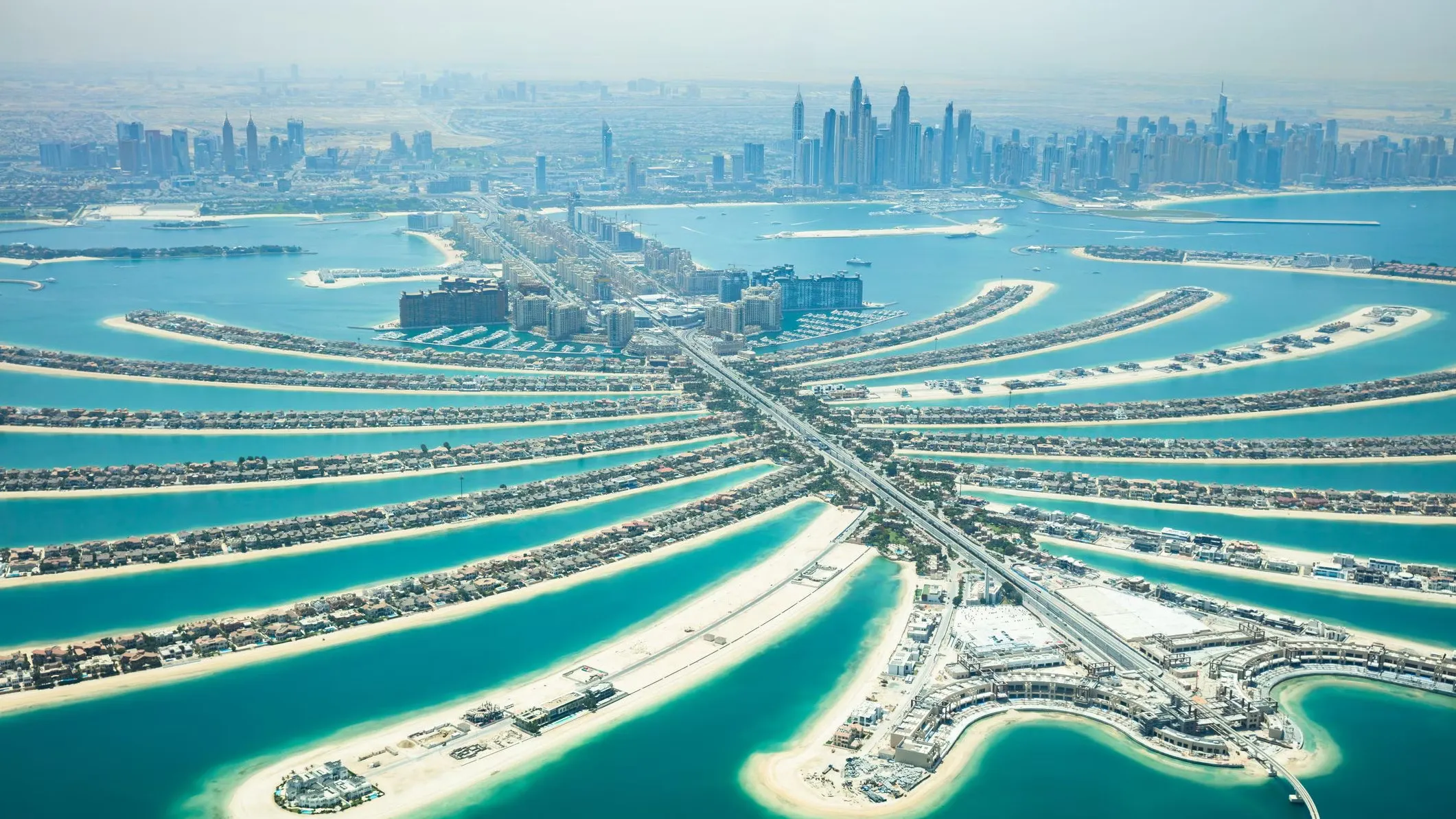
Contrast that with Downtown Dubai, Dubai Marina, and Palm Jumeirah — where the international buyer pool is so deep that well-priced units in quality buildings genuinely sell in under 30 days. Knight Frank's Dubai Prime Residential Monitor Q4 2025 confirmed that prime properties in these freehold zones are outperforming the wider market, with average days-on-market under 28 days for correctly-priced units.
The lesson: when evaluating freehold property in Dubai, ask not just "can I legally buy here?" but "who will I sell to, and how quickly?" Freehold title is a necessary condition for expat ownership, but it's not sufficient for a good investment. Secondary market depth is what actually protects your capital.
Freehold Villas and Villa Communities: Where Families Buy
The villa freehold communities in Dubai cater primarily to families seeking space, greenery, and school proximity. The most established names include:
Emirates Hills — Dubai's most prestigious gated villa community. Custom-built homes on Montgomerie Golf Course frontage. Prices range from AED 25M to AED 120M+. Not a community for first-time buyers, but the ultimate statement of freehold ownership in Dubai. Exclusive, low-turnover, and consistently appreciating.
Arabian Ranches I, II & III — Emaar's sprawling desert-themed villa community off Mohammed Bin Zayed City Road. Arabian Ranches I (Phase 1, 2003) offers mature trees and a different character to newer phases. 4BR Saheel villas in AR I now trade at AED 7M–10M. Arabian Ranches III (ongoing) offers off-plan townhouses from AED 2.8M on Dubailand Road with 60/40 payment plans. Families consistently rank AR as a top pick for its Jumeirah English-Speaking School and proximity to Sheikh Zayed Road.
Jumeirah Park & Jumeirah Islands — Two Nakheel-developed freehold communities west of JLT. Jumeirah Park offers 3–6BR villas from AED 4.5M–12M in a landscaped, low-density setting. Jumeirah Islands features 50 clusters of island villas surrounded by water features — a unique freehold product in Dubai's market. Both communities have seen strong appreciation (+14–18% YoY in Q4 2025).
The Meadows, The Springs, and The Views — Emaar's earliest freehold villa and townhouse communities, built between 2002–2006. The Meadows offers 4–7BR villas on Dubai Marina's hinterland, now trading at AED 7M–18M. The Springs townhouses (2–3BR) run AED 3.2M–5.5M. These communities have matured beautifully — large trees, established roads, and proximity to Dubai Internet City and Media City make them perennial expat favourites.
Al Barari — Dubai's ultra-luxury green freehold community on Al Barsha South's edge. 60% of the land is landscaped with botanical gardens, streams, and walking trails. Villas from AED 12M to AED 50M+. The Seventh Heaven apartments within Al Barari offer freehold apartment ownership in this exceptional natural setting from AED 2.5M.
Buying Freehold Property in Dubai as an Expat: The Step-by-Step Process
Understanding which freehold areas are available is only half the equation. Here's how the purchase process actually works for non-UAE nationals in 2026:
Step 1 — Identify your zone and property: Use the DLD-published list of designated areas. All properties in those communities are eligible for expat freehold purchase. Your RERA-registered agent (such as Astra Terra Properties, BRN 54738) can confirm specific building eligibility before you proceed.
Step 2 — Sign the Memorandum of Understanding (MOU): Once you've agreed on price, a Form F MOU is signed by buyer and seller. A 10% deposit (typically) is paid into escrow. This document is legally binding in Dubai.
Step 3 — Obtain a No Objection Certificate (NOC): The seller's developer issues an NOC confirming no outstanding payments, service charges, or encumbrances on the property. This typically takes 5–10 business days and costs AED 500–5,000 depending on the developer.
Step 4 — Transfer at the Dubai Land Department: Both parties (or their power of attorney representatives) appear at a DLD typing centre. The title deed is issued in the buyer's name. The DLD transfer fee of 4% is paid at this stage, along with the DLD registration fee (AED 2,000–4,000) and trust account admin fee (AED 4,000+VAT typically).
Step 5 — Update service charges and utilities: The community service charge account is transferred via the developer's management office. DEWA (water/electricity) and any other utilities are registered in your name. Full process end-to-end: 2–4 weeks for ready properties with clear title.
Freehold Property Dubai and Golden Visa Eligibility
Perhaps the most compelling secondary benefit of buying in a Dubai freehold area is the pathway it creates to UAE residency. Dubai's Golden Visa programme — launched in 2019 and expanded in 2022 — grants 10-year renewable UAE residency to property investors who meet the AED 2 million threshold.
Key rules as of Q1 2026: The property must be fully paid (not mortgaged, or if mortgaged, the equity must exceed AED 2M). The property must be in a designated freehold area — leasehold properties do not qualify. Off-plan properties can qualify if the purchase price exceeds AED 2M and the developer confirms the registration with the DLD. Multiple properties can be combined to reach the AED 2M threshold.
According to RERA 2025 data, over 12,000 Golden Visas were issued via the property investment route in 2025 — up 34% from 2024. The combination of freehold ownership rights and long-term residency has fundamentally altered the risk calculus for global investors, particularly those from countries where political or currency risk is elevated.
Investment Disclaimer: This content is for informational purposes only and does not constitute financial, investment, or legal advice. Property prices and yields are indicative and based on Q1 2026 market data. Past performance is not a guarantee of future returns. Consult with a RERA-registered agent before making any investment decision. Prices correct as of March 2026.
Frequently Asked Questions: Freehold Property in Dubai 2026
Can any foreigner buy freehold property in Dubai, or are there restrictions?
Any foreign national aged 21 years or older can purchase freehold property in Dubai's designated zones, regardless of nationality. There is no requirement to hold a UAE residency visa before purchasing — you can buy on a tourist visa. As of Q1 2026, buyers from over 180 nationalities have purchased in Dubai's freehold areas. The only hard restriction is that properties in non-designated (leasehold or UAE/GCC-only) areas remain unavailable to non-GCC nationals. Your RERA-registered agent will confirm zone eligibility before any purchase proceeds.
How many freehold areas are there in Dubai as of 2026?
As of 2026, the Dubai Land Department (DLD) has designated over 40 distinct freehold zones where non-UAE nationals can hold full ownership rights. This list has grown from an original 23 zones when the programme launched in 2002. Recent additions include Dubai Islands and new sub-zones within Mohammed Bin Rashid City (MBR City) and Dubai South. The DLD publishes the official list, which your RERA-licensed agent can provide for any specific property you're evaluating.
What is the minimum property price to buy freehold in Dubai?
There is no legally mandated minimum purchase price to buy freehold property in Dubai as an expat. In practice, the most affordable entry points are in International City (studios from AED 200,000–350,000) and Discovery Gardens (1BRs from AED 450,000). However, if you want to qualify for the UAE Golden Visa through your purchase, the property must be valued at AED 2 million or more and be fully paid or have equity exceeding AED 2M. For mortgage-financed purchases, UAE banks typically lend up to 80% LTV for properties under AED 5M for non-UAE nationals.
Do I pay property tax on freehold property in Dubai?
No. Dubai and the broader UAE impose zero annual property tax on residential real estate. There is no capital gains tax when you sell, no inheritance tax on real estate, and no stamp duty equivalent. The primary ownership costs are: (a) DLD transfer fee of 4% of purchase price (paid once at transaction), (b) annual community service charges ranging from AED 8/sqft (Discovery Gardens) to AED 22+/sqft (DIFC, Downtown), and (c) DEWA utility bills. The absence of recurring property taxation is one of the most compelling structural advantages Dubai offers over comparable global freehold markets like London, New York, or Singapore.
Which freehold areas in Dubai offer the best rental yields in 2026?
Based on Q1 2026 market data, the highest-yielding freehold communities are: International City (8–10% gross for studios, though capital appreciation is limited), JVC (7.5–8.5% gross for 1BR apartments in quality buildings), Dubai Silicon Oasis (7–8% gross), Arjan (7–8.5% gross), Al Furjan (7.2–8.5% gross for 1BRs, with an airport appreciation thesis). Premium communities like Dubai Marina (6.5–8% for 1BRs on Marina Walk), Business Bay (6.5–7.5% for canal-facing units), and Downtown Dubai (6.1–7.2%) offer lower yields but substantially more liquid secondary markets and stronger capital appreciation track records. The right yield/appreciation balance depends on your investment objective — income now vs capital growth over 5–10 years.
Can I get a UAE residency visa through freehold property ownership?
Yes, through two main routes. The UAE Golden Visa (10-year renewable residency) is available to buyers who purchase freehold property valued at AED 2 million or more, fully paid. This visa covers the investor and their immediate family (spouse and children). A shorter-term 2-year investor visa is also available for freehold property valued between AED 750,000 and AED 1.99 million, subject to GDRFA approval. Both visas are applied for through the General Directorate of Residency and Foreigners Affairs (GDRFA Dubai) following DLD registration of the title deed. Processing time for Golden Visa applications runs approximately 4–6 weeks from submission of complete documentation.
Ready to Buy in a Dubai Freehold Area?
At Astra Terra Properties, we specialise in helping international buyers find the right freehold property for their investment goals — whether that's maximising yield, securing a Golden Visa, or finding a forever home in Dubai's best communities. We're RERA-certified, fluent in the process, and obsessed with getting your transaction right.
📞 +971 58 558 0053
www.astraterra.ae | Oxford Tower, Office 502, Business Bay, Dubai
Joseph Toubia | RERA Certified Agent | BRN 54738 | ORN 44050
FAQ — Dubai Property Investor Questions
Is now a good time to buy in Dubai?
For selective buyers, yes. Focus on assets with rental depth, realistic pricing, and resale liquidity.
Which is better right now: ready or off-plan?
Ready and near-handover typically offer clearer risk control and faster income visibility in the current cycle.
How do I avoid weak deals?
Underwrite net yield after service charges, compare building-level comps, and buy with an exit plan.
Area-Specific Intent: Where This Strategy Fits Best
- Business Bay: strong tenant depth, active resale market, central connectivity.
- Dubai Marina: premium rental demand, liquidity in proven towers, selective entry needed.
- JVC: attractive yield profile and broad renter pool for value-focused investors.
- Downtown Dubai: prime demand and prestige-driven occupancy, quality/price discipline required.
Explore area breakdowns: https://www.astraterra.ae/area-guides
Get Your Dubai Investment Shortlist in 24 Hours
Tell us your budget, target yield, and risk level. Astraterra will send handpicked live options with ROI logic and negotiation guidance.
- WhatsApp direct: +971 58 558 0053
- Email: joseph@astraterra.ae
- Best for: Investors, end-users, and relocation buyers
Book your strategy call now →