
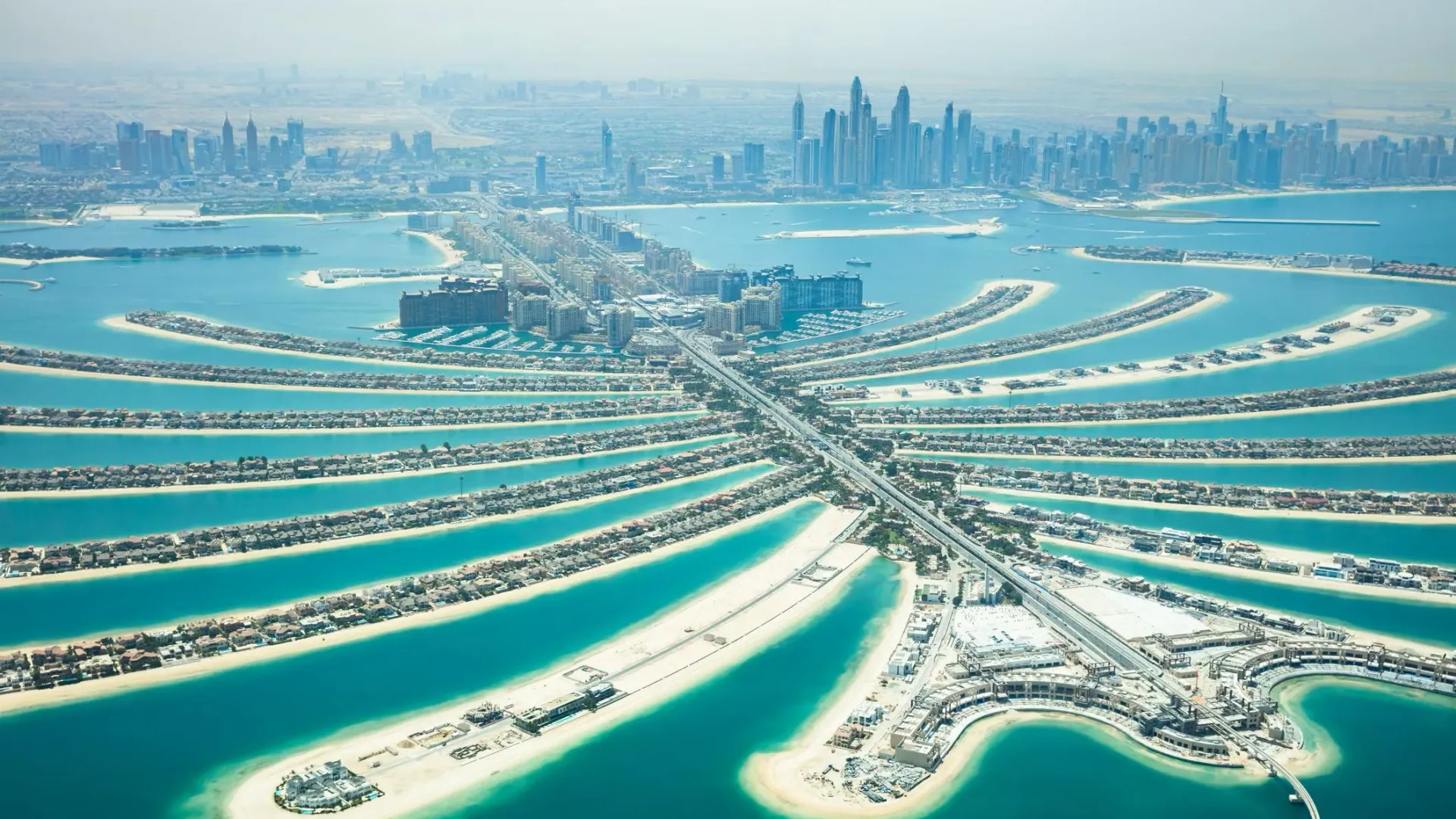
Palm Jebel Ali Dubai 2026 — Investment Guide to Nakheel's New Mega-Island
Bigger than Palm Jumeirah. Relaunched in 2023 with 80 fronds and 110km of additional coastline. Villas from AED 18M with secondary market premiums of 20–40% already observed. Adjacent to Al Maktoum International Airport — Dubai's most ambitious south-side development. This 2026 guide covers everything investors need to know before committing to Palm Jebel Ali.
Buyers comparing Palm Jebel Ali with more accessible south-corridor launches can also review RAW District by Imtiaz in Downtown Jebel Ali.
What Is Palm Jebel Ali?
Palm Jebel Ali is Nakheel's second palm island — and it's bigger than Palm Jumeirah. Paused after the 2009 financial crisis, the project was dramatically relaunched in 2023 with a revised master plan featuring 80 fronds (vs Palm Jumeirah's 16), 110km of additional coastline, and ultra-luxury villa plots. Located adjacent to Al Maktoum International Airport in Dubai's southern corridor, Palm Jebel Ali represents Nakheel's most ambitious project since the original Palm Jumeirah.
The relaunch was not a simple continuation of the original project. The 2023 master plan incorporated significant improvements: updated frond designs with larger plot sizes, upgraded infrastructure specifications, and a revised community concept centred on ultra-luxury villa living with private beach access on every plot. Nakheel positioned Palm Jebel Ali explicitly as a product for the global ultra-HNWI market — not a mass residential community but a collection of private estate properties on one of the world's most remarkable man-made landforms.
The scale is extraordinary even by Dubai's standards. The island is twice the area of Palm Jumeirah, with a crescent arc that creates some of the most dramatic sea views available in the UAE. Each frond is designed with private beach access at its tip, ensuring that even the most inland villas on each frond retain genuine waterfront amenity. The community master plan includes hotels, beach clubs, and retail along the trunk, with infrastructure actively under construction as of 2026.
Palm Jebel Ali vs Palm Jumeirah
The two projects serve different buyer profiles at different stages of market maturity.
Palm Jebel Ali Property Prices (2026)
Phase pricing is subject to availability. Secondary market premiums of 20–40% above Nakheel launch pricing have already been observed on the earliest phases.
The Investment Thesis
Buyers who purchased Palm Jumeirah at launch in 2003–2005 at similar prices to today's Palm Jebel Ali have seen their properties multiply 5–10x in value. Four key catalysts underpin the Palm Jebel Ali thesis.
Al Maktoum International Airport
The planned expansion to become the world's largest airport — handling 260M passengers annually — will transform connectivity and land values across the entire southern Dubai corridor. Palm Jebel Ali sits in the direct growth shadow of this mega-project.
Dubai's south-side growth story
Expo City Dubai, Dubai South, and Jebel Ali Port create a critical mass of economic activity anchoring the southern corridor. Dubai's planners have committed to making this zone the city's second major urban spine by 2040.
Limited supply of large waterfront villas
Genuine beachfront villa plots of this scale — with private beach access and over 80 fronds to choose from — do not exist elsewhere in Dubai. The scarcity is structural and permanent once the project sells out.
Nakheel government backing
Nakheel is a government-backed master developer. The Palm Jumeirah track record, the backing of Dubai's sovereign wealth infrastructure, and the scale of ongoing investment in the southern corridor significantly reduce the developer risk compared with private projects.
The Palm Jumeirah analogy is the most compelling framing for Palm Jebel Ali — but it requires honest qualification. Palm Jumeirah benefited from being the world's first man-made palm island, a novelty that generated global media coverage and established Dubai as a luxury real estate destination almost overnight. Palm Jebel Ali does not have that novelty advantage. What it does have is the maturity of the Dubai market — a significantly deeper pool of global HNWI buyers familiar with Dubai property, a proven infrastructure track record from Nakheel, and the benefit of being positioned in the path of one of the world's most ambitious airport and logistics expansions. For investors with a 5–10 year horizon and liquidity to sustain a long holding period, Palm Jebel Ali represents one of Dubai's most asymmetric opportunity sets.
Who Is Buying Palm Jebel Ali?
The buyer profile for Palm Jebel Ali is consistently ultra-HNWI — with most transactions in the AED 20M+ range as a long-term wealth preservation play.
GCC royalty and ultra-HNWIs
Buyers from across the Gulf seeking the most prestigious new address in the UAE. Many are acquiring multiple plots or villas as family compounds.
International investors
European, Russian, Indian, and South Asian investors diversifying into UAE real estate at the ultra-luxury tier. The combination of no inheritance tax, no capital gains tax, and USD-pegged currency makes Dubai uniquely attractive.
Long-term Dubai residents upgrading
Established Dubai residents who have seen their existing properties appreciate significantly and are reinvesting gains into a new generational asset. Many are selling Palm Jumeirah apartments to fund Palm Jebel Ali villa deposits.
Family offices
Institutional-grade family offices diversifying real estate portfolios into Dubai. Most are committing AED 20M+ as a long-term (5–10 year) wealth preservation play with currency and geopolitical diversification benefits.
Enquire About Palm Jebel Ali with Astraterra
Our RERA-certified advisors provide access to Palm Jebel Ali phases, secondary market listings, and institutional-grade guidance on ultra-luxury Dubai real estate. Free advisory service — no buyer commission.
Frequently Asked Questions — Palm Jebel Ali
Is Palm Jebel Ali a good investment?
Palm Jebel Ali is a long-term, ultra-HNWI investment with significant upside if Dubai's south-side development story plays out. Early buyers on Palm Jumeirah who paid similar prices in 2003 have seen 5–10x returns over 20 years. The key risks are timeline (phased delivery through 2028+) and the speculative nature of a long-horizon play.
What is the price of a villa on Palm Jebel Ali?
Nakheel's launch pricing for Palm Jebel Ali villas starts from approximately AED 18,000,000 for a 5-bedroom Garden Home. Beach-facing villas start from AED 22,000,000. Secondary market premiums of 20–40% above launch price have already been observed on the earliest phases.
When will Palm Jebel Ali be completed?
Palm Jebel Ali is being developed in phases. The first phase handovers are expected from 2026, with subsequent phases delivering through 2028 and beyond. Infrastructure (roads, utilities) is being actively constructed. The full community development timeline extends into the early 2030s.
Where is Palm Jebel Ali located?
Palm Jebel Ali is located in Dubai's Jebel Ali area, approximately 35–40 minutes from Downtown Dubai. It's adjacent to Al Maktoum International Airport, and 15 minutes from the existing Jebel Ali Port and Free Zone. The surrounding area is Dubai's fastest-developing southern corridor.