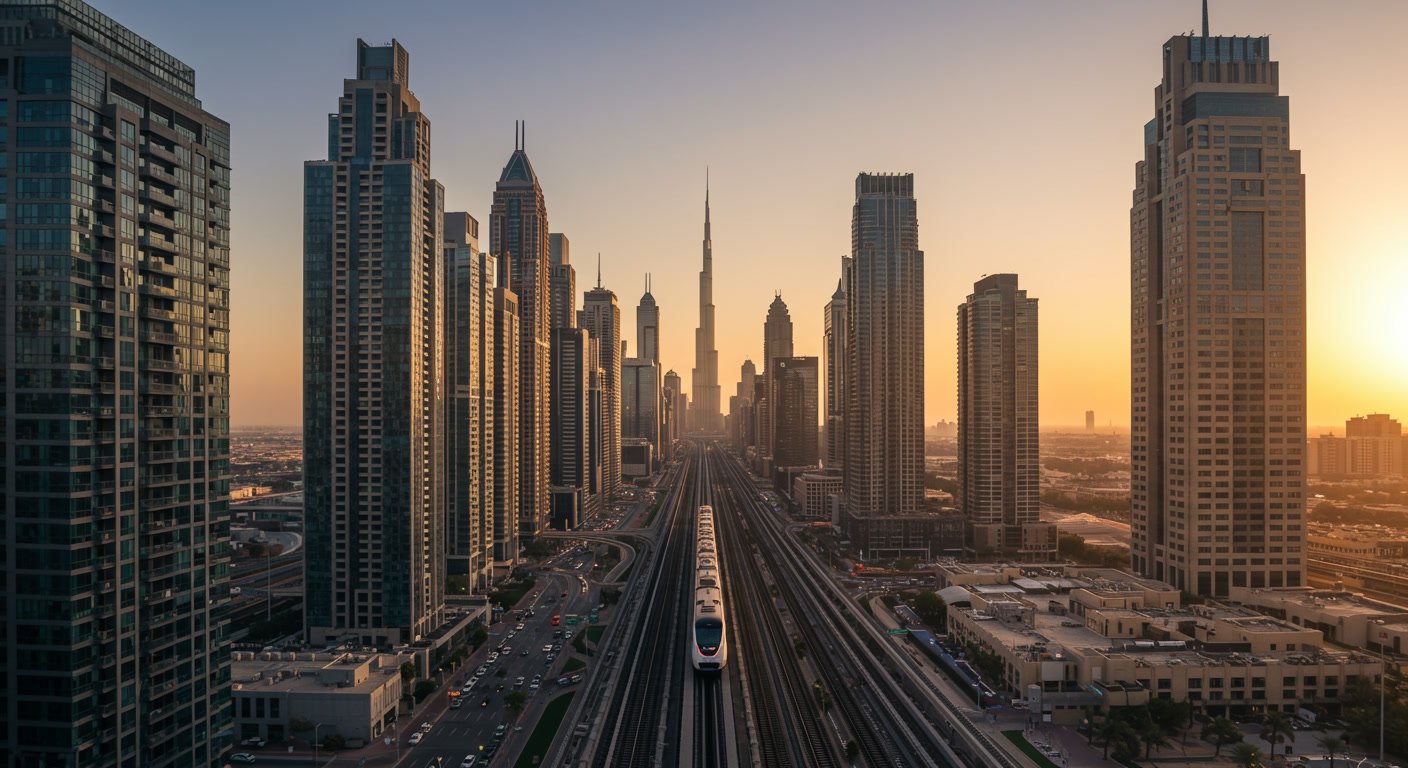
Dubai metro gold line 2032 property impact is becoming a serious investor question because this is not the same setup as the earlier Blue Line conversation. The Blue Line angle was largely about outward expansion and future-growth corridors. The Gold Line discussion is more central, more mature and more tied to daily movement inside parts of Dubai that already have real residents, real workplaces and real tenant demand.
That matters a lot in 2026. In the current war-aware market, buyers are no longer rewarding every infrastructure headline the same way. They want assets that make sense now, then get an additional tailwind later if the transport thesis plays out. In other words, the strongest Gold Line trade is not speculative fantasy. It is a good property in an area that already works, with future rail access potentially improving liquidity, commute convenience and buyer confidence.
That is the frame I would use for any serious investor today. If the line improves connectivity across mature mixed-use districts, the real upside is not only price appreciation. It is a broader tenant base, cleaner resale narratives and less day-to-day friction for residents. When infrastructure upgrades a functioning district rather than trying to rescue a weak one, the property effect is usually more durable.
Why this infrastructure story feels more investable than generic rail hype
Transport matters in Dubai because it affects the two things investors care about most, occupancy depth and liquidity. A better-connected district becomes easier to rent, easier to explain to end users and easier to exit when market sentiment turns selective. That does not mean every station creates a gold rush, but it does mean rail access can improve the quality of demand around a property when it is paired with schools, offices, retail and a livable street pattern.
The Gold Line could be important precisely because it may improve movement inside denser, established districts instead of only feeding distant future inventory. That is a better investor setup in my view. The area already has life. The rail layer simply makes that life more efficient.
2026 numbers that keep the thesis grounded
There are several 2026 filters investors should anchor to before getting carried away. In our current underwriting across central apartment districts, realistic gross yield ranges still tend to screen around 5.5% to 6.5% in better Business Bay stock, around 4.5% to 5.5% in prime Downtown-led product where liquidity matters more than headline yield, and around 6.5% to 7.5% in stronger value-led apartment communities when building quality is good. These are the kinds of ranges that tell you whether a future transport premium is actually worth paying for.
Financing also matters more in 2026 than people admit. Many buyer cases are being stress-tested around mortgage-cost bands near 4.5% to 5.5%, plus at least one to two months of vacancy risk in the first year. On top of that, service charges still create major dispersion. A building running around AED 14 per sq ft annually behaves very differently from one closer to AED 22 per sq ft. Metro proximity does not fix a bad operating profile.
Buyer budgets are also clustering in practical ranges. We continue to see cautious 2026 investors targeting apartments roughly in the AED 1.2 million to AED 2.5 million band for central and connector-district exposure, especially one-beds and efficient two-beds where tenant depth is strongest. That is where the Gold Line could matter most, because a real commute improvement materially changes who will rent or buy the asset.
The war-aware rule investors should not break
In this market, I would not advise anyone to buy a weak building just because a future route map looks exciting. The line is a tailwind, not a rescue plan. If the asset cannot defend itself today on rentability, location logic and building quality, the investment case is too thin. The best Gold Line opportunities are the ones you would still be comfortable owning even if the re-rating takes longer than the market hopes.
If you want the wider framework behind that cautious posture, our guide on ready vs off-plan in Dubai 2026 explains why buyers are increasingly prioritising shorter-duration exposure and proven demand over long-dated stories.