The dubai rail network plan 2032 gold line matters because it is less about discovering the next outer-edge story and more about repricing mature districts where people already live, rent and commute. That is the key difference from the earlier Blue Line conversation. The Blue Line angle was broader and more expansion-led. The Gold Line angle is tighter, more central and more defensive. It matters for buyers who want cleaner exits, renters who want lower commute friction, and investors who care about demand durability rather than brochure hype.
Dubai Land Department data showed AED 176.7 billion in Q1 2026 sales value across the emirate, confirming that liquidity is still deep even in a more selective market. At the same time, several 2026 market notes pointed to slower monthly momentum in parts of the premium segment, a wider negotiation band in mid-market stock, and stronger buyer preference for practical locations with proven end-user demand. Source: DLD Q1 2026 market summary, CBRE Dubai market commentary 2026, Property Monitor dashboards.
That shift matters in the current regional backdrop. War-aware capital does not disappear, but it becomes more demanding. Buyers ask harder questions about income visibility, replacement demand and exit liquidity. In our recent conversations at Astraterra, clients are not looking for the loudest infrastructure headline. They are asking where a transport upgrade could improve a district that already works today. That is a much better question.
Why this is not a repeat of the Blue Line thesis
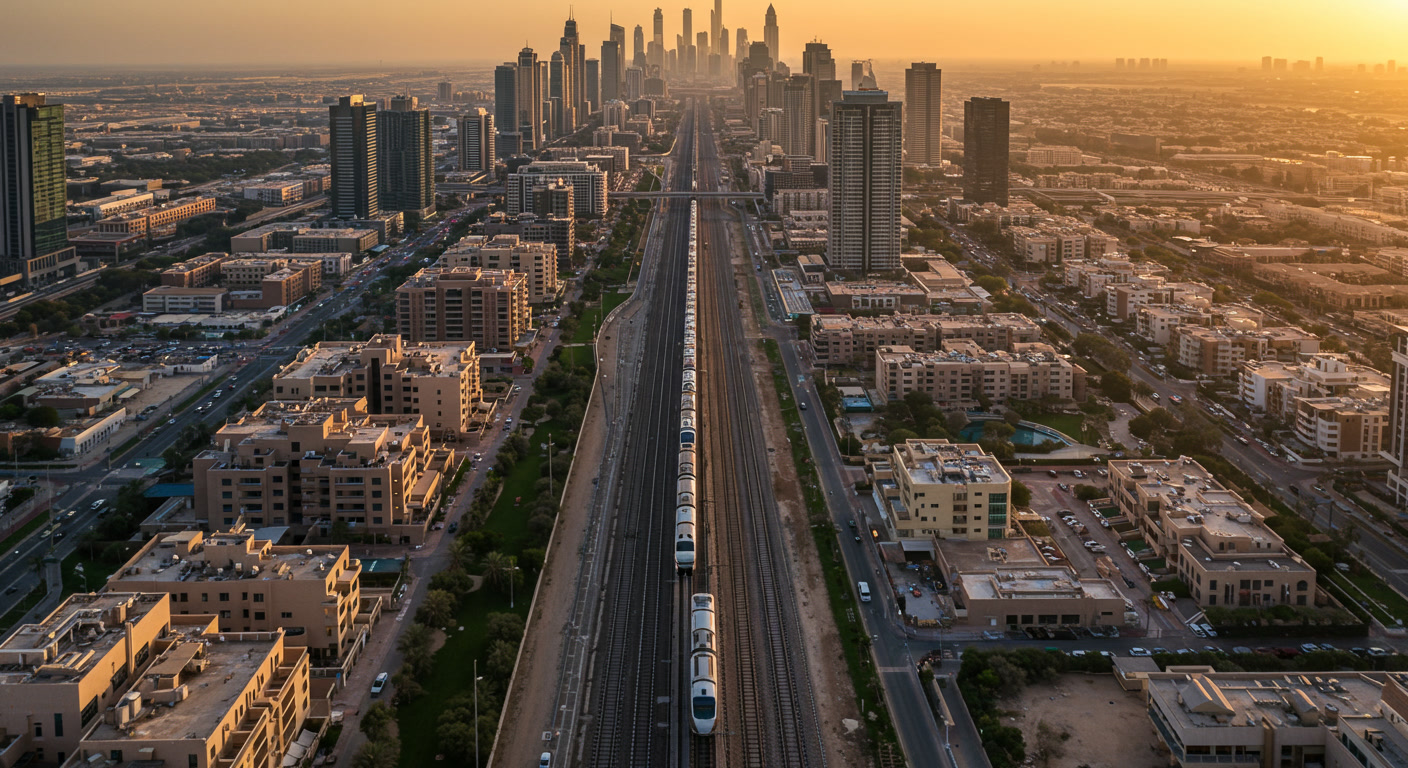
The Blue Line discussion was mostly about network expansion and future discovery. The Gold Line discussion is about compression. If a corridor already has schools, clinics, office access, creek-side employment, retail depth and daily-use demand, a new line does not need to invent a market. It only needs to make a functioning market easier to use. That tends to produce more resilient repricing.
Property Monitor's 2026 transaction patterns continued to show mature mixed-use locations holding up better than purely story-driven fringe inventory when sentiment turned cautious. Source: Property Monitor central Dubai dashboard, Q1 2026. I think this is the contrarian point most investors miss. A transport line does not rescue weak stock. It mostly rewards places that already have practical reasons to be owned or rented.
That is why I am more interested in how the Gold Line could affect Al Jaddaf, Oud Metha, Bur Dubai, Deira-adjacent repositioning pockets and core-edge alternatives than in vague claims that everything on a proposed map will soar. Investors who buy into that simplistic narrative usually overpay for mediocre assets. Buyers who stay disciplined can do much better.
Why the 2026 market context matters now
Five specific 2026 conditions make this topic timely. First, Dubai transaction value stayed high in Q1 2026 at AED 176.7 billion. Second, several analysts noted premium-price momentum cooling versus the sharpest 2024 and 2025 phases. Third, Bayut and Property Finder's 2026 rental tracking kept pointing to persistent tenant demand in central, commute-friendly neighborhoods. Fourth, UAE base-rate expectations in 2026 kept financing conversations highly sensitive to monthly carrying cost. Fifth, regional uncertainty kept more buyers focused on liquidity, not just upside. Source: DLD, Bayut 2026 rental trend snapshots, Property Finder demand trends, UAE financing commentary 2026.
Put together, that gives the Gold Line a very specific strategic meaning. It is not a lottery ticket. It is a potential catalyst on top of already-existing use value. For serious buyers and investors, that is exactly the kind of setup worth studying.