
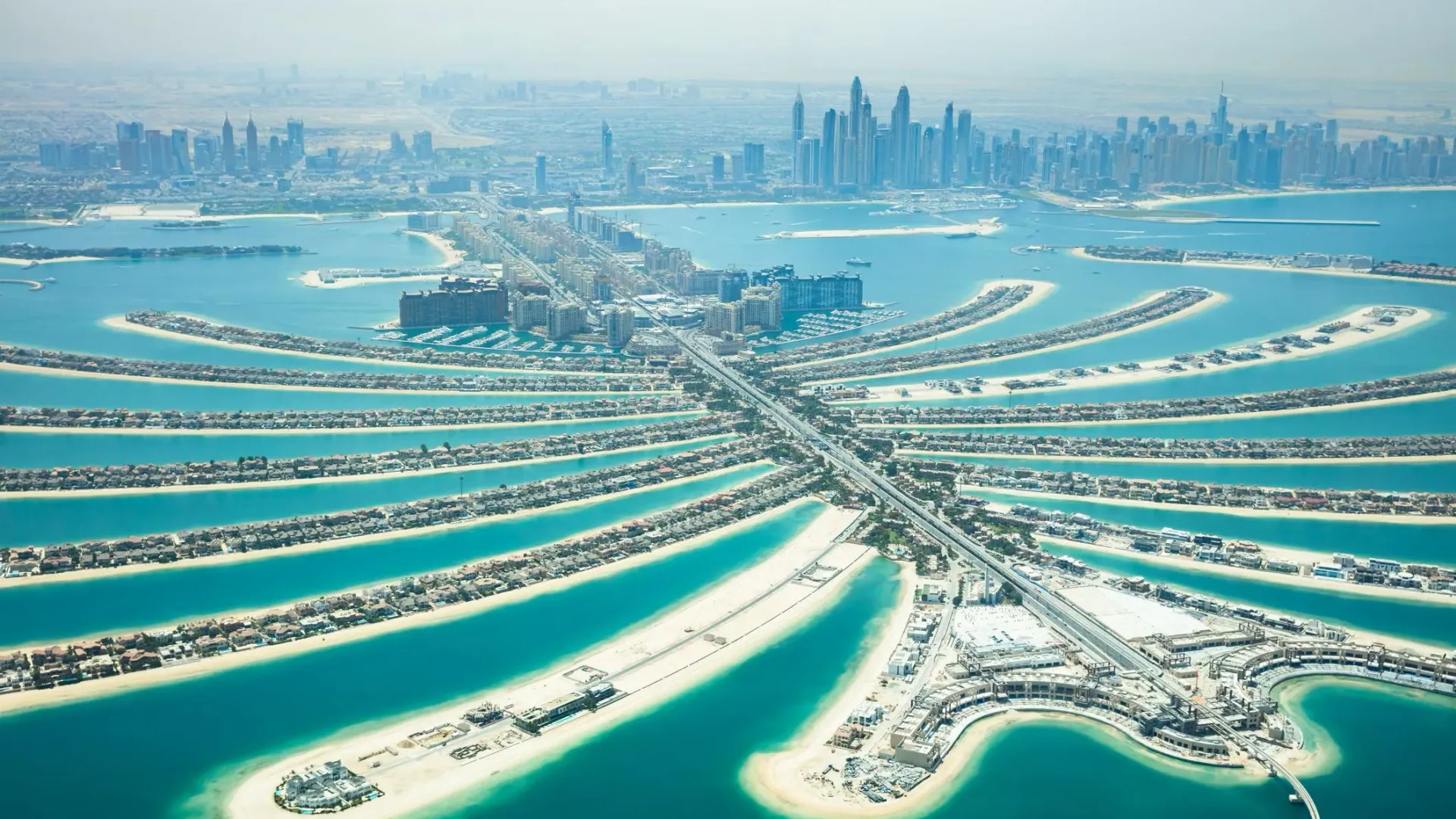

Dubai has 96,585 homes entering the market in 2026: why 83% sold is the real signal
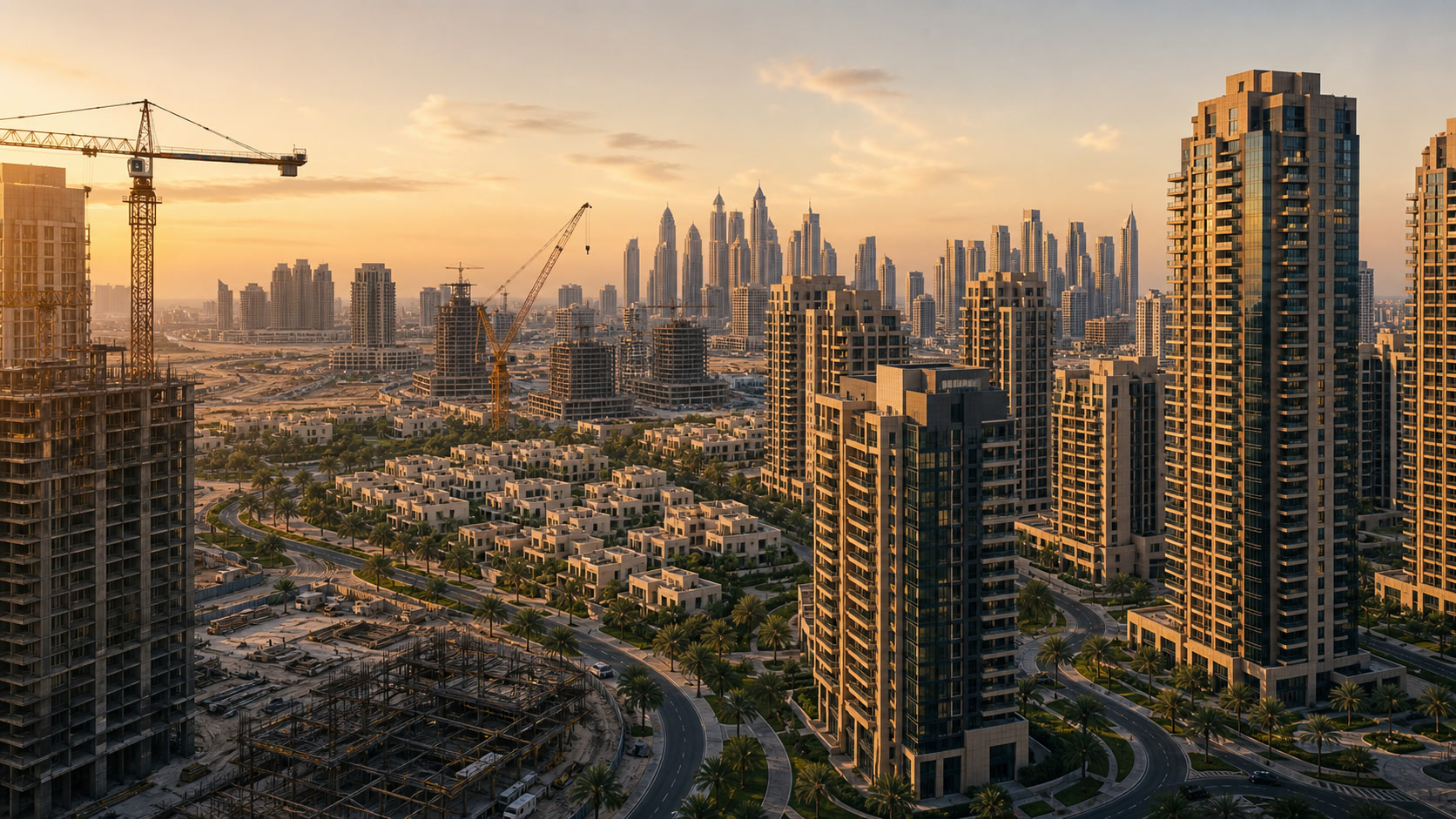
Quick answer
💡 Key Takeaways
What the 83% sold figure actually says
Dubai's 96,585-home delivery wave is not a problem by itself. If 83% of that stock is already sold, the market is still absorbing supply quickly, which means the real question is not whether Dubai has enough demand, but which communities are absorbing the fastest.
Gulf News reported on August 22, 2026 that Dubai is set to hand over 96,585 homes in 2026, with 83% of those homes already sold. That is the first thing serious buyers should notice. The supply number is large, but the absorption number is even more important because it tells us how much of that pipeline the market has already committed to before handover.
This is where a lot of casual commentary gets the market wrong. People hear a big delivery number and immediately assume oversupply. But supply only becomes a problem when it arrives faster than demand can absorb it. Dubai is clearly not there yet. In fact, the data shows the opposite: buyers are still locking in a large share of future stock, and certain pockets are effectively sold out.
The same article said some communities have already reached 100% absorption for their 2026 handovers, including Al Wasl for 637 apartments, and villa communities such as Wadi Al Safa 5, Nad Al Sheba First and Al Hebiah Sixth. It also noted that Downtown Dubai has 6,248 apartments under construction with 92.2% already sold, while Business Bay has 30,317 apartments under construction with 82.8% sold overall and 88.7% sold among the homes due for delivery this year.
That is the real signal. Dubai is not absorbing all stock equally. It is rewarding the communities with the strongest logic, most visible demand and clearest end-user appeal. The market is not indiscriminately hot. It is selective. And selective markets usually create better buying opportunities for disciplined investors, because the right location still matters more than the marketing story.
Why supply is not the same as oversupply
Why supply is not the same as oversupply
Dubai is adding a lot of homes, but the city is also adding buyers, tenants and new forms of demand. That balance matters. A market can have a large delivery pipeline and still remain healthy if the stock is spread across the right communities and absorbed by the right buyer groups.
Khaleej Times reported that Dubai added 24,800 residential units in the first half of 2026 alone, which is a huge amount of new stock by any normal standard. But the same market is still recording strong absorption in the best-located districts. That tells you something important about the shape of demand. Buyers are not reacting to all supply the same way. They are concentrating in areas with better transit, better schools, stronger amenities, clearer resale logic and more obvious tenant depth.
This is also why buyers are upgrading to bigger units and higher-end communities after recent price movements. A more selective market does not just create caution. It also creates choice. Some buyers move up the ladder when they see value in larger, better-located or better-finished homes. Others stay disciplined and buy where the rental and resale story is easiest to defend.
My reading is simple: Dubai's market has shifted from a broad sprint to a more selective race. That is healthy. It means weak assets have to compete harder and good assets earn their premium. For buyers, that is exactly when precision matters most.
For comparison, our recent post on completed projects showed how certainty is already commanding a premium. Today's absorption data says the same thing in a different language: buyers are paying for confidence, not just for square footage.
Where absorption is strongest
Where absorption is strongest
If you want to understand where the market is actually working, do not start with the raw delivery total. Start with the communities where the stock is disappearing fastest. That is where demand is clearest.
Downtown Dubai remains a premium benchmark because the market understands it instantly. The location, skyline value, rental depth and resale clarity are all easy to communicate. When a district like Downtown shows a high absorption rate, that is not a surprise. It is a confirmation that buyers still pay for quality and recognisable city-centre utility.
Business Bay is the other major signal. It sits between residential and commercial demand, which gives it a broader base of buyers and tenants. A district like this tends to absorb stock well when the building quality, access and service charges are reasonable. That is especially true for investors who want something they can explain quickly to the rental market later.
The villa story is just as important. Areas such as Wadi Al Safa 5, Nad Al Sheba First and Al Hebiah Sixth are showing that end-user demand is still strong in family-oriented stock where the location and lifestyle proposition are obvious. These are not random names on a supply chart. They are areas where buyers are clearly voting with real money.
That matters because it helps buyers separate two very different types of stock. Some communities are absorbing because the product is genuinely useful. Others are simply large. In Dubai right now, size alone is not enough. The market is rewarding practical liveability, not just big masterplans.
If you are comparing live options, start with our current properties page and shortlist only the communities that still make sense after you model rent, service charges and exit liquidity. If a unit only looks cheap because it is far from the real demand, it is probably cheap for a reason.
How buyers should respond now
How buyers should respond now
When a market is selective, the winner is usually the buyer who can stay calm and compare properly. That means looking at the right questions in the right order.
First, compare community absorption. A project with strong absorption is already being validated by the market. That does not guarantee upside, but it does reduce the chance that you are buying into a weak demand pocket.
Second, compare practical livability. Ask whether the home is easy to occupy, easy to rent and easy to resell. A property that works for real life usually works better for capital too.
Third, compare the exit story. If you needed to sell in twelve months, would the market understand the unit immediately? If not, you may be taking on more risk than the discount justifies.
Fourth, compare against ready stock. In a market with this much supply, ready and near-handover homes become easier to underwrite because the product is visible. That is why we keep coming back to completed and nearly completed communities in our recent analysis.
My bias is to favour stock that still looks good after the brochure is removed. If a community has real absorption, usable amenities and a clean resale story, it deserves attention. If it only has a big headline number, I would move on.
For buyers who want a sharper shortlist, use our buying guide and send the actual units or communities to Astraterra Properties. We can compare them against the live market and tell you which ones are worth a second look.
Dubai Market Advisory
Need help separating genuine demand from loud supply headlines?
Astraterra can compare ready homes, handover stock and live communities across Dubai, then shortlist the assets that still make sense after rent, service charges and exit liquidity are included.
📞 +971 58 558 0053 | 🌐 contact us | 💬 WhatsApp Joseph
Joseph's take and FAQs
Joseph's take and FAQs
My take is that this is a healthy market, but a more demanding one. A healthy market can still have pockets of oversupply, weaker stock and bad buys. The difference now is that those mistakes are easier to spot if you look at absorption instead of just the delivery headline.
The biggest lesson from today's data is that Dubai is still attracting capital, but it is not distributing that capital evenly. Buyers are rewarding communities that are easy to understand, easy to live in and easy to exit. That is good news for disciplined buyers, because it means quality still matters.
Q: Is 96,585 homes too much supply for Dubai in 2026?
Not by itself. The more important number is that 83% of that stock is already sold, which shows demand is still absorbing the pipeline.
Q: Which areas are absorbing fastest?
Downtown Dubai, Business Bay and selected villa communities such as Wadi Al Safa 5, Nad Al Sheba First and Al Hebiah Sixth are showing the strongest signals.
Q: Should I avoid buying because supply is high?
No. You should avoid buying weak stock. High supply only hurts buyers who ignore community quality, pricing and exit depth.
Q: What is the best buying strategy now?
Compare ready homes, near-handover stock and communities with proven absorption before you look at launches with weaker evidence.
Q: What should I do next?
Shortlist the communities you are already considering, compare them against the latest absorption story and send the list to Astraterra so we can pressure-test the numbers.
Related reading: Dubai completed projects drew $30.2 billion in H1 2026, Jebel Ali Village handovers in 2026 and the full Astraterra blog archive.
Frequently Asked Questions
Joseph Toubia
CEO & Founder, Astra Terra Properties
RERA-certified real estate professional (BRN 54738) specialising in Dubai off-plan properties, investment advisory, and Golden Visa guidance. Based in Dubai.
Related Tools & Resources
Free calculators and guides to help you make smarter property decisions in Dubai.
Send your requirements to Astraterra CRM
Get a qualified commercial shortlist
Share your rent or buy intent, business activity, target area, budget, size, fit-out needs, permissions and timeline. Astraterra will route it into CRM for follow-up.
Ready to Invest in Dubai Property?
Browse our curated selection of off-plan projects with flexible payment plans from 10% down, or explore ready properties for sale across Dubai.