
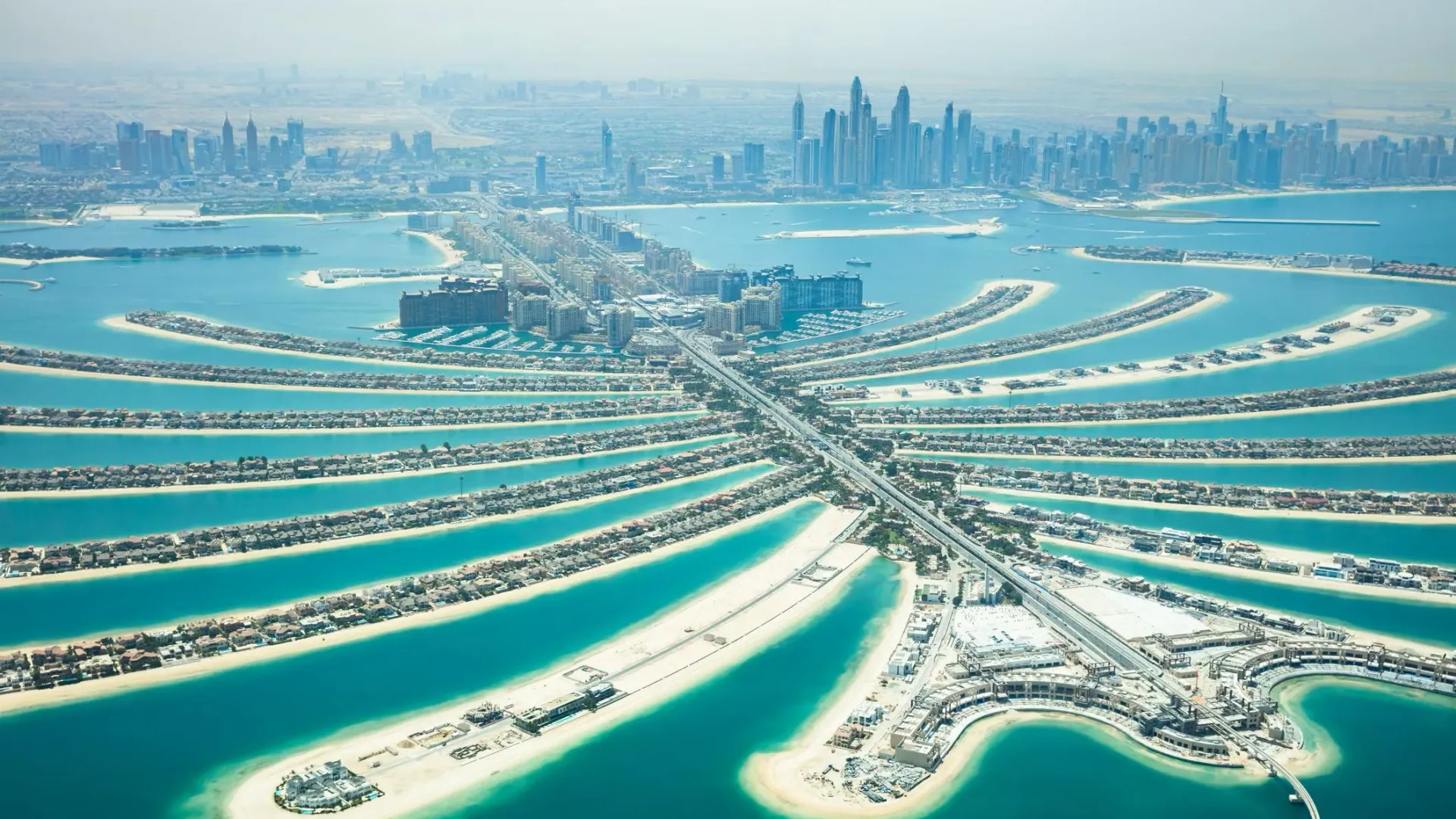
Dubai home sales hit Dh221.3 billion in the first half of 2026, according to Gulf News, and that figure tells you something important: demand has not disappeared just because prices are higher than they were a few years ago. It also tells you something more subtle. This is no longer a market where every district rises for the same reason. Buyers are becoming more selective, supply is getting broader, and the gap between good assets and weak ones is widening.
The question for serious buyers is not whether Dubai is still active. It clearly is. The real question is where you can still buy well before the next wave of supply lands and resets the conversation around value. That is especially relevant in mid-2026 because The National has already pointed to roughly 120,000 new units expected to enter the Dubai market this year, with price growth forecast to moderate into the 5 to 8 per cent range rather than the sharp spikes of earlier cycles.
That is why a headline like Dh221.3 billion should not make buyers euphoric or complacent. It should make them disciplined. In markets like this, the best opportunities are rarely the loudest. They are the ones with real occupant demand, healthy transaction depth, and enough utility that the unit still makes sense after the first burst of enthusiasm fades.
If you want our broader market view, start with our Dubai property prices 2026 area breakdown and our guide to Dubai buyer leverage in 2026.
Dubai home sales H1 2026: what the data is really saying
The sales figure alone does not tell the whole story. What matters is how those sales are being distributed across the market. In recent Dubai cycles, off-plan has kept absorbing a large share of demand, but the smartest buyers are increasingly asking a different question: if supply is expanding, which districts still hold pricing power because they have real end-user demand, strong rental depth and credible resale liquidity?
That is where the 2026 market is splitting. Some communities are still driven by genuine population growth, business expansion and family formation. Others are mostly driven by marketing momentum. The first group can absorb more supply. The second group is much more vulnerable when handovers increase and buyers have more choice.
Dubai South is a good example of the first group. Arabian Business reported four days ago that Dubai South emerged as the emirate's fastest-growing real estate market after 2,869 transactions worth AED 3.3 billion in June 2026. That matters because it is not just a headline about one district. It is a signal that airport-linked growth, master-planned infrastructure and a widening buyer base are pulling capital into a part of the city with a long runway.
But the same logic also applies to JVC and Business Bay, which continue to attract buyers for different reasons. JVC still offers one of the clearest entry points for end-users and investors who care about rental depth, affordability and easy exit liquidity. Business Bay remains a strong middle ground for buyers who want a central location with a more balanced risk profile than pure luxury corridors.
Put simply, H1 2026 sales are telling us that the market is healthy, but not lazy. Buyers are willing to pay, yet they want proof. They want district strength, not hype. They want units that can be lived in, rented out, or resold without needing a perfect market to support them.
Where smart buyers should still look before supply expands
Dubai South: the clearest forward-looking growth story
If you want to understand why Dubai South keeps coming up in serious market conversations, look at the combination of transaction momentum and infrastructure direction. June 2026 numbers show that buyers are already voting with their money. The district is benefiting from the wider Al Maktoum International Airport story, logistics growth, and a master plan that still has room to mature.
For buyers, that means Dubai South can work in two ways. First, it can be a long-term growth bet for end-users who are happy to ride the next phase of community formation. Second, it can be a value entry point for investors who want exposure to a district that has not fully priced in its future role yet. The risk is timing: you need to be comfortable holding through development cycles rather than expecting instant appreciation.
That is why Dubai South suits patient capital. If your horizon is three to five years, the district is still interesting. If you want instant liquidity tomorrow, you may prefer a more mature market.
JVC: still the best value-and-liquidity compromise
JVC remains one of the easiest communities to underwrite because the buyer pool is broad. That matters. A unit in a community with broad tenant demand and broad buyer appeal is easier to rent, easier to resell and easier to explain to a bank or partner. JVC may not be the flashiest name in the market, but it continues to be one of the most practical.
From an investment point of view, JVC works best when the buyer is not trying to overpay for a premium view that the market will not fully reward. The better plays are usually well-configured one-bedroom units, efficient layouts, reasonable service charges and access to the main road network. If you are buying for yield, JVC still deserves a place on the shortlist.
Business Bay: central, resilient and still liquid
Business Bay is not cheap, but it remains important because it solves a different problem. It gives you centrality. For many buyers, that is worth paying for, especially if they want an asset that can appeal to professionals, executives and international buyers. The district also benefits from being close to Downtown, DIFC and the broader office and hospitality ecosystem, so demand is not dependent on one type of occupant.
The key in Business Bay is discipline. Do not assume that every tower has equal value. Canal-facing units, practical layouts and buildings with credible management tend to outperform. If the goal is to preserve capital and keep options open, Business Bay remains one of the most defensible places to buy in central Dubai.
Al Furjan and selected outer-ring communities: practical family value
Not every buyer needs a prime central address. Some want a family-focused, lower-entry, practical community with a decent rental story and room to grow. That is where Al Furjan and selected outer-ring neighbourhoods can still make sense. These areas are not about status. They are about usable value.
The best version of this strategy is simple: buy where the family demand is real, the road access is improving, and the unit is not overdesigned for a market that may become more price conscious as supply rises. In 2026, that kind of pragmatism is not boring. It is smart.
How to buy in this market without getting caught by the supply wave
The biggest mistake buyers make in a rising but maturing market is confusing activity with safety. Yes, Dh221.3 billion in H1 sales is impressive. No, that does not mean every purchase is equally good. Supply expansion changes everything, because future buyers will have more choice than current buyers did a year ago.
So what should you do? First, buy with a clear holding period. If you think you may need to exit inside 18 months, you are taking on more risk than the market headline suggests. A 3 to 5 year horizon is much more realistic for most serious buyers. Second, choose assets that can still rent well if your personal plans change. End-user appeal and investor appeal do not always overlap, but the best units have both.
Third, check the asset rather than just the area. The wrong tower in a good district can underperform badly. The right tower in a mid-tier district can outperform expectations. Layout, service charges, parking, access, developer reputation and resale depth all matter. Fourth, keep your financing realistic. A weak leverage structure can turn a good asset into a stressful one. Fifth, think about exit liquidity before you think about Instagram appeal.
If you are still comparing options, our team can walk you through Dubai properties currently worth shortlisting and the practical differences between buy-side opportunities and rental-led strategies.
Joseph's take on the H1 2026 market
My view is simple: Dubai is still one of the most attractive real estate markets in the world, but the game has changed. The easy-money phase is not the point anymore. The point is selection. The buyers who will do well over the next cycle will be the ones who respect supply, understand district fundamentals and buy assets that match a real use case.
That is why I keep coming back to the same principle with clients: buy the problem you actually have solved. If you need a home for the family, buy something that supports daily life and long-term comfort. If you need yield, buy something that tenants already want. If you need capital preservation, buy a location and building with clear liquidity. If you are betting on growth, make sure the district has a real catalyst behind it, not just a clever sales story.
Dubai South fits that framework because the catalyst is structural. JVC fits because the demand base is broad. Business Bay fits because central liquidity still matters. And for buyers with a more conservative view, that mix of options is exactly why Dubai remains compelling even as supply rises.
If you want a sharper read on your own budget, send us your brief and we will narrow the market down to the handful of units that actually fit your timeline, financing and risk tolerance.
Frequently asked questions about Dubai home sales in 2026
Is Dubai still a good place to buy property in 2026?
Yes, but the strategy matters more than before. Dubai is still active and internationally attractive, but buyers should focus on asset quality, district strength and realistic holding periods instead of assuming everything will appreciate automatically.
Which area looks strongest after H1 2026 sales?
Dubai South is one of the strongest forward-looking stories because of infrastructure and transaction momentum. JVC and Business Bay still look attractive for buyers who want liquidity and a wider buyer pool.
Will new supply hurt the market?
It can create pressure in weaker sub-markets, but it also gives buyers more choice. The key is to avoid overpaying for assets that depend on endless market momentum.
Should I buy off-plan or ready?
It depends on your objective. Off-plan can work if you are targeting a future growth pocket and can hold through delivery. Ready stock is often better if you want immediate rental income or clearer liquidity.
What is the smartest next step for a buyer right now?
Shortlist 3 to 5 communities, compare actual completed units, then test rent, service charges, and resale depth before you commit. That is the difference between buying a headline and buying an asset.