The Contrarian View: What Most Price Analysis Gets Wrong About Dubai in 2026
Most Dubai property price guides focus on average price per sqft as if that number alone tells you something actionable. It doesn't. The metric that matters more than average price in 2026 is price per sqft of genuinely usable space. Dubai developers have been progressively reducing unit sizes for five years. A "1BR apartment" in JVC today is often 550–620 sqft, versus 750–850 sqft for a 1BR built in 2012. On a headline per-sqft basis, the newer unit may appear comparably priced — but per usable metre of living space, you are paying materially more for materially less room to live.
The second thing most analysis misses: yield compression is not uniform across all price brackets. Downtown Dubai's 4.5% gross yield is frequently cited as "low." But if you bought a Downtown apartment in 2019 at AED 1,650/sqft and it's now trading at AED 2,850/sqft, your effective yield-on-cost is over 7.5%. This is why holding period and entry price are more important than current gross yield in any given area.
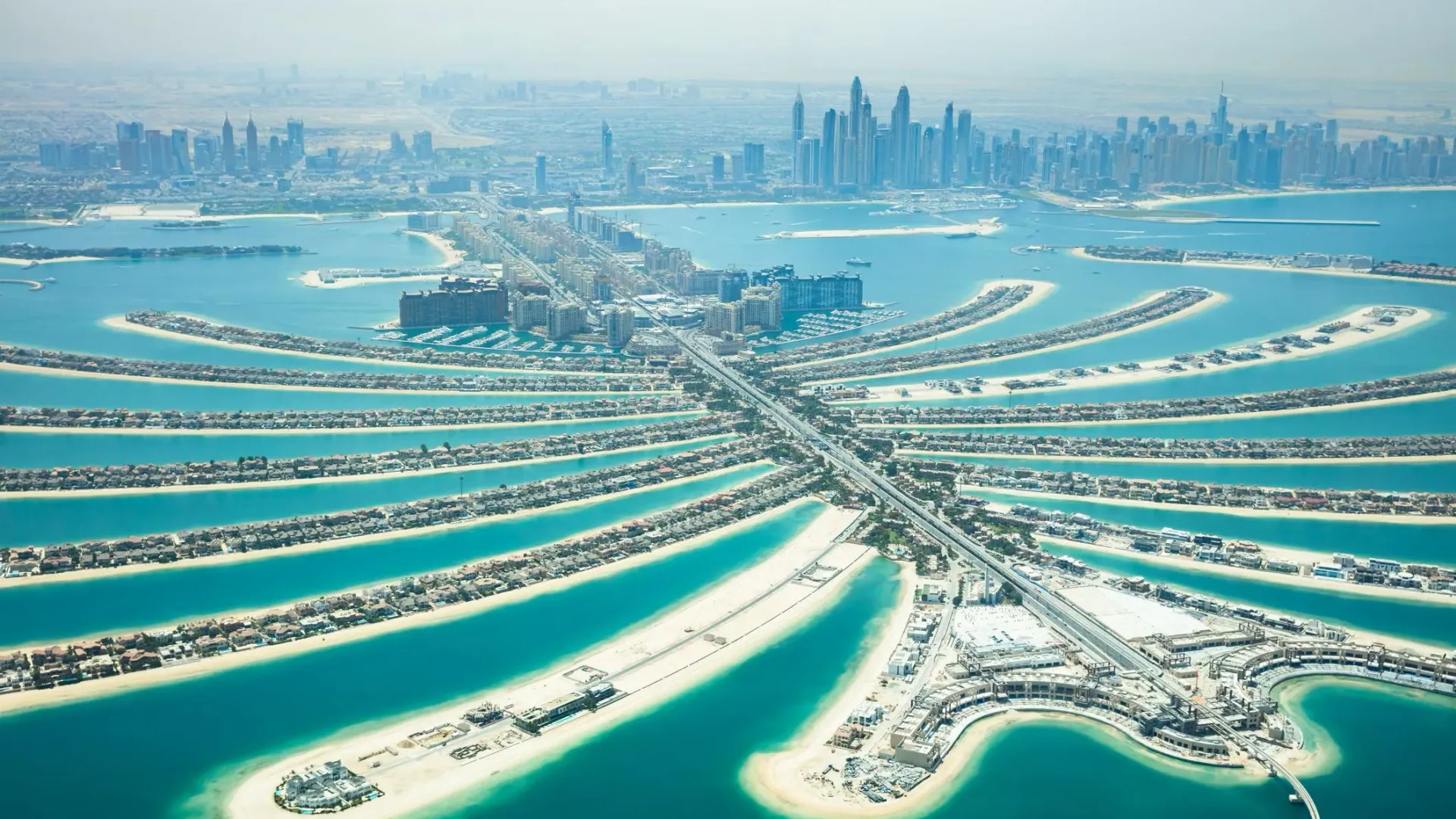
The third common misconception: that Dubai luxury is in a bubble. At AED 5,200/sqft for Palm Jumeirah, Dubai is still 35–40% cheaper per sqft than comparable beachfront or waterfront real estate in Monaco, Malibu, or Hong Kong's Island district. On a relative global-value basis, Dubai ultra-luxury looks rational — not speculative.
Joseph's Take: What I Actually Tell My Clients About Dubai Prices in 2026
I've been working Dubai real estate through both boom and correction cycles, and I've never seen a market quite like the 2026 moment. Here's my honest assessment:
The entry-level buyer has been almost entirely priced out of central Dubai. When I started in this market, a young professional earning AED 15,000/month could buy a 1BR in Business Bay with a 20% down payment and a UAE bank mortgage. Today, that same person needs AED 260,000–370,000 as a down payment for a 1BR at AED 1.3M–1.85M. That pricing pressure is real and structural — it is pushing buyers who would once have targeted Business Bay or Marina directly into JVC, Dubai South, and Al Furjan. This structural shift means JVC will continue absorbing demand for the next 3–5 years regardless of what happens to central Dubai prices.
I'm genuinely concerned about off-plan saturation in certain sub-markets. RERA Q4 2025 flagged that 17% of off-plan projects missed their handover dates by 12+ months. When you buy off-plan in JVC or Dubai South today, you are betting on a developer's ability to deliver on schedule. I've seen clients wait three years past promised handover in communities like Town Square Dubai — that's three years of bridging costs or lost yield. At Astraterra Properties, we now refuse to recommend off-plan projects from developers without a proven, on-time delivery track record. Emaar, Select Group, and Meraas are the benchmarks; new entrants we scrutinise very carefully before recommending to clients.
The market that most surprises me right now is Dubai Hills Estate. This was always positioned as a lifestyle community for families. But the capital appreciation — 18% YoY for villas in Q1 2026 — has converted it into a sophisticated institutional investment target. Family offices and HNW buyers are accumulating villa plots and completed homes in Golf Place and Club Villas. That institutional interest is a significant medium-term bullish signal.
If I had AED 1.5M to invest today, I would be choosing between a 2BR in JVC for high yield and strong rental demand, or a 1BR in a Business Bay canal-facing tower for lower yield but higher capital upside. I would not be buying in Downtown Dubai at current prices unless it was purely a lifestyle decision — the yield maths simply does not support it for an investment mandate. Multiple Astraterra clients who took the JVC and Business Bay route over the past 24 months have outperformed their Downtown-buying peers on a total-return basis.
Frequently Asked Questions: Dubai Property Prices 2026
What is the average price per sqft in Dubai in 2026?
The citywide average for Dubai property prices 2026 varies dramatically by community. Downtown Dubai leads at AED 2,850/sqft (Property Monitor Q1 2026). Dubai Marina averages AED 1,450–1,820/sqft depending on waterfront access. Business Bay ranges AED 1,200–1,900/sqft. JVC off-plan is the most accessible at AED 1,180–1,350/sqft. Dubai South and Al Furjan offer the lowest entry at AED 800–1,100/sqft. These are Q4 2025–Q1 2026 transaction averages; individual deals vary significantly by floor, view, fit-out, and building facilities.
Will Dubai property prices fall in 2026?
Tax treatment depends on the owner, the activity and applicable residence rules; this article should not describe every property investment or receipt as tax-free. The FTA guide for natural-person real-estate investment explains the conditional Corporate Tax exclusion for qualifying activity that is not conducted, or required to be conducted, through a licence. Company structures and licensed activities need separate analysis. Check any VAT and overseas obligations with a qualified adviser.
Which Dubai community offers the best rental yield in 2026?
JVC (Jumeirah Village Circle) offers the highest sustained gross rental yield in 2026 at 7.8% (Property Monitor February 2026). Dubai Marina follows at 7.1%, Business Bay at 6.5–7.2%, and Dubai Hills Estate at 5.5–6.5%. Downtown Dubai yields have compressed to 4.5–5.5% due to capital appreciation outpacing rent growth. For pure yield-focused investors, JVC and Dubai Marina offer the best risk-adjusted returns. For dual-purpose buyers seeking yield combined with capital upside, Business Bay canal-facing units represent the strongest balance of both metrics in Q1 2026.
What is the minimum budget to buy property in Dubai in 2026?
You can enter the Dubai market with approximately AED 350,000–450,000 for a studio in emerging communities like Dubai South, Liwan, or outskirts of JVC. For a 1BR in an established community with strong rental demand, budget AED 650,000–950,000 in JVC, or AED 1.3M–1.85M in Business Bay. If financing via UAE bank mortgage, you need a minimum 20% down payment for UAE residents (25% for non-residents) plus approximately 4–5% in transaction costs (DLD fee 4%, agency fee 2%, admin). For a AED 1M property, budget at least AED 250,000–280,000 in total upfront costs.
How much have Dubai property prices increased since 2020?
Dubai property prices have risen dramatically since the 2020 COVID trough. In Q2 2020, average citywide apartment prices reached approximately AED 1,000/sqft — a decade-long low. By Q1 2026, the citywide average sits at approximately AED 1,650–1,800/sqft, representing a 65–80% increase in six years. Premium communities have outpaced this: Downtown Dubai rose from approximately AED 1,700/sqft to AED 2,850/sqft (+67%); Palm Jumeirah from AED 2,200/sqft to AED 5,200/sqft (+136%). Knight Frank has designated Dubai as the world's best-performing major prime residential market for the 2020–2026 period.
Can non-residents buy property in Dubai in 2026?
Yes. Non-residents from any country can purchase freehold property in designated freehold zones in Dubai without UAE residency, employment, or a visa. The most popular freehold communities include Downtown Dubai, Dubai Marina, Palm Jumeirah, Business Bay, JVC, Dubai Hills Estate, and Dubai South. Non-residents pay the same DLD 4% transfer fee as residents. UAE bank mortgage financing is available for non-residents at a 25% minimum down payment (versus 20% for residents). After purchase, buyers of properties valued at AED 2M or more can apply for a 10-year UAE Golden Visa, effectively converting the property purchase into a residency pathway.
For deeper community analysis, explore our Dubai Marina complete area guide and our Business Bay apartment prices and investment guide.
FAQ — Dubai Property Investor Questions
Is now a good time to buy in Dubai?
For selective buyers, yes. Focus on assets with rental depth, realistic pricing, and resale liquidity.
Which is better right now: ready or off-plan?
Ready and near-handover typically offer clearer risk control and faster income visibility in the current cycle.
How do I avoid weak deals?
Underwrite net yield after service charges, compare building-level comps, and buy with an exit plan.
Area-Specific Intent: Where This Strategy Fits Best
- Business Bay: strong tenant depth, active resale market, central connectivity.
- Dubai Marina: premium rental demand, liquidity in proven towers, selective entry needed.
- JVC: attractive yield profile and broad renter pool for value-focused investors.
- Downtown Dubai: prime demand and prestige-driven occupancy, quality/price discipline required.
Explore area breakdowns: https://www.astraterra.ae/area-guides
Get Your Dubai Investment Shortlist in 24 Hours
Tell us your budget, target yield, and risk level. Astraterra will send handpicked live options with ROI logic and negotiation guidance.
- WhatsApp direct: +971 58 558 0053
- Email: joseph@astraterra.ae
- Best for: Investors, end-users, and relocation buyers
Book your strategy call now →