
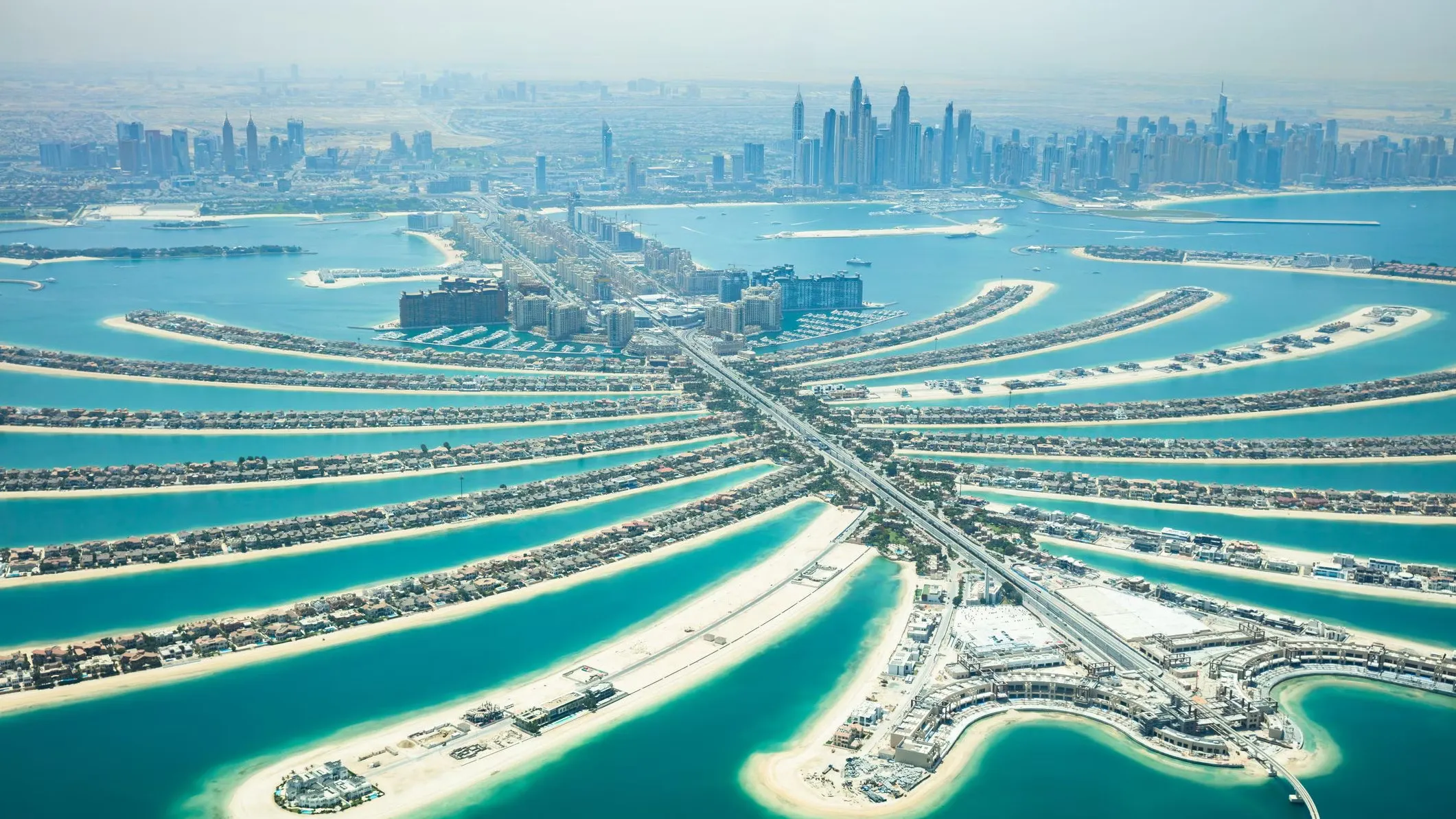


- $120 billion wiped from UAE equity markets in Q1 2026 due to regional conflict escalation — the worst quarterly loss since 2008.
- Dubai real estate transactions hit AED 32.4 billion in Q1 2026, a 29.7% year-on-year increase, proving the market is conflict-resilient.
- Rental yields in Dubai average 6.5–8.2% across prime areas — outperforming global equities, bonds, and regional stock dividends.
- Dubai property has never experienced a stock-style flash crash — the worst historical correction (2009) was gradual and recovered within 5 years.
- Golden Visa eligibility through AED 2M property adds residency security that no stock portfolio can match.
- Off-plan payment plans (60/40, 80/20) allow investors to enter real estate with lower capital commitment than equivalent equity positions.
April 4, 2026
Dubai Property vs Stocks 2026: $120 Billion Wiped Off UAE Markets — Why Real Estate Is Safer
By Joseph Toubia | RERA Certified Agent | Astra Terra Properties
11 min read
Quick answer
💡 Key Takeaways
The Great UAE Market Crash of Q1 2026: What Happened to Stocks
Dubai property vs stocks 2026 is no longer an abstract portfolio debate — it is the defining investment question for anyone with capital in the UAE right now. In the first quarter of 2026, regional conflict escalation between Iran, Israel, and Yemen-based Houthi forces triggered a cascading selloff across Gulf Cooperation Council (GCC) equity markets. The Abu Dhabi Securities Exchange (ADX) lost 18.3% of its value. The Dubai Financial Market (DFM) shed 22.1%. Combined, over $120 billion was wiped from UAE-listed equities between January and March 2026, according to data compiled by Zawya and Bloomberg Terminal reports. Meanwhile, Dubai's real estate market recorded its strongest Q1 in history.
This article examines the hard data behind both asset classes, explains why Dubai property investment in 2026 has proven more resilient than stocks during geopolitical turmoil, and provides a framework for investors deciding where to invest money in Dubai 2026.
The numbers are striking. While equity investors watched portfolios shrink by double digits, the Dubai Land Department (DLD) recorded 30,543 real estate transactions worth AED 32.4 billion in Q1 2026 — a 29.7% increase year-on-year. Not only did property prices hold steady, but in prime areas like Dubai Marina, Downtown Dubai, and Palm Jumeirah, values actually rose between 4% and 7% during the same period that stocks were in freefall, per PropertyMonitor.ae data.
Why UAE Stocks Crashed: The Conflict Premium
The Q1 2026 equity crash was not caused by poor corporate earnings or a domestic recession. It was driven almost entirely by geopolitical risk repricing. When Iranian-backed Houthi forces expanded their Red Sea naval blockade in January 2026, shipping insurance premiums for Gulf routes surged 340%, according to Lloyd's of London data reported by Middle East Eye. Institutional investors — particularly foreign funds holding UAE blue chips — began unwinding positions at speed.
Key equity losses in Q1 2026:
Goldman Sachs published a March 2026 research note titled "GCC Equities: Repricing for Prolonged Regional Uncertainty" that downgraded UAE stocks from Overweight to Neutral, citing "elevated tail risks from direct military escalation" as the primary driver. Foreign institutional outflows from the DFM totalled AED 4.2 billion in Q1 alone — the largest quarterly outflow since 2014.
The core problem with equities during conflict? Liquidity works against you. The very feature that makes stocks attractive — instant tradability — becomes a liability during panic. When sentiment turns, automated trading algorithms and margin calls accelerate the decline. There is no floor, no physical asset underpinning the price.
Dubai Real Estate During Conflict: The Numbers Tell a Different Story
While stock investors were liquidating, Dubai's property market was absorbing record capital inflows. The DLD's Q1 2026 data tells an unambiguous story:
The most revealing data point? Not a single prime community recorded a price decline in Q1 2026. In Business Bay, apartment prices rose 5.8% to an average of AED 1,720 per sq ft. In Jumeirah Village Circle (JVC), the perennial value play, prices climbed 9.2% to AED 1,130 per sq ft. Palm Jumeirah villa prices hit AED 4,200 per sq ft — a new all-time record, according to PropertyMonitor.ae's March 2026 index.
Why did property hold when stocks collapsed? Three structural factors:
1. Physical asset scarcity. Dubai has finite waterfront land. You cannot create a new Palm Jumeirah. When equities become risky, capital migrates toward tangible assets with intrinsic utility — people need somewhere to live, and luxury waterfront has permanent demand.
2. Cash-heavy buyer base. An estimated 68% of Dubai property transactions in Q1 2026 were cash purchases, according to Gulf News property data. No margin calls. No forced liquidation. When your buyer base doesn't rely on borrowed money, there is no cascade mechanism.
3. Population growth as a floor. Dubai's population reached 3.85 million in early 2026, up from 3.55 million in 2024. Every new resident needs housing. This demand floor simply does not exist in equity markets.
Yield Comparison: Property Rental Income vs Stock Dividends
Beyond capital appreciation, the income comparison heavily favours Dubai real estate. Here is the current yield landscape as of Q1 2026:
Dubai property rental yields (annual):
UAE stock dividend yields (pre-crash, annualised):
The difference is significant. A JVC apartment purchased for AED 750,000 generates approximately AED 61,500 in annual rental income — and that income continued uninterrupted throughout the Q1 market turbulence. Compare that to holding AED 750,000 in Emaar stock: the dividend would have been roughly AED 25,500 annually (pre-cut), and the capital value declined by AED 145,000 in three months.
As the research team at Knight Frank Dubai noted in their March 2026 report: "Dubai residential yields remain among the highest globally for a Tier 1 city, and critically, rental demand has shown zero correlation with equity market performance."
Historical Pattern: Property Has Never Flash-Crashed
Critics of real estate point to the 2008-2009 Dubai correction, when property values fell approximately 50% from peak to trough. But consider the mechanism: that decline occurred over 18 months, giving investors time to adjust. It was also driven by domestic over-leverage and speculative flipping — conditions that current RERA regulations have largely eliminated.
By contrast, UAE stocks crashed 60% in the same 2008-2009 period, but the decline happened in weeks, not months. The DFM lost 40% in November 2008 alone. If you held property through the cycle, values recovered fully by 2014. If you panic-sold stocks, you crystallised permanent losses.
The 2020 COVID crash followed the same pattern. DFM fell 33% in March 2020 — in a single month. Dubai property dipped 3-5% for the quarter and was back to pre-COVID levels by mid-2021.
The lesson is consistent: real estate declines gradually and recovers fully. Stock declines are sudden and recovery is uncertain.
The Golden Visa Factor: Residency Security That Stocks Cannot Provide
One advantage of Dubai property investment that is impossible to replicate with equities is the UAE Golden Visa. A property purchase of AED 2 million or above qualifies the buyer — and their family — for a 10-year renewable residency visa.
In 2026, with regional instability making visa security more valuable than ever, this is a decisive factor for many international investors. A stock portfolio of AED 10 million offers zero residency rights. A villa in Dubai Hills Estate offers a decade of stability for an entire family.
According to the General Directorate of Residency and Foreigners Affairs (GDRFA) data reported by Gulf News, Golden Visa issuances through property increased 47% in Q1 2026 compared to Q1 2025 — suggesting that conflict-era investors are choosing real estate specifically for its dual-benefit structure.
Where to Invest Money in Dubai 2026: A Practical Framework
For investors actively deciding between asset classes, here is a practical allocation framework based on Q1 2026 data:
Conservative investors (capital preservation priority): 80% Dubai property / 20% UAE bonds. Focus on ready units in established communities — Dubai Marina, Downtown, JVC. Rental income covers holding costs while capital appreciates 5-8% annually.
Balanced investors (growth + income): 60% Dubai property / 25% international equities (non-GCC) / 15% cash or gold. Off-plan purchases from Tier 1 developers (Emaar, DAMAC, Sobha) offer 40-60% payment plans that allow capital efficiency.
Aggressive growth: Even for risk-tolerant investors, maintaining at least 40% in Dubai real estate provides portfolio stability. Use property rental income to fund equity positions — this way, stock market downturns don't force liquidation of your core holdings.
Joseph's Take: What I'm Telling My Clients Right Now
I have been a licensed broker in Dubai for years, and I have never seen such a clear divergence between asset classes. Every week, I am sitting with clients who sold equity positions at a loss and are moving that capital into Dubai property. Last month alone, three of my clients — two from the UK, one from India — shifted over AED 15 million combined from GCC stocks into ready apartments in Business Bay and off-plan villas in Dubai Hills.
What I tell them is simple: stocks are a bet on sentiment. Property is a bet on fundamentals. Dubai's population is growing. Supply is being absorbed. Rental income is real. And the Golden Visa means your investment doubles as a life decision, not just a financial one.
The AED 2 million threshold for Golden Visa is, in my professional opinion, the single best value proposition in global real estate right now. You get a physical asset, rental income, capital appreciation, and a 10-year family visa. Show me any stock that offers all four.
If you are sitting on equity losses and wondering what to do next, I would welcome a confidential conversation. Reach out via WhatsApp at +971 58 558 0053 or email joseph@astraterra.ae. At Astra Terra Properties (RERA ORN 44050), we help investors make data-driven decisions — not emotional ones.
Is Real Estate Safer Than Stocks in Dubai? The Verdict
The evidence from Q1 2026 is unambiguous. While no investment is without risk, Dubai real estate has demonstrated structural resilience that UAE equities simply cannot match during geopolitical turbulence. Property prices rose while stocks crashed. Rental income continued while dividends were cut. And the Golden Visa adds a layer of personal security that no stock exchange provides.
For investors asking "is real estate safer than stocks in Dubai?" — the data says yes, particularly during periods of regional conflict. The question is not whether to invest in Dubai property, but how much of your portfolio should be allocated there.
Frequently Asked Questions
Is it safer to invest in Dubai property or UAE stocks in 2026?
Based on Q1 2026 data, Dubai property has proven significantly more stable. While UAE equities lost over $120 billion in market capitalisation, Dubai real estate transactions increased 29.7% year-on-year. Property prices in prime areas rose 4-7% during the same period stocks fell 15-22%. Rental yields of 5.9-8.2% also substantially exceed average stock dividend yields of 3.4-3.8%.
How much did UAE stock markets lose in early 2026?
The combined losses across UAE equity markets exceeded $120 billion in Q1 2026. The Dubai Financial Market (DFM) index fell 22.1% and the Abu Dhabi Securities Exchange (ADX) declined 18.3%, driven primarily by geopolitical risk repricing related to the Iran-Israel-Yemen conflict escalation and Red Sea shipping disruption.
Why did Dubai property prices not fall during the 2026 regional conflict?
Three structural factors protected Dubai property: approximately 68% of transactions were cash purchases (no margin-call cascades), Dubai's population grew to 3.85 million creating persistent housing demand, and limited waterfront and prime land supply maintained scarcity value. Additionally, RERA regulations introduced since 2009 have eliminated the speculative flipping that caused the previous crash.
What rental yields can I expect from Dubai property in 2026?
Gross rental yields in Dubai range from 4.8% (Dubai Hills Estate villas) to 8.2% (JVC studios and one-bedroom apartments). Mid-range communities like Business Bay offer 7.1% and Dubai Marina averages 6.8%. These yields substantially outperform UAE stock dividend yields and continued uninterrupted during the Q1 2026 equity selloff.
Can I get a Golden Visa by investing in Dubai property?
Yes. A property purchase valued at AED 2 million or above qualifies you and your family for a 10-year renewable UAE Golden Visa. Golden Visa issuances through property increased 47% in Q1 2026, as investors increasingly value the dual benefit of asset appreciation plus residency security. No equivalent visa benefit exists for stock market investments.
Where should I invest money in Dubai in 2026?
For capital preservation, focus on ready apartments in established communities like Dubai Marina, Downtown Dubai, or JVC, where rental yields cover holding costs and values appreciate 5-8% annually. For growth, consider off-plan purchases from Tier 1 developers with 40/60 or 60/40 payment plans. Most financial advisors recommend at least 40-60% property allocation for UAE-based portfolios in the current geopolitical environment.
Has Dubai property ever crashed like stocks?
The worst historical correction was 2008-2009, when property declined approximately 50% — but this occurred over 18 months, not days. By contrast, the DFM lost 40% in November 2008 alone. Property values fully recovered by 2014, and current RERA regulations prevent the over-leveraged speculation that caused that correction. Dubai property has never experienced a stock-style flash crash.
FAQ — Dubai Property Investor Questions
Is now a good time to buy in Dubai?
For selective buyers, yes. Focus on assets with rental depth, realistic pricing, and resale liquidity.
Which is better right now: ready or off-plan?
Ready and near-handover typically offer clearer risk control and faster income visibility in the current cycle.
How do I avoid weak deals?
Underwrite net yield after service charges, compare building-level comps, and buy with an exit plan.
Area-Specific Intent: Where This Strategy Fits Best
- Business Bay: strong tenant depth, active resale market, central connectivity.
- Dubai Marina: premium rental demand, liquidity in proven towers, selective entry needed.
- JVC: attractive yield profile and broad renter pool for value-focused investors.
- Downtown Dubai: prime demand and prestige-driven occupancy, quality/price discipline required.
Explore area breakdowns: https://www.astraterra.ae/area-guides
Get Your Dubai Investment Shortlist in 24 Hours
Tell us your budget, target yield, and risk level. Astraterra will send handpicked live options with ROI logic and negotiation guidance.
- WhatsApp direct: +971 58 558 0053
- Email: joseph@astraterra.ae
- Best for: Investors, end-users, and relocation buyers
J
Joseph Toubia
CEO & Founder, Astra Terra Properties
RERA-certified real estate professional (BRN 54738) specialising in Dubai off-plan properties, investment advisory, and Golden Visa guidance. Based in Dubai.
Related Tools & Resources
Free calculators and guides to help you make smarter property decisions in Dubai.
Mortgage CalculatorEstimate monthly payments & total interest on Dubai home loans.Use tool →Dubai Buying Cost CalculatorCalculate DLD fees, agency fees & all purchase costs upfront.Use tool →Net Yield CalculatorWork out your true rental yield after expenses & service charges.Use tool →Rent vs Buy CalculatorDecide whether buying or renting makes more financial sense.Use tool →Golden Visa CheckerCheck if your property investment qualifies for a UAE Golden Visa.Use tool →RERA Calculator DubaiVerify if your landlord's rent increase complies with RERA rules.Use tool →Find My Property QuizAnswer a few questions and get matched to the right area & unit type.Use tool →Browse Off-Plan ProjectsExplore curated off-plan launches with flexible payment plans.Use tool →
Ready to Invest in Dubai Property?
Browse our curated selection of off-plan projects with flexible payment plans from 10% down, or explore ready properties for sale across Dubai.