
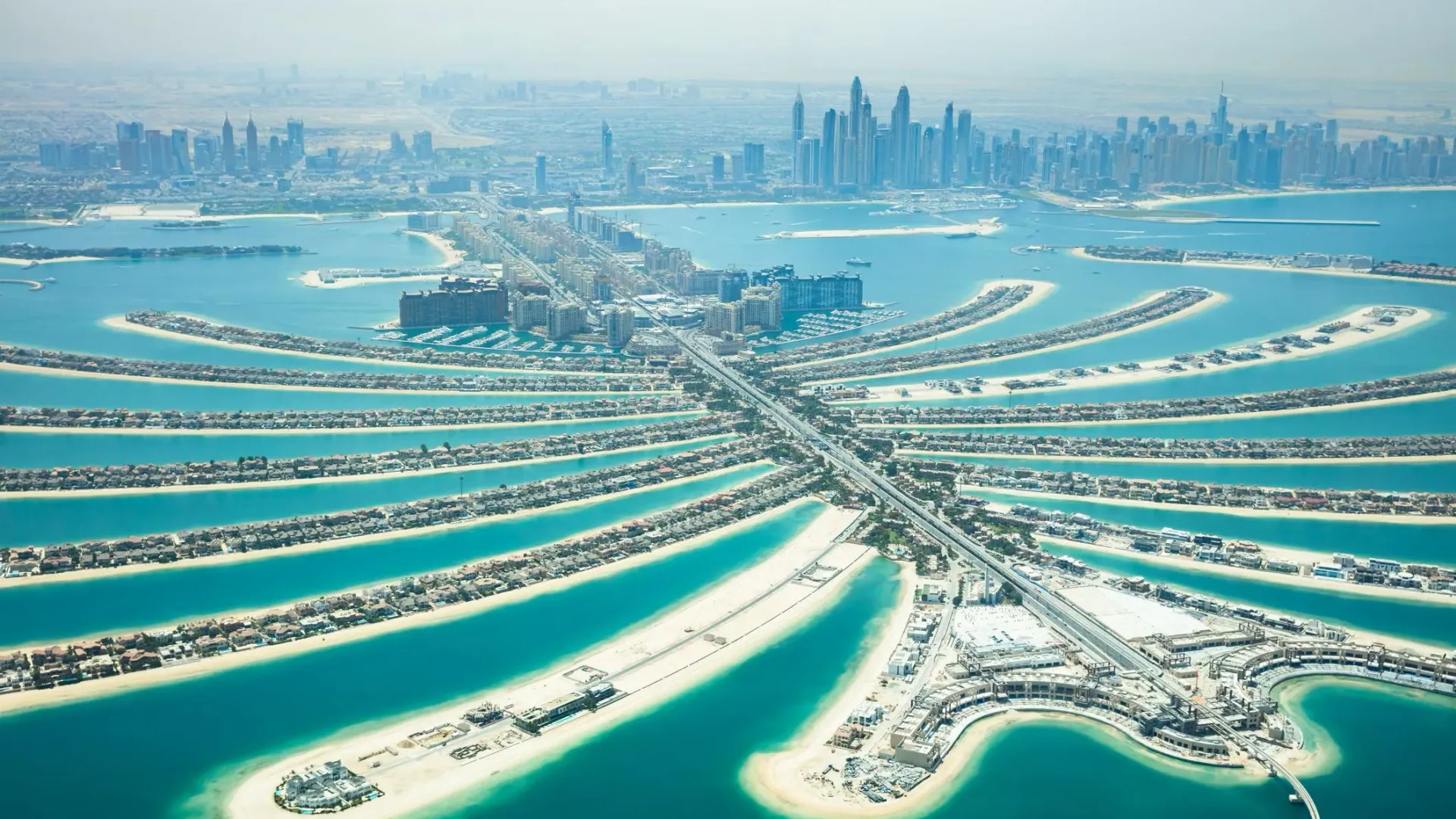
Dubai Property Market 2026 — Prices, Trends & Expert Forecast
Dubai's property market is navigating a pivotal transition in 2026 — from the exceptional boom of 2023–2024 toward a period of more sustainable, fundamentals-driven growth. This analysis covers current prices, transaction volumes, best-performing areas, supply pipeline risks, and a frank assessment of whether now is a good time to buy.
2026 Market Stories Moving the Most Attention Right Now
The most important Dubai property signals right now are not generic "market is hot" headlines. They are specific demand and supply stories: major Emaar launches, first-home buyer momentum, tokenised access, and live transaction data.
Dubai Property Market Overview Q1 2026
Dubai's property market entered 2026 on strong footing. The Dubai Land Department recorded over AED 500 billion in annual transactions in 2024 — a record. Transaction volumes in Q1 2026 remained elevated, driven by continued population growth, sustained HNWI inflows, and a robust off-plan launch pipeline. Price corrections seen in some mid-market areas in late 2025 have largely stabilised.
Dubai's population surpassed 3.8 million in 2025 and continues to grow, adding approximately 100,000 new residents annually. This structural demand — not speculative buying — underpins the market's resilience. HNWI (High Net Worth Individual) migration from Europe, India, Russia, and the UK continues at record pace, with Dubai consistently ranking as the world's top destination for net inflows of millionaire residents.
AED 500B+
Annual transactions (2024 record)
3.8M+
Dubai population and growing
100K+
New residents per year
#1
Global HNWI inflow destination
Price Trends by Property Type (2024–2026)
After the exceptional growth of 2023–2024, price momentum is moderating across all property types in 2026. The data below reflects DLD transaction records and market analysis as of Q1 2026.
Note: Growth figures represent median price per square foot across completed transactions in each category. Individual projects and communities will vary significantly above and below these ranges.
Best Areas Performing in 2026
Five communities stand out as the top performers on capital appreciation in 2026, each driven by distinct demand catalysts.
Al Marjan Island (RAK)
+20–30% price surgeWynn resort effect driving extraordinary price appreciation. Pre-Wynn demand is at peak levels — early buyers are seeing significant unrealised gains.
Mohammed Bin Rashid City
Premium appreciationPremium supply constraint continues to drive strong capital appreciation. Branded residences and master-planned community amenities support sustained demand.
Dubai Hills Estate
12–15% growthFamily demand consistently outpacing supply. Top-rated schools, Dubai Hills Mall, and golf course amenity create a self-contained premium community.
JVC (Jumeirah Village Circle)
Transaction volume leaderHighest transaction volume in Dubai. Stable yields of 7–9%, affordable entry points, and strong tenant demand make JVC the go-to choice for yield-focused investors.
Dubai South
Long-term growth playInfrastructure investment — Al Maktoum International Airport expansion, Expo City, and logistics hub — is driving long-term value creation for patient investors.
Supply Pipeline — What's Coming
Dubai has 160,000+ units under construction due to complete by 2026–2028. Most analysts expect this supply increase to moderate (not reverse) price growth in mid-market areas, while prime and branded product remains in short supply. Communities with established infrastructure — schools, retail, transport — are better insulated from oversupply risk.
The key distinction is between location quality and developer credibility. Projects in established communities from tier-one developers (Emaar, Nakheel, DAMAC, Sobha) have deep buyer queues and minimal completion risk. Speculative launches in greenfield locations from lesser-known developers carry substantially higher vacancy and discount-to-handover risk.
Low supply risk
- ·Prime waterfront (Palm Jumeirah, Creek)
- ·Branded residences (Four Seasons, Ritz-Carlton)
- ·MBR City, Dubai Hills Estate (constrained supply)
- ·Established communities with amenity anchor
Higher supply risk
- ·Mass-market studios in JVC fringe areas
- ·Greenfield communities (no schools / retail)
- ·High concentration of investor-owned stock
- ·Unknown developer — execution risk
Is Now a Good Time to Buy in Dubai?
An honest assessment, not a sales pitch. Here is what the data and fundamentals actually suggest:
Prices vs 2019–2021
Prices are not cheap by historical standards — prime areas are at or near all-time highs. Anyone expecting 2019-level entry prices is likely to wait indefinitely.
Fundamental demand drivers
Population growth, zero income tax, zero capital gains tax, Golden Visa policy, and HNWI migration remain structurally intact and are not reversing. These are the foundations of the market.
Best strategy
Focus on yield-positive properties in communities with proven tenant demand — JVC, Business Bay, Al Furjan, Downtown. Rental yield covering holding costs means you are not dependent on capital appreciation.
What to avoid
Speculative plays in communities with high construction pipeline and no established amenities (schools, retail, transport). These face the most risk from the incoming supply wave.
Off-plan opportunity
Off-plan from proven developers (Emaar, Nakheel, Sobha) still offers 15–25% upside to handover in the right projects — but requires careful developer due diligence.
Dubai Property Market Forecast 2026–2027
Consensus among Dubai property analysts and major brokerages for the 2026–2027 period points to continued growth — but at a more moderate pace than the exceptional 2023–2024 cycle. Here is the detailed outlook by segment:
Transaction Volumes
Expected to remain elevated but below 2024 record peaks
The 2024 transaction record of AED 500B is unlikely to be exceeded in 2026, but volumes will remain historically high as population growth and off-plan launches sustain activity.
Overall Price Growth
5–10% (vs 15% in 2024)
Still positive and above inflation, but the market is clearly moderating from the exceptional 2023–2024 pace. This is a healthy normalisation, not a crash.
Prime Segment
Continued outperformance
Limited supply of beachfront, branded, and ultra-prime product continues to support above-average price growth in Dubai's most prestigious addresses.
Mid-Market
Moderation expected
Large pipeline of new supply in JVC, Dubai South, and JVT will constrain price growth in these communities. Yield compression is the main risk for investors.
Rental Market
Yields holding at 6–8%
Established communities continue to deliver 6–8% gross rental yields. As purchase prices have risen faster than rents, yield compression is modest but ongoing.
Get Expert Guidance on Dubai Property in 2026
Our RERA-certified agents provide free, data-driven advice on buying in Dubai's current market. Tell us your budget and goals, and we will identify the best opportunities available today.
Frequently Asked Questions — Dubai Property Market 2026
Are Dubai property prices going up or down in 2026?
Dubai property prices continue to grow in 2026, but at a more moderate rate than the 15–18% seen in 2024. Most communities are seeing 5–10% annual growth. Prime areas (Palm Jumeirah, MBR City) continue to outperform, while mid-market communities are seeing some price stabilisation.
Will Dubai property prices fall in 2026?
Most analysts do not forecast significant price falls in 2026. While the exceptional growth of 2023–2024 is unlikely to repeat, fundamental demand drivers — population growth, HNWI migration, Golden Visa, zero taxes — remain intact. A modest correction in some oversupplied mid-market communities remains possible.
Which area is performing best in Dubai property market 2026?
Al Marjan Island (Ras Al Khaimah) is seeing the strongest growth driven by Wynn Resort anticipation. In Dubai itself, Mohammed Bin Rashid City, Dubai Hills Estate, and Business Bay are outperforming on capital appreciation. JVC remains the leader in transaction volume and rental yield.
Should I buy property in Dubai now or wait?
Timing the market perfectly is very difficult. Most long-term investors would argue that buying well-located property in Dubai at today's prices — with 6–9% yield covering holding costs — is preferable to waiting and potentially buying at higher prices later. Focus on fundamentals: yield-positive, established community, proven developer.