
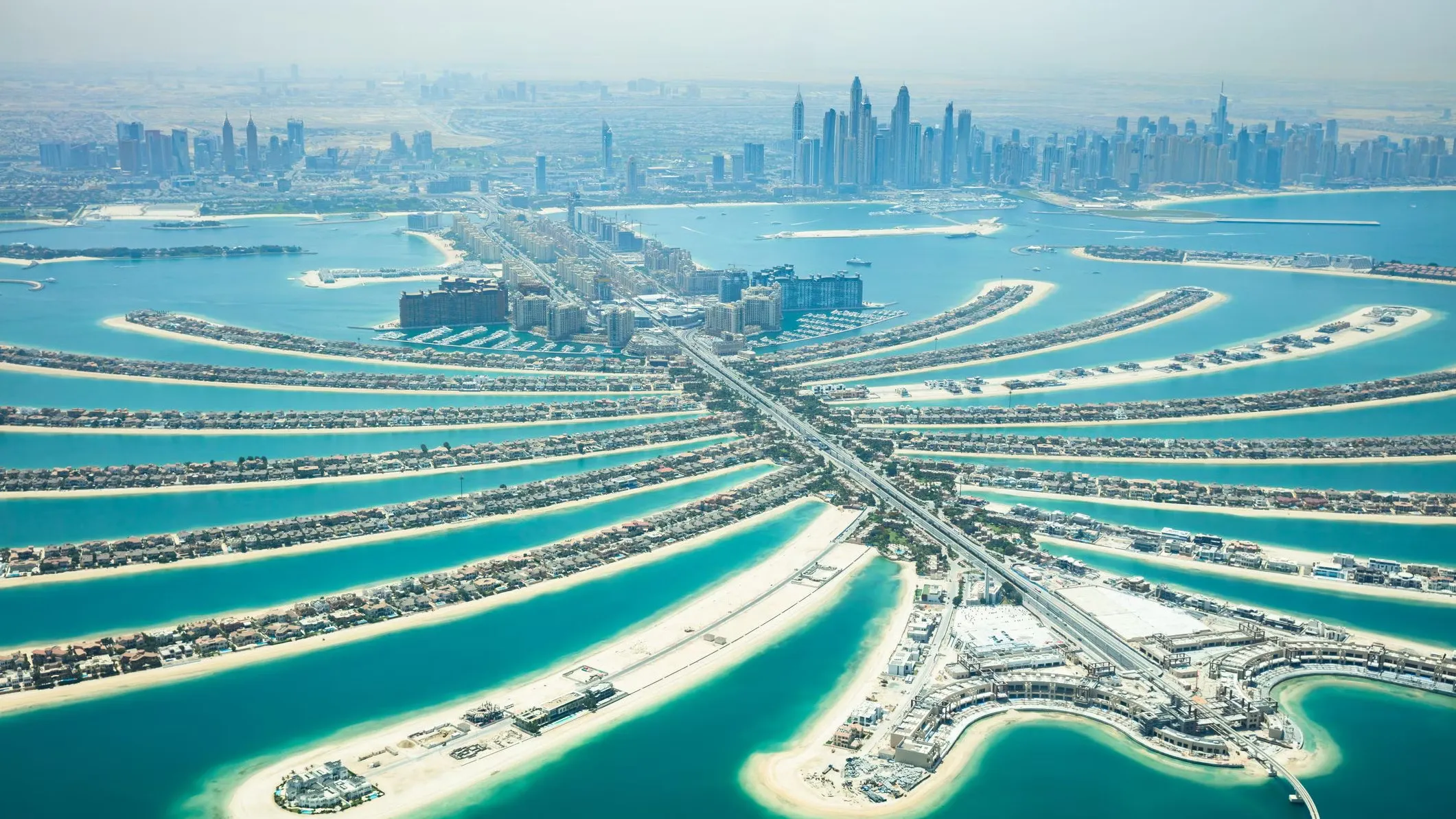

Dubai villa prices 2026 are still moving higher in the right communities, but the easy part of the cycle is clearly fading. The latest market signal is not “everything is booming” and it is not “prices are rolling over” either. It is more nuanced than that: broad market momentum is cooling, while better-located villas and stronger family communities are still holding pricing power.
That distinction matters because serious buyers do not buy “Dubai” as one single asset. They buy a villa on a specific street, in a specific master community, with a specific service-charge profile, school catchment, tenant pool and resale audience. In 2026, that level of detail is becoming more important, not less.
What happened this week and why it matters now
Three fresh market signals line up unusually well. First, Gulf News reported that Dubai’s residential market recorded Dh139.1 billion in Q1 2026 sales across 44,200 residential transactions, with off-plan accounting for 73% of deals. The same report also said average residential prices reached Dh1,683 per square foot in Q1 2026, up 9.6% year on year, while rent growth slowed to 10.2% year on year.
Second, The National highlighted that this has become a more selective market. Its core warning was simple and useful: owners and buyers should stop relying on sentiment and ask whether the asset is genuinely strong enough to justify being held in a tighter decision environment. That thinking applies directly to villas, because the spread between a high-quality family villa and a weak micro-market villa is widening.
Third, Khaleej Times reported that Dubai’s official 2025 price index still showed villas as the best-performing residential segment, with villa prices up 14.83% year on year versus 7.38% for apartments and 9.81% for the overall residential market. In other words, the most recent full-year structural data says villas led; the most recent 2026 quarter says broad growth is cooling; and the most recent behavioural read says buyers are getting more selective. Put together, that is the exact setup where quality outperforms.
The broad market is cooling, but not evenly
A lot of commentary misses this point. Cooling is happening at the market level, but it is not distributed evenly across every community or every product type. Gulf News noted that the annual rise in average prices was the slowest in three years and that a rising supply pipeline is beginning to create a more balanced phase. That does not automatically mean villa demand disappears. It means buyers can finally compare options more carefully.
For villas, this matters because demand is usually more needs-driven than speculative. Families who want space, gardens, privacy, parking, and better community infrastructure do not treat villas the same way short-term speculators treat a generic off-plan apartment launch. If a villa product serves an end-user need inside a proven master community, pricing tends to stay more resilient even when the market overall becomes harder work.
The other helpful Q1 2026 detail is that ready villa activity remained visible in specific communities. Gulf News said DAMAC Hills 2 led ready villa sales with 230 transactions, followed by Dubai South, Al Furjan, The Valley and The Springs. Those names are not random. They represent different buyer motives: value-led family housing, newer suburban expansion, established commuter communities and proven owner-occupier demand.
If you want wider context before drilling into villas specifically, it is worth comparing this move with our existing breakdown on Dubai property prices 2026 and our practical framework on ready vs off-plan in Dubai 2026. Both become more useful in a market where broad direction matters less than asset selection.