← Back to Blogs
February 27, 2026

Living in Dubai as an Expat in 2026: Best Communities, Schools & Cost of Living Guide

By Joseph Toubia | RERA Certified Agent | Astra Terra Properties
Living in Dubai as an Expat in 2026: Best Communities, Schools & Cost of Living Guide

πŸ’‘ Key Takeaways

By Joseph Toubia | RERA Certified Agent | Astraterra Properties | Published: February 27, 2026

Why 2026 Is the Best Year to Relocate to Dubai

Dubai is no longer just a transit hub or a short-term work posting. For hundreds of thousands of families, entrepreneurs, and professionals worldwide, the emirate has become a permanent, aspirational home β€” a place where career opportunities, tax efficiency, safety, and an extraordinary quality of life converge in one sun-drenched city.

What makes 2026 particularly compelling? Several converging factors. Dubai's population now stands at approximately 3.6 million residents, of which roughly 90% are expatriates representing more than 180 nationalities (Dubai Statistics Centre, 2025). That level of diversity is not cosmetic β€” it is cultural infrastructure. You will find your community, your cuisine, your language, and your familiar comforts within days of arriving.

From a macro perspective, the UAE economy is firing on all cylinders. The International Monetary Fund (IMF) forecasts UAE GDP growth of 4.1% in 2025–2026, driven by trade, tourism, technology, and financial services. Job creation continues in financial technology, healthcare, logistics, and digital media β€” sectors actively recruiting international talent.

Critically for property buyers and long-term residents, Dubai's property market set record transaction volumes in 2025. The Dubai Land Department (DLD) recorded more than 180 nationalities among buyers in Q4 2025, with total annual transaction value exceeding AED 500 billion β€” a historic milestone. Knight Frank's UAE Residential Market Monitor Q4 2025 confirmed that Dubai prime residential prices rose 11.2% in 2025, significantly outpacing London (4.1%), New York (3.8%), and Singapore (2.6%).

At Astraterra Properties, we have personally guided families relocating from the UK, India, Australia, Germany, and across the Arab world through every stage of this transition β€” from community shortlisting and school applications to negotiating rental contracts. The questions are always the same: Where should we live? Which school fits our children? What can we afford? This guide answers all of those questions with precision.

Dubai's Best Expat Communities in 2026

Dubai's residential landscape is remarkably varied. Whether you prioritize beach access, school proximity, affordability, or investment upside, there is a community engineered to match. Here are the standout choices for expat families and professionals in 2026:

1. Dubai Hills Estate β€” Best for Families Seeking Green Spaces

Developed by Emaar, Dubai Hills Estate is arguably Dubai's most complete master community. Built around an 18-hole championship golf course and central park, it offers a mix of villas, townhouses, and apartments. Dubai Hills Mall, several international schools (GEMS Heritage, Ranches Primary), and direct Metro Blue Line extension access make this a premium family choice. Average 3-bedroom villa rent: AED 230,000–290,000/year (PropertyFinder Market Report, Jan 2026).

2. Jumeirah Village Circle (JVC) β€” Best Value for Young Professionals

JVC continues to be one of Dubai's most searched residential communities β€” and for good reason. With average 2-bedroom apartment rents of AED 80,000–100,000/year and strong capital appreciation of 14.3% YoY (Property Monitor, Feb 2026), JVC delivers exceptional value for both tenants and investors. Community parks, nurseries, and easy Sheikh Zayed Road access make daily life convenient. At Astraterra, JVC remains our top recommendation for first-time Dubai renters seeking a move-in-ready, affordable community with strong future capital growth potential.

3. Arabian Ranches & Ranches 3 β€” Best for Suburban Family Living

Emaar's flagship villa communities offer the quintessential family Dubai experience: wide roads, landscaped parks, community pools, BBQ areas, and a peaceful atmosphere. Schools like Jumeirah English Speaking School (JESS) and Ranches Primary are within walking distance. Average 4-bedroom villa rent: AED 250,000–330,000/year.

4. Business Bay β€” Best for Urban Professionals

For single expats and couples prioritizing career proximity, Business Bay is unmatched. Walking distance from Downtown Dubai and DIFC, with premium amenities and Dubai Canal waterfront. Average 1-bedroom apartment rent: AED 85,000–115,000/year (Property Finder, Jan 2026). CBRE Dubai Q4 2025 confirmed Business Bay as the top-searched community by professionals aged 25–40.

5. Palm Jumeirah β€” Best for Luxury Beachfront Living

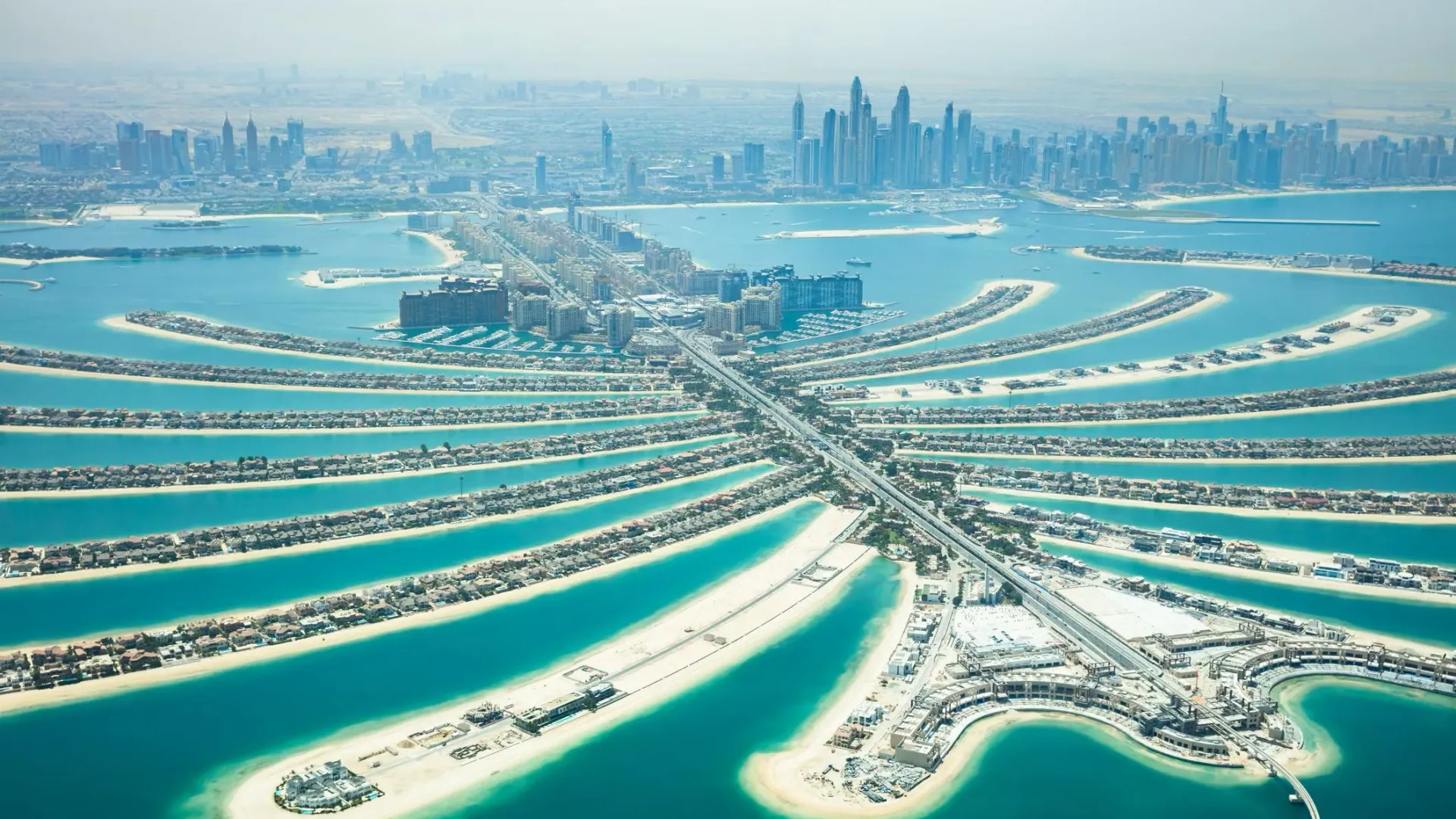
The Palm needs no introduction. With direct beach access, iconic views, and world-class amenities, it remains the pinnacle of Dubai residential prestige. Expect to pay AED 300,000–600,000/year for villas. Knight Frank confirmed Palm Jumeirah villa prices surged 18% in 2025, making it one of the world's fastest appreciating luxury residential addresses.

International Schools: A Dubai Education Guide

Dubai's international school system is one of the most developed in the world. The Knowledge and Human Development Authority (KHDA) Annual Report 2025 confirmed that Dubai now has over 200 licensed international schools serving more than 300,000 students from every major curriculum system.

The main curriculum systems available:

  • British Curriculum (GCSE/A-Levels): GEMS Wellington International, Kings' School, Dubai College β€” fees from AED 45,000–90,000/year per child
  • International Baccalaureate (IB): Dubai International Academy (DIA), Raffles World Academy, Nord Anglia β€” fees AED 60,000–110,000/year
  • American Curriculum: American School of Dubai (ASD), American International School β€” fees AED 45,000οΏ½οΏ½οΏ½85,000/year
  • Indian CBSE/ICSE: Delhi Private School, Our Own English High School β€” most affordable at AED 15,000–35,000/year
  • French Curriculum: LycΓ©e FranΓ§ais International Georges Pompidou β€” AED 35,000–55,000/year

School admission tip: Waitlists at top-tier schools fill 12–18 months in advance. Apply immediately upon confirming your relocation timeline. KHDA inspection ratings (Outstanding, Good, Acceptable) are publicly available at khda.gov.ae and should be your first research stop.

Cost of Living in Dubai: Complete Expat Breakdown

CBRE's Dubai Residential Cost of Living Survey (2025) found that a family of four can live comfortably for AED 18,000–25,000/month β€” comparable to Singapore or Zurich but with zero income tax, dramatically improving disposable income for most western expats. The 0% income tax advantage is transformative: a professional earning AED 45,000/month saves the equivalent of 40% UK income tax β€” effectively a 67% pay raise compared to London.

Typical monthly budget for a professional expat family of four in JVC or Dubai Hills Estate: Rent (3BR apartment/townhouse) AED 8,000–16,000; school fees (per child) AED 2,500–7,500; groceries and dining AED 3,000–5,000; transport AED 1,500–3,000; utilities (DEWA + internet) AED 600–1,200; health insurance (family) AED 1,000–2,500; leisure and lifestyle AED 2,000–4,000. Total: approximately AED 18,600–39,200/month depending on school tier and community choice.

Residency Visa & Golden Visa Options

Every expat living in Dubai requires a valid UAE residence visa. The main categories relevant to relocating families:

  • Employment Visa: Sponsored by your UAE employer. Covers you and immediate family. Renewable every 2–3 years. The most common route for professionals.
  • Freelance/Self-Employed Visa: Available through free zones (DMCC, Dubai South, IFZA). 1–3 year validity. Requires freelance permit and proof of income.
  • Property Investor Visa: Purchase property worth AED 750,000+ to qualify for a 2-year renewable visa. AED 2M+ qualifies for the prestigious 10-year Golden Visa.
  • Golden Visa (10-year): RERA Q4 2025 data confirmed 12,000+ Golden Visas issued via the property investment route in 2025 alone. The Golden Visa provides long-term security, no sponsor needed, and free zone business rights.

The Golden Visa has dramatically changed Dubai's expat equation. A AED 2M+ property purchase unlocks 10 years of legal residency β€” effectively a path to permanent settlement without the bureaucratic hurdles of traditional immigration systems.

Healthcare in Dubai: World-Class, Mandatory Insured

Dubai has one of the most advanced healthcare systems in the MENA region. Employers are legally required to provide health insurance to employees and their families β€” Dubai Health Authority (DHA) enforces compliance with significant fines for non-compliant employers. Dubai has 50+ private hospitals and clinics including Cleveland Clinic, Mediclinic, American Hospital, and Aster. All healthcare professionals must hold DHA licenses equivalent to Western board certification. With employer-provided insurance, most consultations cost AED 50–150 co-pay, and specialist referrals, surgeries, and emergency care are largely covered.

Frequently Asked Questions

Q: Can foreigners own freehold property in Dubai?A: Yes. Since Law No. 7 of 2006, non-UAE nationals can purchase freehold property in designated zones covering approximately 60% of Dubai's residential areas. This includes Downtown, Dubai Marina, JVC, Palm Jumeirah, Dubai Hills Estate, JBR, Business Bay, and hundreds more. The DLD registers the title deed in the buyer's name with full ownership rights.

Q: How long does it take to get a residence visa in Dubai?A: Employment visas typically take 2–4 weeks after medical fitness testing and Emirates ID application. Property-based visas (including Golden Visa) usually take 4–8 weeks from DLD transaction completion. Freelance visa applications via free zones range from 3–6 weeks depending on the zone.

Q: Is Dubai safe for families?A: Dubai consistently ranks among the safest cities globally. The Global Safety Index 2025 ranked Dubai as the 3rd safest city in the world for families. Crime rates are extremely low, CCTV coverage is comprehensive, and community security is robust. Public spaces are family-friendly with strict laws maintaining public order.

Q: What is the best area to live in Dubai for a family with young children?A: Dubai Hills Estate, Arabian Ranches, Jumeirah Village Circle (JVC), and Mirdif consistently top family liveability rankings. The criteria that matter most are school proximity, park access, community amenities, and value. Our Astraterra team conducts personalised community matching consultations β€” factoring in your school shortlist, commute to work, and budget to recommend the single best option for your family's specific profile.

Q: Do I need a car in Dubai?A: In most communities, yes β€” a car significantly improves quality of life. Dubai's Metro covers core urban areas, but suburban communities like JVC, Arabian Ranches, and Dubai Hills Estate are best navigated by car or ride-hailing apps (Careem, Uber). Petrol costs approximately AED 3.00–3.50/litre (Q1 2026), and a typical monthly fuel spend for a family is AED 500–900.

Q: How much do I need to earn to live comfortably in Dubai?A: For a single professional, a salary of AED 15,000–20,000/month provides a very comfortable life in mid-range communities. For a family of four with two school-age children, AED 30,000–45,000/month is typically recommended to cover rent, school fees, and lifestyle expenses without financial stress. Remember: zero income tax applies to all earnings in the UAE.

Looking for Dubai property advice?

Get a free consultation from our RERA-certified team

πŸ’¬ WhatsApp Us β€” Free Consultation

Plan Your Move: Key Resources

Before signing any tenancy contract, make sure you know your rights β€” our Dubai rental law 2026 guide covers everything from RERA rules to notice periods and dispute resolution. If you're considering buying instead of renting, read how to buy property in Dubai as a foreigner in 2026. Ready to find your Dubai home? Browse rental properties across all the best expat communities, or explore properties for sale if you're ready to invest.

Cost of Living in Dubai 2026: The Real Numbers

One of the most common questions I hear from expats planning a move to Dubai is: "What will it actually cost?" Here is a realistic breakdown based on 2026 market data, not aspirational estimates:

Accommodation Costs (Annual Rent)

  • Studio apartment (JVC, Arjan, Al Quoz): AED 40,000–65,000/yr
  • 1BR apartment (JVC, Business Bay, Dubai Marina): AED 65,000–120,000/yr
  • 2BR apartment (JVC, Dubai Hills, Palm Jumeirah): AED 110,000–250,000/yr
  • 3BR villa (Arabian Ranches, Jumeirah): AED 200,000–450,000/yr
  • Agency fee: Typically 5% of annual rent (one-time, on signing)
  • Ejari registration: AED 220
  • DEWA deposit: AED 2,000–4,000 (refundable)

Monthly Living Costs (Single Professional)

  • Accommodation: AED 4,000–8,000/month
  • Groceries (mid-range): AED 1,500–2,500/month
  • Transport (Metro + RTA Bus or car running costs): AED 800–2,500/month
  • Dining out (2–3x per week): AED 1,200–2,500/month
  • Utilities (DEWA): AED 400–900/month (studio–1BR)
  • Health insurance: AED 3,000–8,000/year (employer-provided for most categories)
  • Realistic monthly budget (single professional): AED 10,000–18,000/month

Schools for Expat Families

Education is the largest non-housing expense for expat families. Dubai has 200+ private schools following 15 curricula. Annual fees (2025-2026 academic year):

  • British curriculum (Good/Outstanding KHDA): AED 25,000–90,000/year
  • American curriculum: AED 30,000–80,000/year
  • IB curriculum (well-regarded schools): AED 55,000–110,000/year
  • Notable schools: GEMS Wellington International (British, AED 55,000–80,000), Jumeirah English Speaking School (British, AED 45,000–70,000), Dubai American Academy (AED 65,000–90,000)

Best Expat Communities in Dubai 2026

For Young Professionals

Dubai Marina is the perennial choice β€” JBR beach, metro access, hundreds of restaurants, and a vibrant social scene within walking distance. 1BR apartments at AED 80,000–120,000/year. Jumeirah Village Circle (JVC) offers better value with AED 55,000–80,000/year 1BR rents and a growing community of mid-career professionals.

For Families

Arabian Ranches and Jumeirah remain the family favourites for villa living β€” established school catchments, parks, and community clubs. Dubai Hills Estate has emerged as the premium family choice for 2025-2026 with its Dubai Hills Mall, championship golf course, and multiple Outstanding-rated schools within the community.

For Budget-Conscious Expats

Jumeirah Village Triangle (JVT), International City, and Al Quoz offer the most affordable rental options. Studio apartments from AED 30,000/year in International City, though amenity depth and connectivity are lower than mid-market communities.

Frequently Asked Questions: Living as an Expat in Dubai 2026

Q: Do I need a UAE visa to live in Dubai as an expat?
Yes. Most expats live in Dubai on an employment visa sponsored by their employer, or on a freelance/investor visa. The UAE Golden Visa (for property investors AED 2M+, company founders, or skilled professionals) provides a 10-year renewable residency independent of employment.

Q: Is Dubai safe for expats?
Dubai consistently ranks among the world's safest cities. The 2025 Economist Safe Cities Index ranked Dubai 3rd globally. Crime rates are exceptionally low across all expat communities.

Q: What is the healthcare system like in Dubai for expats?
Dubai has world-class private healthcare. Major hospitals include Cleveland Clinic Abu Dhabi, Mediclinic City Hospital, and American Hospital Dubai. All employers are required by law to provide health insurance. Private health insurance for self-employed expats costs AED 3,000–15,000/year depending on coverage level.

Q: Can I buy property in Dubai as an expat?
Yes. Dubai has designated freehold areas where foreign nationals can purchase property with full ownership rights. Communities like Dubai Marina, JVC, Business Bay, Downtown, and Palm Jumeirah are all freehold. See our complete guide to buying property in Dubai as a foreigner for step-by-step guidance.

Sources

  • Dubai Statistics Centre β€” Population and Cost of Living Report 2025
  • KHDA (Knowledge and Human Development Authority) β€” School Fee Guide 2025-2026
  • RERA β€” Average Rental Index Dubai Q4 2025
  • Economist Intelligence Unit β€” Safe Cities Index 2025
  • Dubai Land Department (DLD) β€” Expat Property Ownership Statistics 2025

Joseph's Take: Making Dubai Work for You as an Expat

I arrived in Dubai years before I started Astraterra Properties, and I remember the overwhelm of navigating a new city with no local knowledge. The questions that kept me up at night β€” which community, which landlord, which school β€” are the same questions my expat clients ask me every week. Having lived through it personally, my advice is always: spend the first 3 months understanding the city before you commit to any long-term contract.

The most common mistake new expats make is choosing an area based on the office location alone, without considering lifestyle fit. A finance professional in DIFC who rents in JVC will spend 45 minutes commuting each way and feel disconnected from the social life they expected. The same professional living in Business Bay or Downtown walks to work and genuinely lives in the city. The AED 20,000–40,000/year rental premium is paid back many times over in quality of life.

For expat families, my consistent recommendation is: choose the school first, then the home. Dubai's best schools have waiting lists. Secure your school placement first, then find accommodation within a manageable distance. Trying to move your child mid-year in Dubai is significantly more disruptive than in most Western education systems due to the curriculum diversity across schools.

If you want a local expert who will give you honest, experienced-based advice on the right community for your budget and lifestyle β€” not just try to sell you the highest-commission listing β€” call me at +971 58 558 0053 or visit astraterra.ae

Frequently Asked Questions

Frequently Asked Questions: Expat Life in Dubai

Is Dubai a good place for expats to live in 2026?

Dubai remains one of the world's top expat destinations, consistently ranking in the top 5 in Mercer Quality of Living surveys. Key draws: no income tax, excellent safety, high quality modern infrastructure, globally diverse community (190+ nationalities), year-round sunshine, strong healthcare and international schools, and a dynamic dining and entertainment scene. The main challenges for expats are: high cost of living (especially rent), extreme summer heat (June–September), cultural adjustment (alcohol laws, dress codes in certain areas), and visa dependency on employment.

What is the average cost of living for a single expat in Dubai?

A single professional expat in Dubai typically spends AED 10,000–20,000/month. Breakdown: rent for a 1BR apartment (AED 4,000–9,000/month depending on area and quality); food and groceries (AED 1,500–3,000/month); transport (AED 800–2,000/month by car or taxi/Careem); entertainment and dining out (AED 1,500–3,000/month); health insurance (usually employer-provided but worth AED 500–1,500/month if self-employed); utilities and internet (AED 400–800/month). Lifestyle spending varies enormously β€” Dubai enables both budget and ultra-luxury lifestyles.

What visa do I need to live in Dubai as an expat?

Most expats in Dubai live on one of these visa types: Employment Visa (sponsored by UAE employer, linked to job); Investor Visa (for business owners and company shareholders); Property Investor Visa / Golden Visa (for property owners at AED 2M+); Remote Work Visa (1-year renewable for remote workers earning minimum USD 5,000/month); Freelancer Permit (various free zones offer freelancer licences with visa eligibility); and Family Sponsorship (visa sponsored by a UAE-resident spouse or parent). Visa requirements change β€” verify with the ICP (icp.gov.ae) or a registered PRO agent before applying.

Which areas in Dubai are most popular with expats?

Popular expat communities in Dubai: Jumeirah (beach access, family feel, Western expats); Dubai Marina / JBR (young professionals, vibrant social scene, waterfront); JVC β€” Jumeirah Village Circle (value for money, families and young professionals); Business Bay (DINK couples, proximity to DIFC/Downtown); Mirdif (quiet, spacious villas and apartments, families); Al Barsha (central, good school access, diverse); Karama and Bur Dubai (budget-friendly, South Asian expat community focus). Each area has a distinct demographic and lifestyle character.

How do I open a UAE bank account as an expat?

To open a UAE bank account as a resident expat: you typically need a valid UAE residence visa, Emirates ID card, salary certificate or proof of income, and tenancy contract (Ejari) or utility bill as address proof. Most major UAE banks (Emirates NBD, Mashreq, ADCB, FAB, RAKBANK, Liv.) offer accounts for residents. Digital banks (Liv. by Emirates NBD, Wio) offer quick digital account opening with minimal documentation. Non-residents can open accounts at some UAE banks with a valid passport and source-of-funds documentation, though this is more limited.

What should I know about culture and social norms as an expat in Dubai?

Key cultural considerations for Dubai expats: respect for Islamic customs is important β€” dress modestly in traditional areas, malls, and during Ramadan; alcohol is available in licensed venues (hotels, bars, clubs) but not in public; public displays of affection are technically illegal; Friday is the weekly day off (UAE weekend shifted to Saturday-Sunday in 2022 for most public sector, but some private sector entities retained Friday); Ramadan requires discretion (no eating/drinking in public during daylight hours). Dubai is pragmatic and tolerant for a Muslim-majority jurisdiction β€” Western lifestyles are largely accommodated within the expat community.

How does healthcare work for expats in Dubai?

Healthcare in Dubai is primarily private. Employers are legally required to provide health insurance for all employees. Self-employed expats or business owners must source their own insurance β€” individual plans start from approximately AED 3,000–8,000/year for basic cover, rising to AED 15,000–40,000/year for comprehensive family plans. Dubai has excellent hospitals: American Hospital, Cleveland Clinic, Mediclinic, Aster Hospitals, Saudi German Hospital, and City Hospital. Emergency care is available to all but can be expensive without insurance. Keep your health card accessible at all times.

πŸ”’ Safety first: Is Dubai Safe? Complete 2026 Safety Guide for Expats β†’

🌍 Investing in Dubai from Abroad?

We help international investors navigate Dubai's off-plan market. Free video consultation with Joseph Toubia, RERA licensed broker (BRN 54738).

WhatsApp: +971 58 558 0053
J

Joseph Toubia

Founder & CEO | RERA Certified Agent | Astra Terra Properties

Joseph Toubia is the founder and CEO of Astra Terra Properties, a full-service real estate agency headquartered in Business Bay, Dubai. With years of hands-on experience in the Dubai property market and RERA certification, Joseph specialises in helping buyers, investors, and tenants navigate the UAE real estate landscape with confidence.

πŸ“ž +971 58 558 0053βœ‰οΈ info@astraterra.ae🌐 View ProfileπŸ’¬ WhatsApp Joseph

Ready to Invest in Dubai Property?

Browse our curated selection of off-plan projects with flexible payment plans from 10% down, or explore ready properties for sale across Dubai.

Browse Off-Plan Projects β†’Buy Ready Property β†’
Get Free Consultation