← Back to Blogs
February 24, 2026

How to Buy Property in Dubai as a Foreigner in 2026: Complete Investor's Guide

By Joseph Toubia | RERA Certified Agent | Astra Terra Properties
How to Buy Property in Dubai as a Foreigner in 2026: Complete Investor's Guide

By Joseph Toubia | RERA Certified Agent | Astraterra Properties Published: February 24, 2026

Why Foreigners Are Flocking to Dubai Property in 2026

Dubai's real estate market has never been more accessible — or more compelling — for foreign investors. In January 2026, the Dubai Land Department (DLD) recorded 15,238 property transactions totalling AED 43.7 billion, representing an 18% year-on-year increase. International buyers drove the bulk of this growth, with 71 nationalities making purchases in Q4 2025 alone (RERA, Q4 2025 Buyer Nationality Report).

What makes Dubai uniquely attractive to overseas investors? The answer lies in a convergence of structural advantages that few global markets can match: zero property tax, zero capital gains tax, full foreign ownership in designated freehold zones, and a legal framework backed by one of the world's most transparent land registries.

At Astraterra Properties, we work with buyers from across Europe, Asia, Africa, and the Americas — and without exception, the question every first-time foreign buyer asks us is the same: "Is it really that straightforward?" The answer is yes — when you understand the process. This guide gives you everything you need to buy confidently in Dubai in 2026.

Knight Frank's UAE Residential Market Monitor (Q4 2025) notes that Dubai prime residential prices rose 11.2% over 2025 — outperforming London (4.1%), New York (3.8%), and Singapore (2.6%). Yet compared to those cities, Dubai still offers dramatically lower entry prices, higher yields, and significantly lower transaction costs. For international capital, the value proposition remains exceptional.

Legal Framework: Freehold vs Leasehold — What You Need to Know

The most important legal concept for any foreign buyer to understand is the distinction between freehold and leasehold ownership in Dubai.

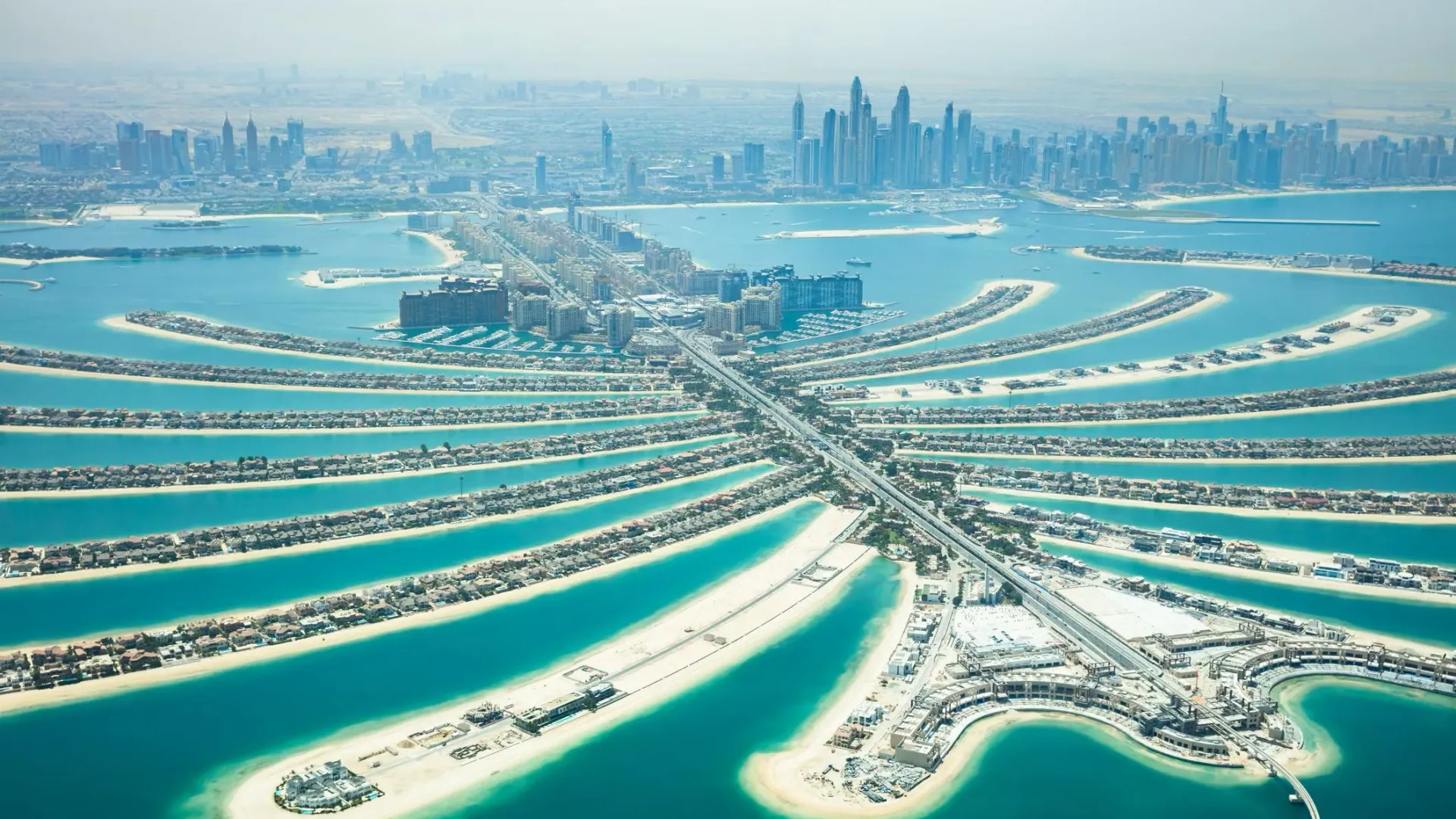
Freehold ownership means you own the property and the land beneath it outright, in perpetuity. As a foreigner, you can purchase freehold property in any of Dubai's 60+ designated freehold zones, which were established by Law No. 7 of 2006 and expanded under subsequent RERA decrees. These zones include virtually every major investment community: Dubai Marina, Downtown Dubai, Palm Jumeirah, JVC, Business Bay, Arabian Ranches, DAMAC Hills, and many more.

Leasehold ownership grants usage rights for a fixed period (typically 30–99 years) without permanent land ownership. While leasehold properties exist in some areas, the vast majority of new developments and resale transactions for foreigners involve freehold title.

RERA (Real Estate Regulatory Authority) oversees all transactions, and the DLD maintains the Oqood (off-plan registration) and standard title deed systems. All property titles are registered in the DLD's blockchain-backed land registry, offering exceptional transparency and legal certainty.

Step-by-Step Buying Process: From Search to Title Deed

Buying property in Dubai as a foreigner follows a structured, well-regulated process. Here's the complete sequence:

Step 1 — Define Your Investment Goals: Are you buying for rental income, capital appreciation, personal use, or a combination? This determines the optimal community, property type (apartment vs villa), and whether to consider off-plan or ready units. Budget your total cost including fees (see below).

Step 2 — Engage a RERA-Licensed Agent: In Dubai, all real estate agents must hold a RERA Broker Card. Always verify your agent's registration on the Dubai REST app or RERA's official directory before signing anything. A qualified agent will provide access to MLS listings, market data, and negotiate on your behalf.

Step 3 — Property Search & Viewing: Once you've identified target communities and property types, your agent arranges viewings. For off-plan purchases, you'll tour developer show apartments and review floor plans, payment schedules, and handover timelines. For ready properties, physical inspection is essential — check snag lists, DEWA connections, service charges, and maintenance history.

Step 4 — Reservation & MOU Signing: When you've selected a property, you sign a Memorandum of Understanding (Form F for secondary market, or developer SPA for off-plan). A standard security deposit of 10% of the purchase price is paid at this stage (held in escrow). For off-plan, developers typically require a booking deposit of 5–20%.

Step 5 — NOC (No Objection Certificate): For secondary market resales, the seller's developer issues an NOC confirming no outstanding service charges or dues on the property. This typically takes 5–10 business days and costs AED 500–5,000 depending on the developer.

Step 6 — DLD Transfer & Title Deed: The final transfer occurs at a DLD Trustee Office (or via the new digital DLD platform). Both buyer and seller (or their POA holders) must attend, or the transfer can be executed via Power of Attorney. The buyer pays the 4% DLD transfer fee, and the new title deed is issued — typically within 24–48 hours. No minimum stay in the UAE is required; transfers can be completed via an authorised Power of Attorney.

Total Cost of Buying: All Fees, Taxes & Hidden Costs Explained

One of the biggest advantages of buying in Dubai is the low ongoing cost burden — but buyers must budget carefully for upfront transaction costs. Here is a complete breakdown:

DLD Transfer Fee: 4% of purchase price (paid once at transfer). This is the largest transaction cost and is split in practice: typically 2% buyer + 2% seller, though full 4% buyer-pay arrangements exist. Source: Dubai Land Department Official Fee Schedule 2026.

Agency Commission: Standard 2% of purchase price, paid by the buyer (secondary market). For off-plan, developer pays the commission — buyer pays nothing to the agent.

DLD Registration Trustee Fee: AED 4,000 for properties above AED 500,000; AED 2,000 for below AED 500,000. Plus VAT (5%).

Mortgage Registration Fee (if financing): 0.25% of the loan amount, payable to the DLD.

Valuation Report: AED 2,500–3,500 (required for mortgage applications).

Service Charges (Annual): Varies by community. Typical range AED 8–30 per sq ft per year. CBRE's Dubai Service Charge Index 2025 cites an average of AED 14.2/sq ft across major communities. Always verify RERA's approved service charge rate for the specific building before purchasing.

Total Acquisition Cost Summary (Example: AED 1.5M apartment):

Note: There is no stamp duty, no annual property tax, no capital gains tax, and no inheritance tax on Dubai residential property — making the long-term holding cost dramatically lower than most global markets.

Mortgage & Financing Options for Non-Residents

Foreign buyers can access mortgage financing in Dubai, though terms differ slightly for non-residents. Here's what to know:

LTV (Loan-to-Value) Limits: Per UAE Central Bank regulations, non-resident foreigners can finance up to 50% of the property value for their first property (50% down payment required). UAE residents can finance up to 80% (first property) or 65% (subsequent properties) for properties priced below AED 5 million.

Eligible Banks: Major UAE banks offering mortgages to non-residents include Emirates NBD, ADCB, Mashreq, First Abu Dhabi Bank, HSBC UAE, and Standard Chartered UAE. Mortgage rates in early 2026 range from approximately 4.5–6.2% per annum depending on residency status, LTV, and term.

Required Documents: Passport copy, 3–6 months bank statements, proof of income (salary certificates or audited financials for self-employed), credit bureau report from home country, and property valuation report.

At Astraterra, we partner with independent mortgage brokers who access rates across 12+ UAE lenders simultaneously — ensuring our clients consistently secure the best terms available. In one recent case, we helped a UK-based investor secure a 4.75% variable rate on a 60% LTV mortgage for a Downtown Dubai apartment, allowing them to deploy remaining capital into a second investment.

Looking for Dubai property advice?

Get a free consultation from our RERA-certified team

💬 WhatsApp Us — Free Consultation

Best Communities for Foreign Investors in 2026

Community selection is arguably the most important decision a foreign investor makes. Different communities suit different investment profiles. Here's our current guidance based on live market data:

For Maximum Rental Yield — Jumeirah Village Circle (JVC): JVC consistently delivers the strongest gross yields in Dubai, averaging 7.8% for studios and 7.4% for one-bedrooms (CBRE Dubai Q4 2025). Average 1BR entry price is approximately AED 850,000–900,000, with monthly rents of AED 6,000–7,500. Strong demand from young professionals and families, with over 800 transactions in January 2026 alone (DLD). JVC has also seen capital appreciation of +14.3% year-on-year (Property Monitor, Feb 2026).

For Capital Growth — Dubai Hills Estate: A master-planned community by Emaar, Dubai Hills has outperformed most freehold areas on capital appreciation. Luxury villa prices rose over 19% in 2025 (Knight Frank UAE Q4 2025). Entry for 3BR villas starts around AED 3.8M–5M. Yields are more modest at 4.5–5.5%, but capital growth prospects remain strong with ongoing infrastructure development and school capacity expansion.

For Prestige & Liquidity — Downtown Dubai / Dubai Marina: These established prime areas offer unparalleled liquidity (easier resale), strong short-term rental performance via Airbnb/Booking.com, and brand recognition that appeals to buyers globally. Yields typically range 4.5–6% (CBRE), with capital growth lagging newer communities. Best suited to buyers prioritising liquid assets or short-let income.

For Off-Plan Value — Dubai South / Al Furjan: Dubai South continues to benefit from the Expo 2020 legacy, Al Maktoum International Airport expansion, and an influx of logistics and aviation sector workers. Off-plan studios and 1BRs are available from AED 500,000–750,000 with 40/60 and 70/30 payment plans. Projected yields of 7–8.5% post-completion (Property Finder Market Report, Jan 2026).

Astraterra's Current Insight: In our client advisory work throughout early 2026, we're seeing the strongest investor interest consolidate around JVC, Business Bay, and Dubai South for yield-first strategies, while Dubai Hills and Palm Jumeirah continue to attract HNW buyers focused on wealth preservation and lifestyle. Our team has completed 15+ investor transactions across these communities in Q1 2026 alone.

Golden Visa Qualification Through Property: Foreign buyers who purchase property worth AED 2 million or more (individual or combined portfolio) qualify for the UAE 10-Year Golden Visa. This provides the right to live, work, and study in the UAE, sponsor family members, and maintain UAE residency without needing an employer. It's arguably the most powerful secondary benefit of Dubai property investment available today. RERA confirmed in Q4 2025 that over 12,000 Golden Visas were issued via the property route in 2025 alone.

Frequently Asked Questions

Q: Can I buy property in Dubai without visiting the UAE? A: Yes. Purchases can be completed remotely via a Power of Attorney (POA) — a notarised document authorising a trusted representative to sign and transfer on your behalf. Many of our international clients complete the entire transaction from overseas. The key requirement is that the POA must be notarised and attested by the UAE embassy in your home country, or signed before a UAE notary public if you visit.

Q: Do I need a UAE residence visa to buy property in Dubai? A: No. Foreign nationals of any country can purchase freehold property in designated zones in Dubai without a visa or UAE residency. However, if you plan to finance the purchase via a UAE mortgage, some lenders require UAE residency. Cash purchases have no such restriction.

Q: What is the minimum budget to buy property in Dubai in 2026? A: The lowest entry point for freehold apartments in well-established communities is approximately AED 400,000–500,000 for studios in areas like International City, Dubai South, and Discovery Gardens. For JVC studios, budget AED 550,000–700,000. For Business Bay 1BRs, expect AED 900,000–1.3M. Add approximately 6–7% for transaction costs (DLD fee + agency + trustee fees).

Q: Are there any restrictions on renting out my Dubai property? A: Owners can rent their properties for either long-term (12-month Ejari contracts) or short-term/holiday rentals (minimum 1-night stays via platforms like Airbnb or Booking.com). Short-term rental requires a DTCM (Dubai Tourism) holiday home licence per unit, typically costing AED 1,500–3,700 per year depending on unit size. There are no restrictions on foreign owners renting their properties.

Q: What happens to my property if I pass away — does it go to the UAE government? A: No. Dubai law respects the inheritance laws of the deceased's home country for expatriate-owned properties, provided a registered Will is in place. The DIFC Wills Service Centre (for non-Muslims) allows foreigners to register wills specifically covering UAE assets, ensuring property passes to your intended beneficiaries. This service costs approximately AED 10,000 and is strongly recommended for any property owner.

Q: Is Dubai property a safe investment in 2026 given global economic uncertainty? A: Dubai's fundamentals remain robust. Population grew by 100,000+ in 2025, reaching 3.8M residents (Dubai Statistics Centre). Tourism hit a record 18.7M visitors in 2025. The UAE's GDP expanded 4.1% in 2025 (IMF estimate). With a zero-debt fiscal policy, massive sovereign wealth reserves, and a diversification-driven economic agenda, Dubai's property market is underpinned by genuine demand — not speculative excess. While no market is risk-free, Dubai continues to offer an exceptionally favourable risk-reward profile for international real estate investors.

Continue Your Dubai Property Journey

Once you've purchased, understanding the rental market is essential. Our Dubai rental law 2026 guide covers everything landlords and tenants need to know. Planning to live in your purchase? Read our guide to living in Dubai as an expat in 2026 covering the best communities, schools and cost of living. Start your property search today: browse all properties for sale in Dubai, explore off-plan projects with flexible payment plans, or meet our trusted developer partners.

Frequently Asked Questions

Frequently Asked Questions: Buying Property in Dubai as a Foreigner

Can any foreigner buy property in Dubai?

Yes — citizens of any country can purchase freehold property in Dubai's designated freehold zones without restrictions. You do not need to be a UAE resident or visit the UAE to buy — remote purchases are possible. Dubai has one of the world's most open freehold property markets for international buyers, with full legal title registration through the Dubai Land Department (DLD). There are no restrictions on nationality, though buyers should check their home country's laws on holding foreign property.

What areas in Dubai can foreigners buy freehold property?

Designated freehold areas where foreigners can buy with full ownership rights include: Dubai Marina, Downtown Dubai, Palm Jumeirah, Jumeirah Village Circle (JVC), Business Bay, Dubai Hills Estate, DIFC, JLT (Jumeirah Lake Towers), Mirdif, Arabian Ranches, Dubai Creek Harbour, MBR City, and dozens more. Practically all of Dubai's major investment and residential communities are within freehold zones. A non-freehold (leasehold) zone, where foreigners can only lease for up to 99 years, is different — always confirm freehold status before purchasing.

What are the total costs of buying property in Dubai as a foreigner?

Total purchase costs in Dubai typically amount to 5–7% above the property price: DLD transfer fee: 4%; DLD admin fee: AED 580–4,200; agency commission: 2% (paid by buyer in most cases); conveyancing/legal fees: AED 5,000–15,000; property valuation (for mortgage): AED 2,500–5,000; mortgage arrangement fee (if applicable): 0.25–1%; title deed registration fee (included in DLD). Unlike many countries, there are no stamp duties, no annual property taxes, and no capital gains tax.

Do I need to be physically present in Dubai to buy property?

No. Dubai property can be purchased remotely. Most developers and sellers accept electronic SPA signing (DocuSign). The DLD power-of-attorney (POA) system allows a UAE-based representative to complete registration on your behalf. For off-plan purchases, the developer handles the DLD registration and your physical presence is not required at any stage. For ready property transfers, either you attend in person or grant POA to a trusted representative or conveyancer. Astraterra Properties has assisted multiple international clients to complete full purchases remotely.

How long does it take to buy property in Dubai?

For ready property with cash: 2–4 weeks from offer acceptance to title deed receipt. For ready property with a mortgage: 4–8 weeks (bank processing is the main delay). For off-plan: the SPA can be signed within 1–2 weeks of booking, and the DLD Oqood pre-registration is typically done within 30 days. There is no lengthy conveyancing process as found in the UK — Dubai's DLD processes are efficient and largely digital.

What taxes does a foreigner pay on Dubai property?

Foreigners buying property in Dubai pay: the 4% DLD transfer fee at purchase (one-time). Ongoing: no annual property tax, no income tax on rental income, no capital gains tax on sale proceeds, no inheritance tax. Service charges (AED 5–25/sqft/year) are the main ongoing cost. VAT is not applicable to residential property sales or residential rentals in the UAE. Commercial property sales and rentals do attract 5% VAT. This exceptional tax efficiency is a core draw for international investors and helps explain Dubai's consistent inbound investment flows.

Should I use a Dubai real estate agent when buying as a foreigner?

Using a RERA-licensed Dubai agent is strongly recommended for foreign buyers, particularly first-time buyers. A licensed agent provides: property search and shortlisting, price negotiation, due diligence (title deed verification, encumbrance checks), SPA review coordination, DLD registration support, and post-purchase property management if needed. Commission is typically 2% paid by the buyer. Verify your agent's RERA licence at the RERA broker registration portal before engaging. Astraterra Properties is RERA-certified and specialises in guiding international buyers through their first Dubai property purchase.

Investment Disclaimer: This article is for informational purposes only and does not constitute financial or investment advice. Property values and rental yields can go up or down. Always conduct your own due diligence and consult a qualified financial advisor before making investment decisions. Prices quoted are indicative as of Q1 2026 and subject to change.

💰 Price data: Check current property prices across all Dubai areas →

🌍 Investing in Dubai from Abroad?

We help international investors navigate Dubai's off-plan market. Free video consultation with Joseph Toubia, RERA licensed broker (BRN 54738).

WhatsApp: +971 58 558 0053
J

Joseph Toubia

Founder & CEO | RERA Certified Agent | Astra Terra Properties

Joseph Toubia is the founder and CEO of Astra Terra Properties, a full-service real estate agency headquartered in Business Bay, Dubai. With years of hands-on experience in the Dubai property market and RERA certification, Joseph specialises in helping buyers, investors, and tenants navigate the UAE real estate landscape with confidence.

📞 +971 58 558 0053✉️ info@astraterra.ae🌐 View Profile💬 WhatsApp Joseph

Ready to Invest in Dubai Property?

Browse our curated selection of off-plan projects with flexible payment plans from 10% down, or explore ready properties for sale across Dubai.

Browse Off-Plan Projects →Buy Ready Property →
Get Free Consultation