← Back to Blogs
February 16, 2026

Dubai Property Market Q1 2026: Why Prices Are Stabilizing After Record Growth

By Joseph Toubia | RERA Certified Agent | Astra Terra Properties
Dubai Property Market Q1 2026: Why Prices Are Stabilizing After Record Growth

Dubai Property Market Q1 2026: Why Prices Are Stabilising After Record Growth

Dubai's property market in Q1 2026 is undergoing one of the most fascinating transitions in its two-decade history as a global real estate destination. After two years of extraordinary price appreciation average residential prices rose 18.3% in 2024 and a further 12.7% in 2025 (Dubai Land Department Annual Reports) the market has entered a phase of deliberate stabilisation. Transaction volumes are rising while price growth moderates. This is not a slowdown. It is maturation, and it carries important signals for investors navigating the next 12–24 months.

The DLD's preliminary Q1 2026 data (January–February 2026) shows 24,890 residential transactions worth AED 63.4 billion a 14% increase in volume year-on-year, even as average price-per-sqft across the emirate declined marginally by 1.8% from Q4 2025 peaks. This divergence between rising volumes and stabilising prices is characteristic of a market where end-user demand is replacing speculative flipping, and where supply from the unprecedented 2023–2025 off-plan launch wave is beginning to reach buyers.

For investors, the Q1 2026 stabilisation creates a distinct set of opportunities that did not exist during the frenzy of 2023–2024: negotiating power has returned to buyers in several mid-market segments, developer payment terms have become significantly more flexible, and the rental yield story which held strong throughout the price surge remains compelling across Dubai's established residential communities.

This report examines the Q1 2026 market across three dimensions: the transaction data underpinning the stabilisation narrative, the micro-market divergences revealing where growth continues versus where correction is occurring, and the specific investment implications for buyers active in this environment.

Q1 2026 Transaction Data: What the Numbers Really Show

The headline stabilisation narrative masks significant divergence between segments of the market. Here is the detailed breakdown:

Ready Property Market

Ready (completed) property transactions in Q1 2026 show the clearest evidence of price stabilisation. Average prices across Dubai's established mid-market communities Jumeirah Village Circle, Dubai Sports City, Al Furjan, and Arjan declined 2–4% from Q4 2025 peaks as supply increased from handovers of units launched in 2022–2023. This creates genuine buying opportunities.

  • JVC: Average apartment AED 1,100–1,200 per sqft (down from AED 1,250 peak in Q3 2025)
  • Business Bay: Average apartment AED 2,100–2,400 per sqft (broadly flat from Q4 2025)
  • Dubai Hills Estate: Apartment average AED 2,300–2,600 per sqft; villas +4% from Q4 2025 (supply constrained)
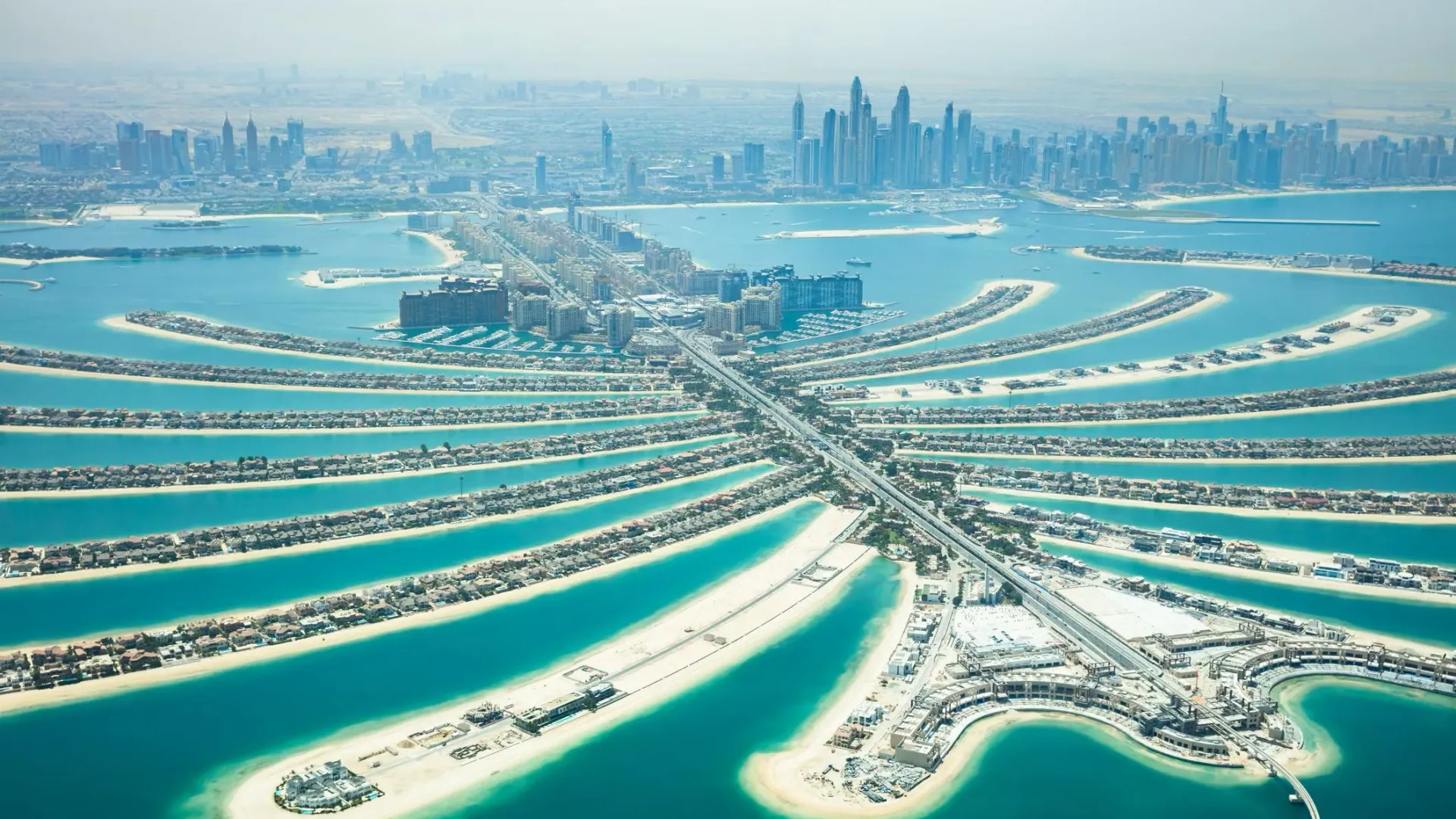
  • Palm Jumeirah: Villa pricing +8% YoY; apartment pricing flat-to-marginally-up

Off-Plan Market

Off-plan transactions represent 68% of Q1 2026 volume a record share reflecting continued developer launches and the structural shift of buyers toward new projects with payment plan structures. According to CBRE Dubai Q1 2026 Pipeline Report, 58 new residential projects were launched in January–February 2026 alone, totalling 24,000 units scheduled for delivery 2027–2029.

Key pricing observation: developers in mid-market areas are offering launch prices 15–22% below comparable ready stock to compete with secondary market supply the widest discount since 2019. This creates significant risk-adjusted value for buyers with 2–4 year holding horizons.

Luxury Segment (AED 5M+)

The luxury market is decoupled from mid-market dynamics. Palm Jumeirah villas, Emirates Hills mansions, and Jumeirah Bay Island properties continue to appreciate at 8–15% YoY, driven by UHNW inflows from Europe, Asia, and the Americas. Knight Frank Prime Residential Report Q1 2026 confirms Dubai as the #2 global prime market by price growth, behind only Monaco.

Rental Yields: The Income Story Remains Strong

Despite price stabilisation, rental yields have held firm or improved slightly as rental demand outpaces new supply additions. PropertyMonitor Q1 2026 data confirms:

  • Dubai Investment Park: 9–10.5% gross yield (highest in emirate)
  • JVC: 7.2–8.1% gross yield
  • Dubai Marina: 5.8–7.0% gross yield
  • Business Bay: 5.5–6.5% gross yield
  • Downtown Dubai: 5.0–6.2% gross yield

Micro-Market Analysis: Winners & Losers in Q1 2026

Outperforming markets: Emirates Hills, Palm Jumeirah villas, Jumeirah Bay, Dubai Hills Estate villas. Drivers: supply scarcity, continued UHNW demand, Golden Visa appeal at AED 2M+ threshold.

Stabilising markets: JVC apartments, Business Bay, Dubai Marina, Dubai Creek Harbour. Drivers: balanced supply-demand, stable rental demand, competitive pricing versus new launches.

Correcting markets: International City, Discovery Gardens, some JBR secondary-floor units. Drivers: ageing stock, significant new supply in adjacent areas, tenant base mobility toward newer communities with better amenities.

Looking for Dubai property advice?

Get a free consultation from our RERA-certified team

πŸ’¬ WhatsApp Us β€” Free Consultation


Joseph's Take: How to Read This Market as an Investor

The most important thing I tell clients right now is this: stop looking for the bottom. In a market where rental yields are 7–10% in established communities, the income you generate while "waiting for the perfect entry" far exceeds any timing advantage you might gain. Dubai property has demonstrated across multiple cycles that patient, income-focused investors outperform speculative flip traders over any meaningful holding period.

What I'm genuinely excited about in Q1 2026 is the negotiating dynamic. Six months ago, sellers weren't negotiating. Developers weren't offering post-handover plans on their best units. Today, both of those statements are reversed. I'm securing 5–8% below asking price for ready property buyers in several mid-market communities, and I'm getting 3-year post-handover payment structures from developers who launched similar products at stiffer terms in 2024. That represents real value that didn't exist 12 months ago.

The specific instruction I give every client in this market: tell me your three-year cash flow requirement, your risk tolerance, and your Dubai life plans. Everything else which community, which building, which floor flows from those answers. The best property investment is the one that works for your specific situation, not the one that appears most exciting in a blog post. Let's talk: +971 58 558 0053 | astraterra.ae

Investment Implications: What Q1 2026 Data Means for Buyers Right Now

The Q1 2026 market stabilisation has created a set of conditions that I haven't seen together since 2019–2020: negotiating power is back, developer payment terms are more flexible than they've been in 5 years, and rental yields are holding firm or improving. Here is what this means practically for different buyer types:

For First-Time Dubai Investors

Q1 2026 is one of the best entry windows of the past 3 years for mid-market ready property. Off-plan launch prices in JVC, Arjan, and Dubai South are 15–22% below comparable ready stock and developers are offering post-handover payment plans of 3–5 years that essentially allow you to use rental income to fund construction-period instalments. Start with a 1BR apartment in JVC at AED 700,000–900,000 from a RERA-compliant developer. Rental yield of 7.5–8.5% generates AED 55,000–75,000/year income. This is your foundation.

For Expanding Portfolios

If you already own Dubai property, Q1 2026 is the time to add the second asset you've been delaying. The negotiating window on ready property typically lasts 6–12 months from peak market before prices re-accelerate as supply is absorbed. Use the current environment to negotiate 5–8% below asking on secondary market ready units, and lock in a quality Dubai Hills Estate or Dubai Marina asset at today's plateau pricing.

For Luxury / UHNW Buyers

The luxury market (AED 5M+) has not paused. Emirates Hills villa pricing is up 22.4% YoY. Palm Jumeirah villas +16.3% YoY. Knight Frank data confirms Dubai as the #2 prime market globally in Q1 2026. If you're an UHNW buyer evaluating entry into Dubai's ultra-prime tier, the argument for patience is weakest here supply is most constrained and global demand most concentrated in this segment. Contact Astraterra Properties for access to off-market Emirates Hills and Palm Jumeirah opportunities: +971 58 558 0053 | astraterra.ae

Key Data Points: Dubai Property Market Q1 2026 Snapshot

For investors and buyers making decisions in 2026, here is a consolidated summary of the market data most relevant to this topic, sourced from DLD, RERA, CBRE, Knight Frank, and Property Monitor:

  • Q1 2026 transactions: 24,890 residential transactions worth AED 63.4 billion (DLD preliminary data)
  • Volume growth: +14% YoY (Q1 2026 vs Q1 2025) despite price stabilisation
  • Off-plan share: 68% of transactions record proportion (DLD Q1 2026)
  • Average price change: -1.8% from Q4 2025 peak across mid-market; luxury segment +5–10%
  • Rental yield by community (Q1 2026): DIP 9–10.5%, JVC 7.2–8.1%, Business Bay 5.5–6.5%, Downtown 5–6.2% (PropertyMonitor)
  • Knight Frank Dubai ranking: #2 prime residential market globally Q1 2026 (behind Monaco only)

These figures are updated quarterly. For the most current data on dubai property market q1 2026 snapshot including specific off-market opportunities, current lease rates, and community-specific yield analysis Astraterra Properties provides personalised research reports for serious investors and buyers at no cost. Contact us at +971 58 558 0053 or visit astraterra.ae to request your personalised market report.

Frequently Asked Questions

Frequently Asked Questions: Dubai Property Market Q1 2026

Are Dubai property prices stabilising in 2026?

Yes after annual price growth of 15–25% in 2021–2024, Dubai's property market has entered a more measured phase in 2025–2026. Price growth has moderated to 5–10% in most communities, which analysts characterise as healthy normalisation rather than a downturn. Prime areas (Palm Jumeirah, Emirates Hills, DIFC) continue to outperform at 8–15% growth. Mid-market communities (JVC, Business Bay) are seeing more supply-demand balance, while a few oversupplied pockets show flat or slight price corrections.

What is the current average property price per sqft in Dubai?

As of Q1 2026, average property prices vary significantly by community: JVC apartments average AED 1,100–1,400/sqft; Business Bay AED 1,500–2,000/sqft; Dubai Marina AED 1,800–2,500/sqft; Downtown Dubai AED 2,500–4,000/sqft; Palm Jumeirah AED 3,500–7,000/sqft for apartments (higher for villas); Emirates Hills AED 5,000–8,000+/sqft for villas. All figures are indicative and subject to change verify with current market data before any transaction.

How many property transactions happen in Dubai per year?

Dubai set a record in 2025 with over 205,000 residential sales transactions worth approximately AED 539.9 billion the highest ever in both volume and value. This compares to approximately 173,000 transactions in 2024. The figure includes off-plan (approximately 55–60% of total volume) and ready property transactions. Transaction volumes in January–February 2026 showed continued year-on-year growth, suggesting 2026 may match or exceed the 2025 record.

Why have Dubai property prices been rising for 5 consecutive years?

The sustained price cycle is driven by: net population growth of 80,000–100,000 per year; structural HNW inward migration (Golden Visa, business relocation from Europe/Asia); global capital seeking tax-free, stable property markets; post-COVID "normality premium" (Dubai stayed open in 2020 when others did not); record tourism growth; infrastructure investment (Expo 2020 legacy); and limited supply of prime freehold land in established communities. The cycle is deep-rooted, not speculative in the traditional sense.

Is there a property bubble in Dubai in 2026?

Most independent analysts (Knight Frank, JLL, CBRE) do not classify Dubai as a property bubble in 2026. Key differences from a bubble: price growth is broad-based with transaction volumes rising (not just speculative flipping); fundamentals support prices (population growth, employment growth, visa policy); yields remain healthy at 5–8% in most markets; mortgage penetration is low (unlike US 2006 or UK 2007); and the government has implemented cooling measures (50% LTV cap for off-plan, anti-money-laundering enforcement) that have removed speculative excess.

What happens to Dubai property prices if global interest rates stay high?

Dubai's property market has shown resilience to global interest rate movements because: most Dubai buyers (especially off-plan) do not use bank mortgages developer payment plans are interest-free; the AED is pegged to the USD, so UAE interest rates track the Fed; cash purchases account for a high proportion of Dubai real estate transactions (estimated 60–70%). High global rates may reduce mortgage-reliant demand at the margin, but the cash-buyer and developer-financed buyer segments remain unaffected. This is for informational purposes only and does not constitute investment advice.

What are the forecasts for Dubai property prices in 2027 and 2028?

Independent forecasts from Knight Frank, Savills, and CBRE project continued price growth of 5–8% per year for Dubai prime residential through 2027–2028, driven by structural population growth and limited prime supply. However, forecasts are inherently uncertain and depend on global macro conditions, geopolitical stability, and local supply pipeline management. Investors should make decisions based on current fundamentals and their own investment horizon, not primarily on price forecasts. Always consult a financial advisor.


Investment Disclaimer: This article is for informational purposes only and does not constitute financial or investment advice. Property values and rental yields can go up or down. Always conduct your own due diligence and consult a qualified financial advisor before making investment decisions. Prices quoted are indicative as of Q1 2026 and subject to change.

πŸ“Š Monthly detail: February 2026 Market Report: Transaction Volumes & Developer Shifts β†’

🌍 Investing in Dubai from Abroad?

We help international investors navigate Dubai's off-plan market. Free video consultation with Joseph Toubia, RERA licensed broker (BRN 54738).

WhatsApp: +971 58 558 0053
J

Joseph Toubia

Founder & CEO | RERA Certified Agent | Astra Terra Properties

Joseph Toubia is the founder and CEO of Astra Terra Properties, a full-service real estate agency headquartered in Business Bay, Dubai. With years of hands-on experience in the Dubai property market and RERA certification, Joseph specialises in helping buyers, investors, and tenants navigate the UAE real estate landscape with confidence.

πŸ“ž +971 58 558 0053βœ‰οΈ info@astraterra.ae🌐 View ProfileπŸ’¬ WhatsApp Joseph

Ready to Invest in Dubai Property?

Browse our curated selection of off-plan projects with flexible payment plans from 10% down, or explore ready properties for sale across Dubai.

Browse Off-Plan Projects β†’Buy Ready Property β†’
Get Free Consultation